Christmas Caroling: Songs, Etiquette and How to Start a Neighborhood Tradition
Christmas caroling is the tradition of going door to door, or gathering in a public place, to sing carols for neighbors in the weeks before Christmas. To start your own, pick one evening, a route of 6 to 10 houses, 5 or 6 public-domain carols everyone knows ("Silent Night," "Joy to the World," "Deck the Halls," "Jingle Bells," "We Wish You a Merry Christmas"), printed song sheets and a thermos of cocoa for the end.
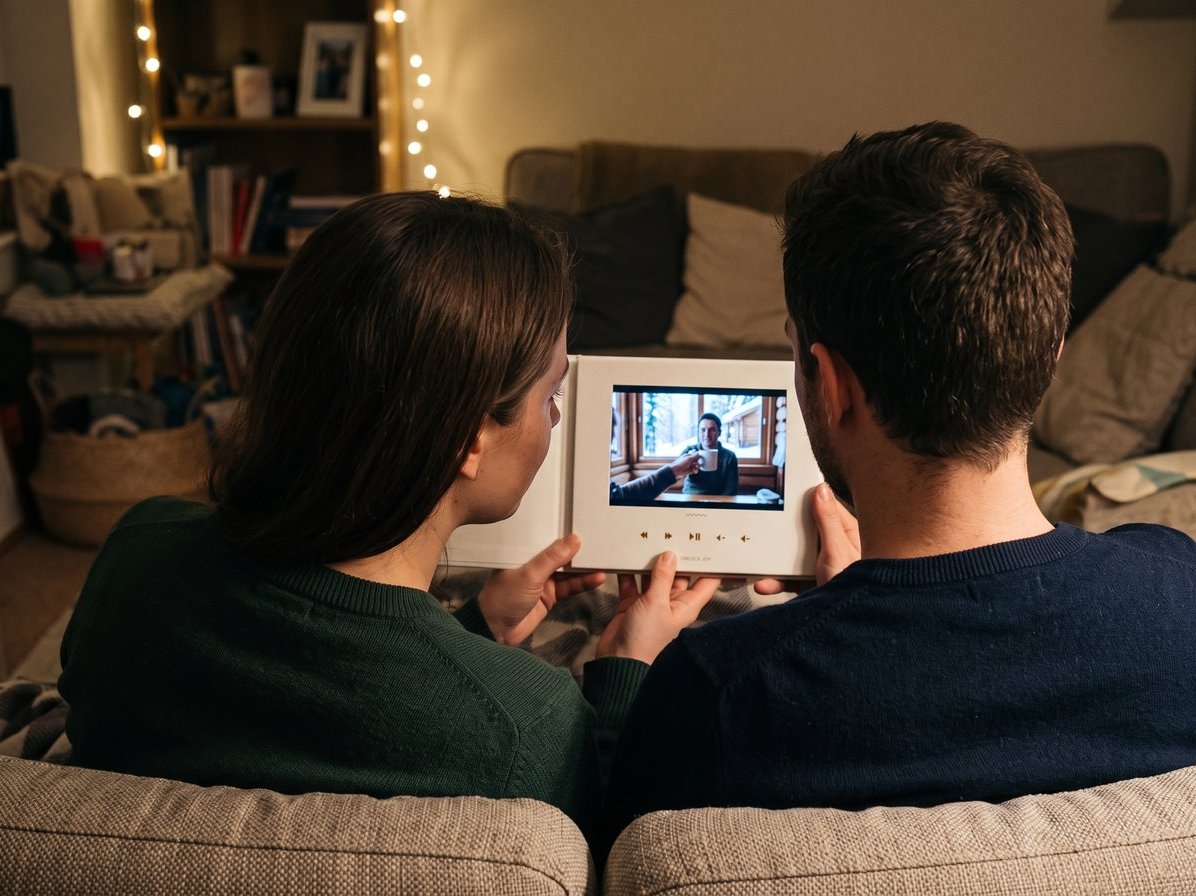
A note before the list: we make Tribute, the group video maker, and it's one of the 5 steps below.
What is Christmas caroling, and where did it come from?
The Christmas carolling meaning is simple: a song of joy shared with whoever opens the door. The Christmas carols tradition grew out of older customs. In England, wassailing meant going house to house with a bowl of spiced drink and a song wishing the household good health in the new year, and "Here We Come A-Wassailing" still carries that custom in its title. Over time, the drink faded and the songs stayed.
Caroling has become rarer, which is one more reason to do it. In Pew Research Center's survey on Christmas then and now, 16% of Americans said they planned to go caroling, while about a third said they had gone caroling as children. A street with one caroling group a year is a street people remember.
How do you start a neighborhood caroling tradition?
You need fewer people than you think. Four voices and one confident singer will carry any carol, and neighbors join once they see you out there.
1. Pick a night and a short route
Choose a weekend evening in mid-December, early enough that families with little kids can come and late enough that it's dark (string lights make everything better). Map 6 to 10 houses close together, plus one stop at the home of someone who lives alone. Plan 2 carols per house, then move on.
- Time needed: 60 to 90 minutes on the night
- Cost: Nothing
Best for: First-time organizers.
Why it works: A short route keeps kids happy and voices warm.
2. Invite neighbors and make song sheets
Send a note through the neighborhood group chat, the HOA newsletter or a flyer on doors two weeks ahead. Print song sheets with large type, one carol per page, and clip them to a piece of cardboard so the wind can't take them. You can print public-domain carols without asking anyone: take the words from an old hymnal or a public-domain collection.
- Time needed: 30 minutes to plan, 30 minutes to print
- Cost: A few dollars for printing and clipboards
Best for: Groups where not everyone knows the second verse.
Why it works: Nobody has to fake the words, so everyone sings louder.
3. Make a carol video for the neighbors who can't come to the door (a Tribute group video)
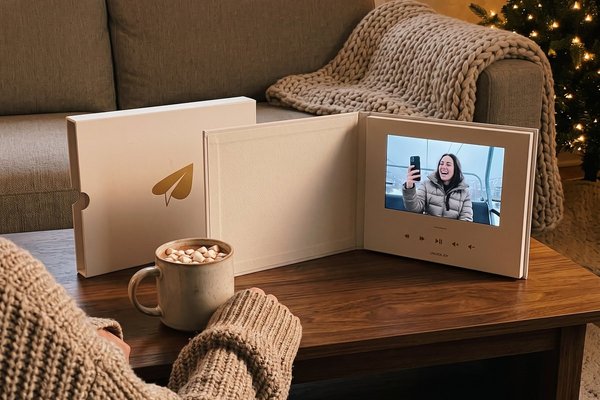
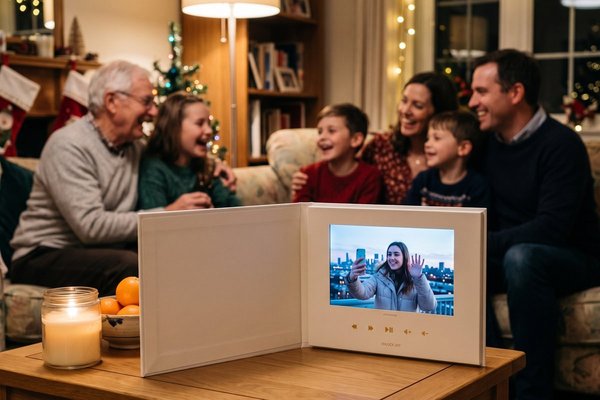
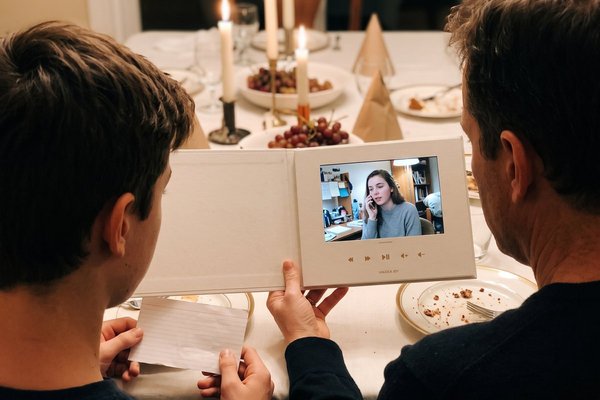
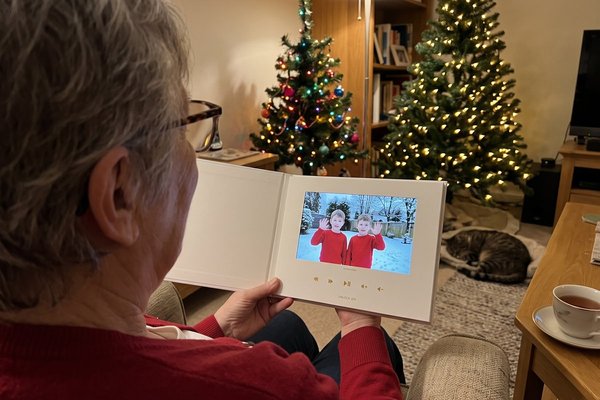
Some people on your list won't be home, or can't come outside: the widow down the street who's in rehab, the grandmother in assisted living, the family stationed overseas. Start a Tribute for them and ask everyone in the group to record a verse or a short Christmas greeting from their phone. Tribute is a group video maker that turns messages from friends and family into one surprise video. It works by inviting everyone to record a short clip from their phone; Tribute compiles the clips, music and photos into a finished video you share or play together.
Picture the neighbor in the rehab unit watching twelve faces from her street sing "Silent Night," one verse at a time, then wave at the camera. Unlike a caroling night, nobody has to be online at the same time, and she can watch it again on Christmas morning. Over 8 million videos have been sent on Tribute, and it holds 4.9 stars from 7,000+ reviews.
- Time needed: About a minute per singer; open it 2 to 3 weeks before so people have time to record
- Cost: Free to start a draft; you pay from $35 when you publish and start collecting videos
Best for: Neighbors who are homebound, in care or far away.
Why it works: The carol reaches the people who need it most, even if they can't open the door.
4. End with warm drinks
Finish at the organizer's house, or a porch with a big thermos. Hot cocoa for the kids, cider for the adults, and a plate of cookies someone baked that afternoon. This is where neighbors who just met trade numbers.
- Time needed: 30 minutes
- Cost: $10 to $20 for drinks and cups
Best for: Groups that want to stay and talk.
Why it works: The cocoa is what the kids will remember next year, and it's why they'll ask to come back.
5. Make it a yearly tradition
Pick the same Saturday every year and say so on the night: "Same time next year." Keep the song sheets in a folder. In a few years, you'll have a group that shows up without an invitation and kids who know all four verses of "O Come, All Ye Faithful."
- Time needed: Five minutes to set next year's date
- Cost: Nothing
Best for: Neighborhoods that want a tradition of their own.
Why it works: A fixed date turns a one-off into something people plan around.
What are the best Christmas caroling songs?
The best Christmas caroling songs have short verses and a chorus everyone knows. All of the carols below are old Christmas carols in the public domain, so you can print the words on your song sheets.
Easy carols for any group:
- "Silent Night"
- "Joy to the World"
- "Deck the Halls"
- "Jingle Bells"
- "We Wish You a Merry Christmas"
Traditional carols for confident singers:
- "Hark! The Herald Angels Sing"
- "O Come, All Ye Faithful"
- "God Rest Ye Merry, Gentlemen"
- "The First Noel"
- "Angels We Have Heard on High"
- "O Little Town of Bethlehem"
Carolling songs for kids:
- "Away in a Manger"
- "O Christmas Tree"
- "The Twelve Days of Christmas"
- "Here We Come A-Wassailing"
Start every stop with an upbeat one, then a slow one. End the night with "We Wish You a Merry Christmas," a carol about singers at a door hoping for something warm.
What is Christmas caroling etiquette?
A few simple rules keep caroling fun for the singers and the listeners.
- Tell people you're coming. A note a few days ahead lets neighbors be home, or turn the porch light off if they'd rather not.
- Respect a dark porch. No light, no carol. Move on with a wave.
- Keep it short. Two songs, five minutes, then the next house.
- Don't ask for anything. If someone offers cookies, say thank you. If they don't, sing anyway.
- Stay off the lawn. Sing from the sidewalk or the path, and above all after snow.
- Finish before 8 p.m. Little kids go to bed, and so do some grandparents.
- Bring a light. A phone flashlight or a lantern helps singers read the song sheets.
Compared to a party, caroling asks almost nothing of the neighbors you visit. That's what makes it a gift.
How is caroling done around the world?
Caroling looks different from country to country, and borrowing one idea can make your night stand out.
- Greece: Greek Christmas carols, called kalanda, are sung by children who go door to door on Christmas Eve, often with a small metal triangle, and receive sweets or coins.
- Mexico: During Las Posadas, December 16 to 24, neighbors walk in a procession that remembers Mary and Joseph's search for a place to stay, singing at doors until one family lets them in. Mexican Christmas carols called villancicos are part of the season.
- England: Wassailing groups still visit homes and orchards in some villages, singing to wish good health and a good harvest.
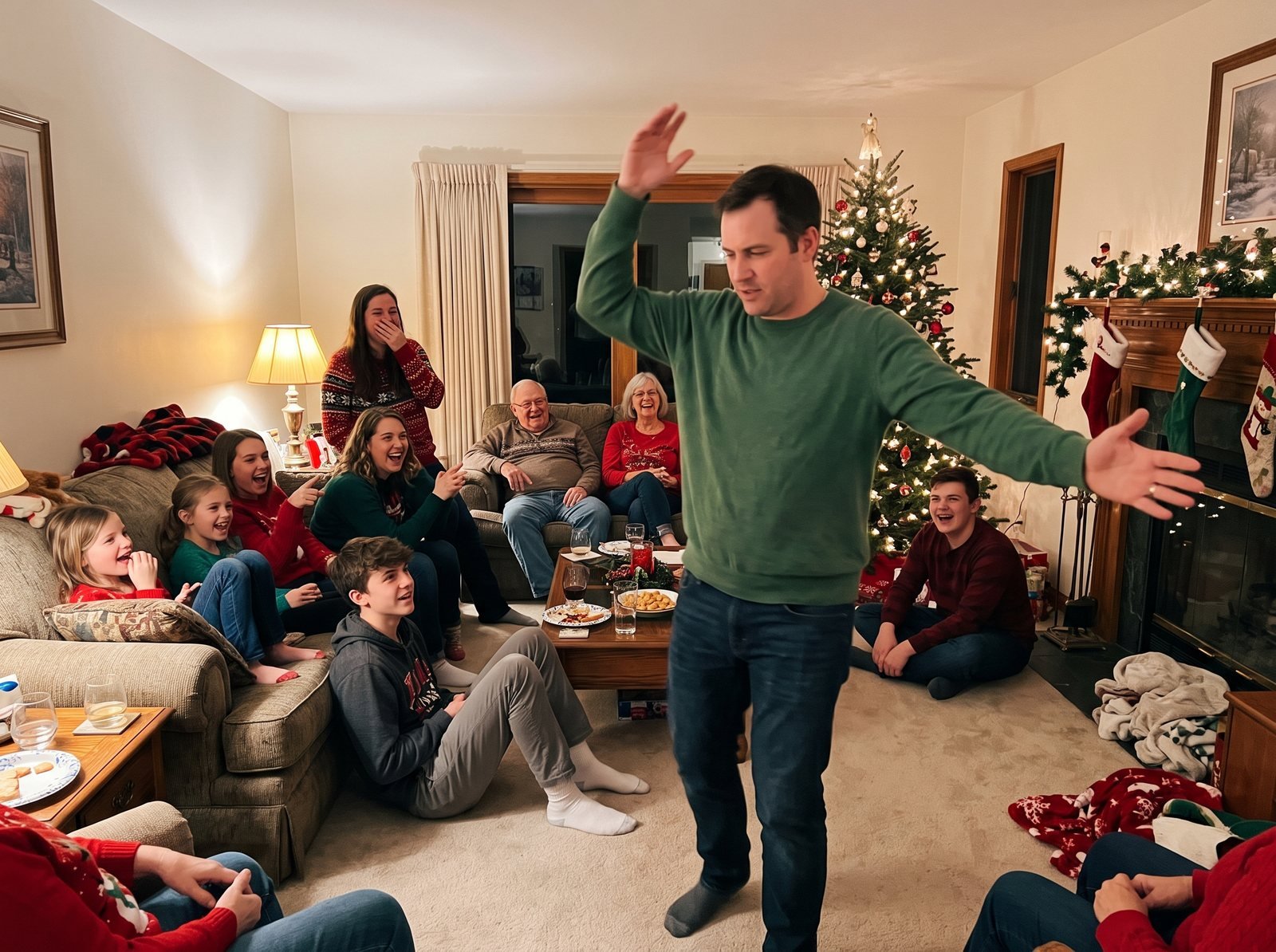
Families gather at Christmas more than any other time: in a 2017 Pew survey, 82% of U.S. adults said they planned to gather with family and friends on Christmas Eve or Christmas Day. Bring a song sheet, and the gathering becomes a caroling group in the living room.
What else pairs well with a caroling night?
A caroling night fits into a bigger December. Our Christmas traditions guide has more ideas to build a season around, our advent calendar tradition guide can put "go caroling" behind one of the doors, and our Christmas ideas roundup covers gifts and gatherings. Starting your traditions in November? See our Thanksgiving traditions.
Frequently Asked Questions
What is the meaning of Christmas caroling?
Caroling means singing Christmas songs for others, often door to door or in a public place. It grew from older customs such as English wassailing, where singers wished households good health for the new year.
What songs do you sing when Christmas caroling?
Choose carols with a chorus everyone knows, such as "Silent Night," "Joy to the World," "Deck the Halls," "Jingle Bells" and "We Wish You a Merry Christmas." These are in the public domain, so you can print the words on song sheets.
When should you go Christmas caroling?
Most groups go on a weekend evening in the two weeks before Christmas, starting around dusk. Finish by 8 p.m. so families with young kids and older neighbors aren't kept up.
How many people do you need to go caroling?
Four to six singers is enough, as long as one person knows the tunes. Bigger groups sound fuller, but small groups move faster between houses.
Is it rude to go caroling without asking?
It's polite to give neighbors a heads-up a few days ahead. On the night, skip any house with the porch light off.
How can people who can't go caroling still join in?
Ask them to record a verse or a greeting on their phone and combine the clips into one group video. Play it for a neighbor who can't come to the door, or send it to family far away.
👉 Start your holiday Tribute and take the carols to everyone who can't open the door.