Employee Recognition Programs: How to Build One People Use
Employee recognition programs are the habits, budget and calendar a company sets up so good work gets thanked by name, by managers and by peers. The ones people use have three parts: a clear reason to say thanks, a few easy formats, and an owner.

| Program type | Who gives it | Typical cost | Best for |
|---|---|---|---|
| Weekly peer shout-outs | Coworkers | Nothing | Any team, any size |
| A group thank-you video for big moments | The whole team | From $35 a video | Remote, hybrid and shift teams |
| Years-of-service milestones | Manager and team | $25 to $150 a person | Companies with long tenure |
| Manager notes and spot awards | Managers | $0 to $50 a moment | Teams under 15 people |
| Annual awards | Leadership, by nomination | $50 to $500 a winner | Companies of 50 or more |
| Points on a recognition platform | Everyone, on software | A monthly fee per user | Companies of 200 or more |
What are employee recognition programs, and how do they differ from rewards?
Recognition says what someone did and why it mattered; a reward attaches something of value to it.
An employee appreciation program is the wider umbrella: the dates, gestures and gifts a company uses to thank people. Employee rewards programs add money, points or gift cards. Staff incentive programs pay out when a target is hit, like a sales bonus.
Most companies need a little of each. The mistake is buying the reward layer first and hoping the recognition follows. People remember the sentence a coworker said about their work long after they spend the gift card.
Why do employee recognition programs matter for retention?
Because recognized people stay, and most people say they are not recognized enough.
Gallup followed about 3,500 employees from 2022 to 2024. Those who were well recognized had 45% lower odds of having left their organization two years later, per Gallup's study of recognition and turnover.
Yet only 22% of employees said they get the right amount of recognition.
Managers carry most of the load and get little help. Close to three-quarters of organizations do not train managers in recognition best practices, per Gallup and Workhuman research on fair recognition.
That is the gap a program closes: it turns "I should thank her" into a date, a format and a reminder.
Which employee recognition programs examples work best?
The best examples are small, repeatable and specific about the work.
Pick two or three that fit your size, then add more once they run without you. For a longer menu, our list of employee recognition ideas covers formats for every budget.
1. Weekly peer shout-outs
Open a channel in Slack or Teams, or a whiteboard by the coffee machine, and ask people to thank one coworker a week by name. Read three aloud at the Monday meeting.
- Time needed: 10 minutes a week to read the best ones aloud
- Cost: Nothing
Best for: Teams where the most useful help happens between peers, out of the manager's sight.
Why it works: It catches the late-night fix and the patient walkthrough that no review form asks about.
2. A group thank-you video for big moments (a Tribute group video)
This one is ours: we make Tribute, the group video gift.
Use it for the moments a program should never miss: a five-year anniversary, a promotion, a project that shipped, a send-off.
Tribute is a group video gift that turns messages from coworkers into one surprise video.
It works by inviting everyone to record a short clip from their phone or computer; Tribute compiles the clips, music and photos into a finished video you share or play together.
Guided prompts help people say something specific instead of "great job." Over 8 million video messages have been shared on Tribute.
- Time needed: 15 minutes to set up; open it 1 to 2 weeks before the moment
- Cost: Free to start a draft; from $35 when you publish and start collecting videos
Best for: Milestones where the person deserves to hear from more than their manager.
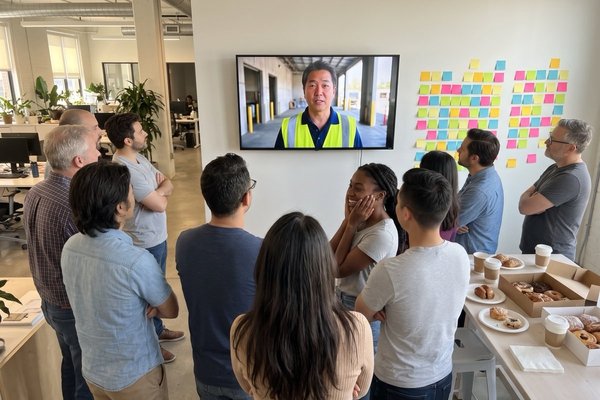
Why it works: The honoree hears a dozen coworkers name what they did, and the program gets a moment people talk about for weeks.
👉 Start a team video for your next milestone if your program has the dates but not yet the voices.
3. Years-of-service milestones
Mark one, three, five and ten years with something that grows with tenure: a note at one year, a team lunch at three, a keepsake at five. Our guide to employee recognition awards has wording and categories.
- Time needed: 30 minutes a month to check the calendar
- Cost: $25 to $150 a person, rising with years
Best for: Companies where people stay long enough to see the five-year mark.
Why it works: A date nobody has to remember is a date nobody forgets.

4. Manager notes and spot awards
Give each manager a small pot, say $50 a quarter per report, and one rule: every spend comes with two written sentences about the work. The note matters more than the coffee card.
- Time needed: 5 minutes a moment
- Cost: $0 to $50 a moment
Best for: Small teams and companies with no HR staff.
Why it works: It happens the week of the work, not at year end when nobody remembers the details.
5. Annual awards
Run a handful of categories by peer nomination, announce them at the year-end meeting, and read the nomination text aloud. The reading is the award; the trophy is a souvenir.
- Time needed: 3 weeks for nominations, 1 hour to present
- Cost: $50 to $500 a winner
Best for: Companies of 50 or more where teams seldom see each other's work.
Why it works: Compared with a private bonus, an award read in front of peers tells everyone what the company values.
Where does a team video fit in employee recognition programs?
It fits if your company is spread across sites, shifts or home desks, and your program's big moments keep landing as a card nobody signs.
For that reader, the hardest part of recognition is gathering people. Picture a nurse manager trying to thank a charge nurse for ten years: three shifts, two campuses, one card in a drawer at the station. A Tribute group video removes the gathering.
You do not have to book a room, chase signatures or find a time zone that suits everyone. Each coworker records a minute when it suits them, and our Concierge editors can put the video together for you.
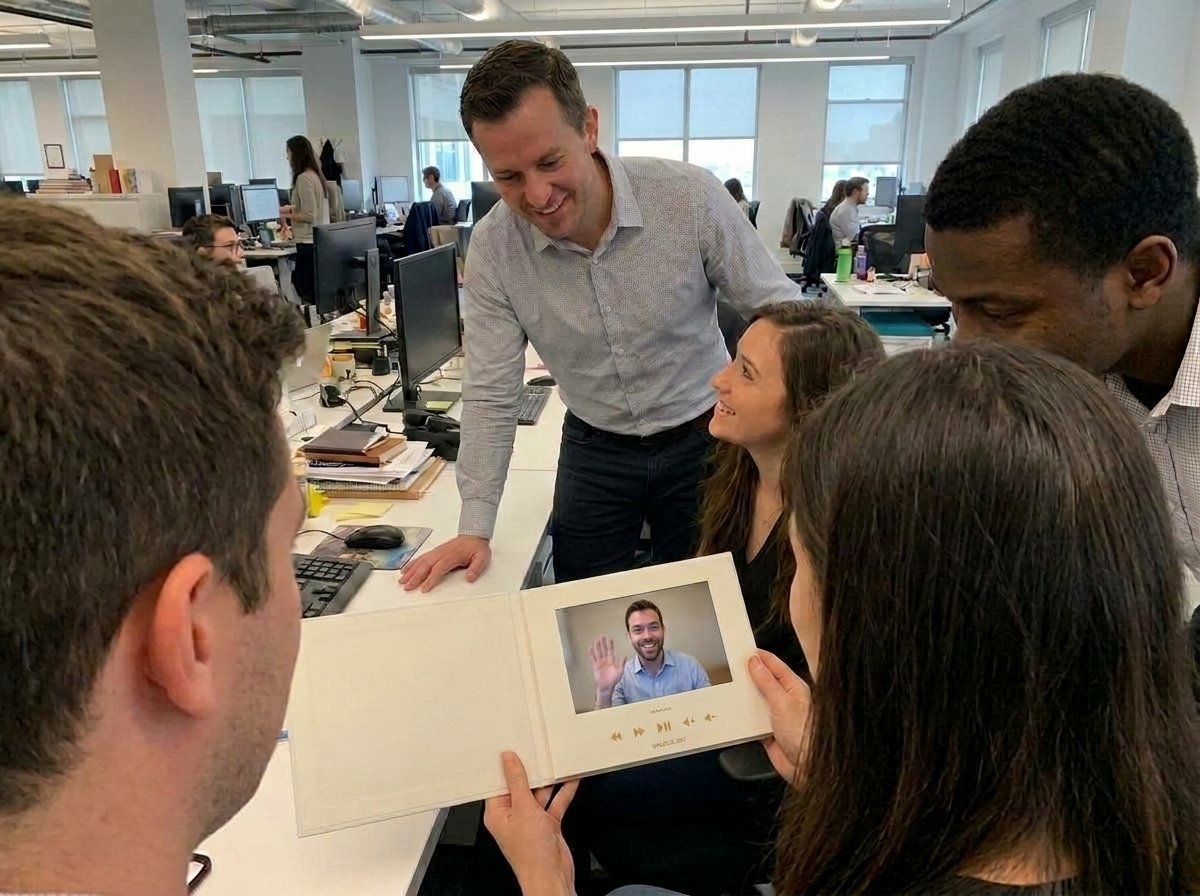
It ends up as a link the honoree can play again, a moment at the all-hands, or a Video Book on their desk for the five-year mark.

Larger companies use Tribute for Work: a custom-branded Tribute portal for the whole organization, a testimonial page for collecting stories, and pro-edited promo videos for events and all-hands.
It is the wrong answer if what you need is points, payroll-linked rewards or a running record of who thanked whom. That is a platform's job, and our guide to employee recognition software compares the options.
How do you build an employee recognition program template in five steps?
Start with the moments, then the money, then the owner.
- List the moments. Anniversaries, launches, promotions, send-offs, and the calendar days like Employee Appreciation Day.
- Set a budget per head. Even $5 a month per person funds a lot of notes and a few videos.
- Choose two or three formats. One peer format, one manager format, one for big moments.
- Name one owner. A person, not a committee, who checks the calendar every Monday.
- Review after 90 days. Ask five people what they remember being thanked for, and keep what they name.
Write the result on one page. If it needs a slide deck, it is too big to run.
How much do employee recognition programs cost for a small business?
A team of 20 can run a good one for under $2,000 a year.
Say your company has 20 people. Peer shout-outs cost nothing. Four milestone videos at $35 each come to $140. A $50 spot award per person each year is $1,000, and a year-end lunch adds a few hundred more.
Unlike a platform priced per user, most of that spend only happens when there is something to celebrate. Employee incentive programs for small business tend to fail on admin, not money, so keep the formats few.
For more low-cost formats, browse our employee appreciation ideas.
Frequently Asked Questions
What is the difference between recognition and rewards?
Recognition names what someone did and why it mattered. Rewards add money, points or a gift. The best programs lead with the first and use the second to back it up.
What are good employee recognition programs examples?
Weekly peer shout-outs, years-of-service milestones, manager notes with small spot awards, annual awards by nomination, and a group video for big moments. Pick two or three to start.
How often should employees be recognized?
Aim for something every week at team level and a bigger moment for each milestone. Frequency matters less than naming the work each time.
Who should own an employee recognition program?
One named person, often in HR or operations at a small company. Managers deliver most of it, but someone has to check the calendar and keep the budget.
Do small companies need recognition software?
Most teams under 100 people do fine with a channel, a calendar and a small budget. Software starts to pay off when you need points, approvals and reporting across many teams.
How do you include remote employees?
Choose formats that do not need everyone in one room: a shout-out channel, mailed notes, or a group video each person records when it suits them.
👉 Give your program's next milestone a video from the whole team when the honoree works across sites or shifts, and the thanks should sound like everyone who noticed.