Group Greeting Cards for Work: Signed Cards, Ecards and Video
A group greeting card comes in three formats: a paper card passed around the office, an ecard or online board signed by link, and a group video where each person records a message. Pick by where your signers are and the moment's size.
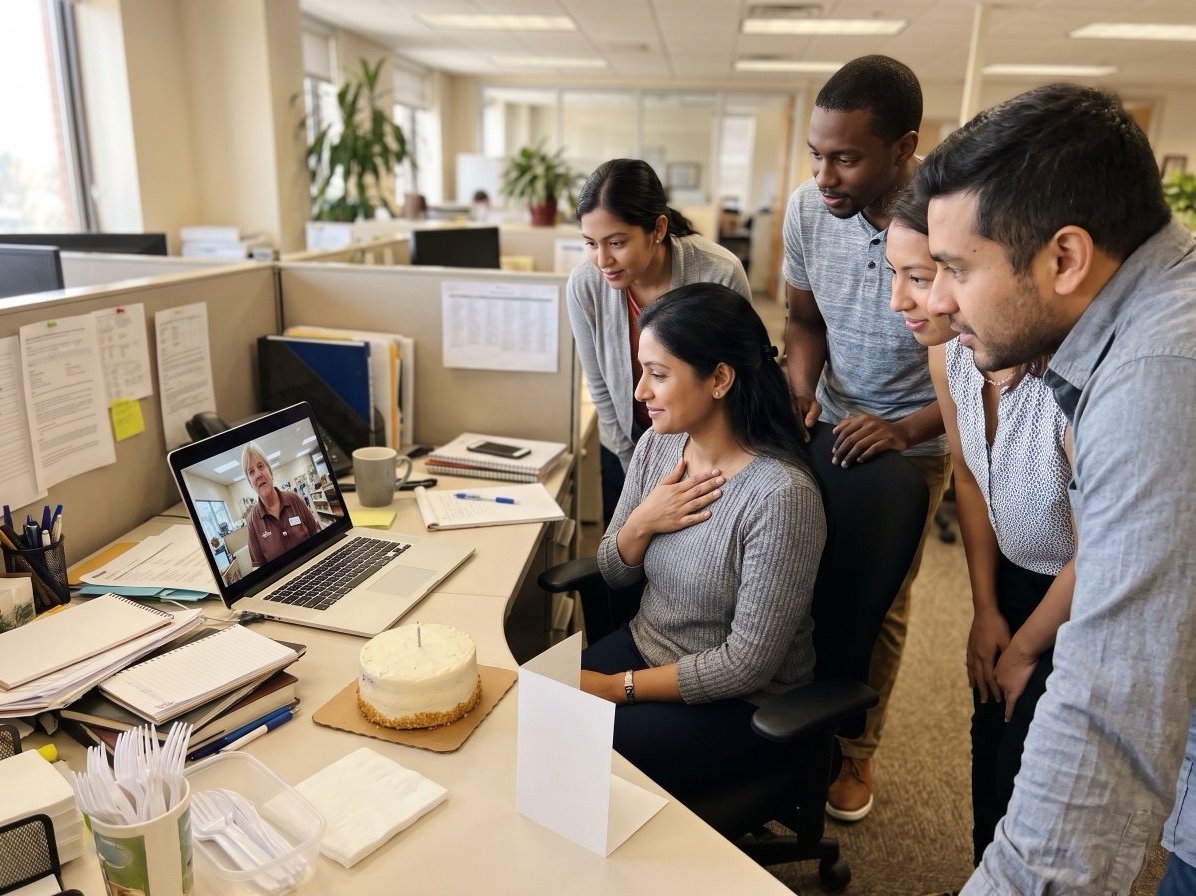

| Format | How people sign | What the recipient gets | Typical cost | Best for |
|---|---|---|---|---|
| Signed paper card | Pen, in person | A card with short notes | The price of a large card | One office, a quick thank-you |
| Ecard or online board | Typed message, photo or GIF from a link | A web page of messages | Nothing for basic versions; paid tiers vary by site | Remote teams, birthdays, get-wells |
| Group video | A short video from a phone or computer | One video of everyone's messages | From $35 | Farewells, anniversaries, big thank-yous |
What is a group greeting card?
It is one card that many people sign for one person, for a birthday, a farewell, a work anniversary or a thank-you.
The paper version is the classic office card: a big envelope that travels from desk to desk. Online versions do the same job with a link, so people sign from wherever they work.
Video takes it one step further: instead of writing, each person says it.
Format matters more than it used to.
In 2025, 35 percent of employed people did some or all of their work at home on days they worked, per the Bureau of Labor Statistics American Time Use Survey. A card in the office reaches only the people who are there that day.
Which group greeting card format should you choose?
Choose by three things: where the signers are, how big the moment is, and how the person likes to be thanked.
That last one gets skipped. Only 10% of employees say someone at work has asked how they like to be recognized, per Gallup's research on recognition across generations.
A private person may prefer a quiet card; someone who loves a crowd may want the video played at the all-hands.
1. Signed paper cards
The office card still works when everyone shares a building. Buy a large card, tuck it in an envelope with a list of names, and give it three days to make the rounds.
- Time needed: 3 days to circulate; 30 seconds to sign
- Cost: The price of a large card
Best for: One office, a birthday or a quick thank-you.
Why it works: Signed cards are physical; they end up pinned above a desk or kept in a drawer.
Space is the catch. Most people write "Happy birthday!" and their name because there is room for nothing else, and remote coworkers never see the card at all.
2. Ecards and online group boards
An ecard from a group, or an online board, works by link: the organizer creates it, shares it in email or Slack, and everyone adds a message, a photo or a GIF. The recipient opens a page full of notes.
- Time needed: 10 minutes to set up; a few days to collect
- Cost: Nothing for basic versions; paid tiers vary by site
Best for: Remote and hybrid teams, birthdays and get-well wishes.
Why it works: Unlike a paper card, it reaches every signer, wherever they sit.
If you are comparing free group greeting cards online, check how long the board stays up and how many signers the basic version allows. Our guide to virtual cards for groups to sign walks through setting one up.

3. A group video (a Tribute group video)
This one is ours: we make Tribute, the group video gift.
It is the same idea as a group card, except each person records their message instead of typing it.
Tribute is a group video gift that turns messages from coworkers into one surprise video.
It works by inviting everyone to record a short clip from their phone or computer; Tribute compiles the clips, music and photos into a finished video you share or play together.
No app or account is needed to record. For a retirement or a ten-year mark, add a Video Book: a hardcover with a 7-inch screen that plays the video when it is opened. Over 8 million video messages have been shared on Tribute.
- Time needed: 15 minutes to set up; open it 1 to 2 weeks before the day
- Cost: Free to start a draft; from $35 when you publish and start collecting videos
Best for: Farewells, work anniversaries and thank-yous that deserve more than a line.
Why it works: The person hears each coworker's voice and sees their face, which a signature cannot carry.
👉 Turn the card into a video everyone records if the signers work in different places and the moment is bigger than a birthday.
Can a group greeting card include everyone's voice?
Yes, if half your team never passes the desk where the card is waiting.
Picture a farewell card for a store manager. It circulates on the day shift, the night crew never sees it, and the regional team signs a separate ecard. A Tribute group video gives every one of them the same link.
You do not have to chase the envelope from desk to desk, mail it to remote staff or squeeze forty names into one inside cover. People record when their shift allows, and a Concierge editor can assemble it for you.
The finished video plays at the send-off, then goes to the person to keep.
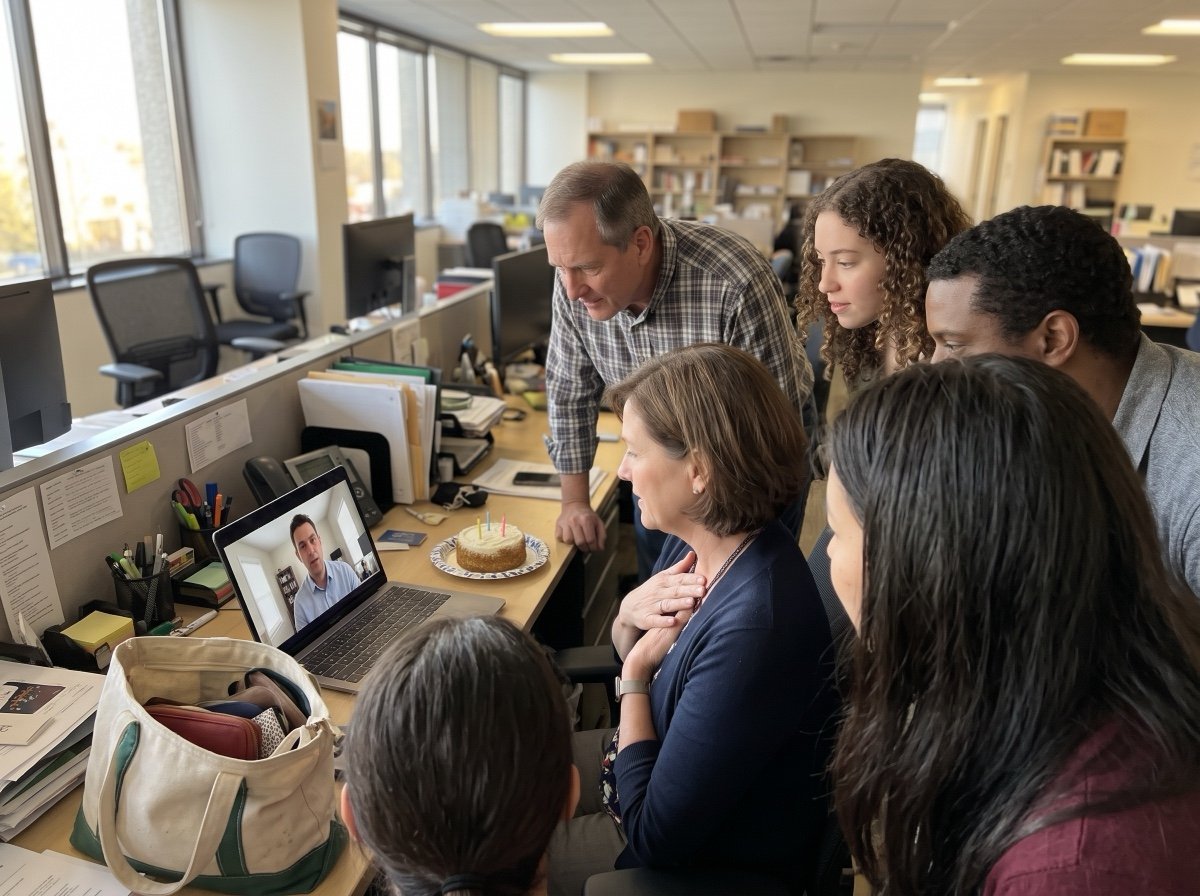
It is the wrong answer for a quick birthday in a five-person office. Sign a paper card that afternoon; it takes everyone a minute.
Which group greeting card fits each occasion at work?
Match the format to the weight of the moment.
| Occasion | Format that fits | Why |
|---|---|---|
| Birthday | Paper card or ecard | Quick, light, everyone signs in a minute |
| Get well or sympathy | Paper card or ecard | Quiet and private; no pressure to respond |
| Welcome to the team | Ecard | Reaches a new hire before day one |
| Work anniversary | Group video | Years of work deserve more than a line |
| Farewell or retirement | Group video, with a Video Book | Something to play again after the last day |
| Holiday thanks to the team | Paper card from the manager | A personal note in a season of mass emails |
Compared with a birthday, a farewell carries years of shared work, which is why it earns the bigger format. For sympathy, keep it simple: a few warm lines matter more than the medium.
What should you write in a group greeting card for a coworker?
One specific thing they did, and what it meant to you.
- "Thank you for answering every question in my first month. I still use your checklist."
- "The office is quieter without your laugh. Good luck in Denver."
- "Five years of fixing the printer before anyone noticed it broke. We noticed."
- "You made the hardest quarter feel doable. Thank you for staying late with us."
- "Happy birthday to the person who remembers everyone else's."
These thank you card messages for coworkers work on paper, in an ecard or said to camera. For office cards around the holidays, pair the card with something from our list of Christmas gifts for employees.
How do you organize a group greeting card at work?
Set a deadline, name an owner, and send one reminder.
- Pick the format using the table above.
- Set the deadline 2 to 3 days before the day, so there is time to put it together.
- Keep it a surprise. Use a channel or email list that leaves the recipient out.
- Send one reminder the day before the deadline.
- Deliver it in person or on a call, so people can see the reaction.
Say you are organizing a card for a payroll lead's ten-year mark. Ask her manager for two moments worth mentioning, and put them in the invitation so signers have something specific to say. The card reads like a story instead of forty versions of "congrats."
For other ways to say thanks, see our employee appreciation ideas, or our guide to making an employee appreciation video.
Frequently Asked Questions
What is the best group greeting card for remote teams?
An ecard, an online board or a group video, since each one works from a link. Paper cards only reach the people in the office.
Are there free group greeting cards?
Many ecard and board sites have a basic version at no cost, with limits on signers, features or how long it stays up. Check those limits before you share the link.
How many people can sign a group card?
A large paper card fits about 20 to 30 short notes. Online boards and group videos have room for the whole department.
How long should a group card stay open?
Give people 3 to 5 days, and close it 2 to 3 days before the occasion. Longer than a week and people forget.
Is a group video better than an ecard?
For big moments like a farewell or a work anniversary, many people prefer hearing voices. For a quick birthday, an ecard is faster for everyone.
👉 Let every signer say it out loud when the team is split across shifts or offices and a farewell card would only reach the people in the room.