End of Year Reflection Questions for the Whole Family
The best end of year reflection questions are simple enough to answer at the dinner table: what was your favorite moment this year, what was hard and what did it teach you, who made your year better, what are you grateful for, and what are you looking forward to next year? Ask them one at a time, give everyone a turn, and write down or record the answers so you can compare next December.
Why ask end of year reflection questions?
We learn from a year when we stop long enough to look at it. Without that pause, the trip, the new job and the rough spring all blur into "it was a busy year." Reflection questions give the year a shape, and asking them as a family lets each person hear how the same 12 months looked from another seat.
Gratitude, in particular, is worth the time. In three studies published in the Journal of Personality and Social Psychology, Robert Emmons and Michael McCullough found that people assigned to list things they were grateful for showed higher well-being on several measures than comparison groups, with the clearest effect on positive mood. Saying thanks out loud helps the other person too: in a separate experiment with 107 MBA students, published in Psychological Science, people who received a gratitude letter felt more positive and less awkward than the writers expected.

What are the best end of year reflection questions?
These year reflection questions are grouped by theme. You don't need all of them. Pick three or four for a family dinner, or work through the whole list alone with a journal over the last week of December.
1. Questions about the highlights
- What was the best moment of your year?
- What was your biggest achievement, at work, at school or at home?
- What adventure or trip do you want to remember?
- What made those moments special?
Best for: Starting the conversation on a high note.
Why it works: Everyone has an answer, and the stories get the table talking.
2. Gratitude questions
- What are you most grateful for from the past year?
- Which person helped you most this year, and do they know it?
- What small, everyday thing made you happy this year?
- What lesson are you thankful you learned, even if it was hard?
Best for: Christmas Eve, New Year's Eve or any family meeting near the end of the year.
Why it works: Gratitude turns a list of events into a list of reasons, and it's the part people remember.

3. The family reflection video (a Tribute group video)
This one is ours: we make Tribute, the group video maker.
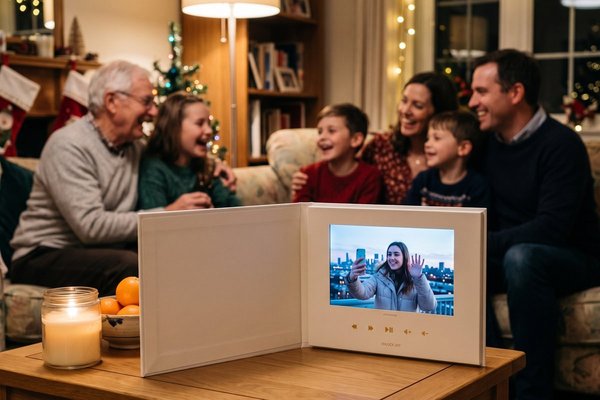
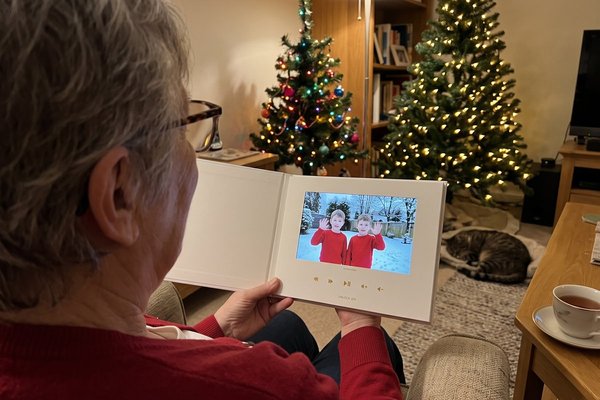
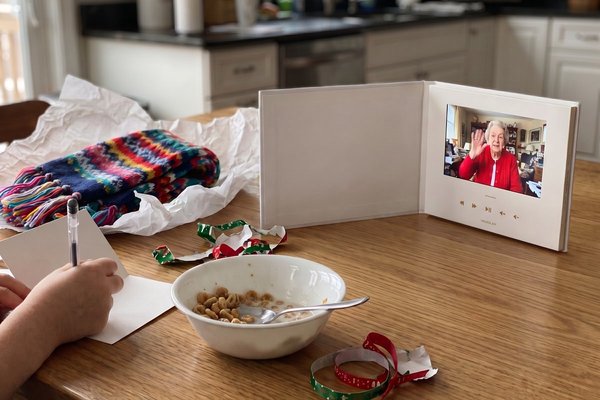
Not everyone will be at the table, so bring them in another way. Start a Tribute in early December, pick one question ("What was your best moment this year, and who were you with?") and send the link to grandparents, cousins and the sibling who lives overseas. Tribute is a group video maker that turns messages from friends and family into one surprise video. It works by inviting everyone to record a short clip from their phone; Tribute compiles the clips, music and photos into a finished video you share or play together.
Play it on New Year's Eve, then go around the room and answer the same question in person. Unlike a group call, nobody has to be online at the same time, and next December you can watch this year's answers before you record new ones. Over 8 million videos have been sent on Tribute, and it holds 4.9 stars from 7,000+ reviews.
- Time needed: A minute per person to record; open it 2 to 3 weeks before you plan to watch
- Cost: Free to start a draft; you pay from $35 when you publish and start collecting videos
Best for: Families spread across cities, and anyone who wants the answers on record.
Why it works: Every voice is in it, and it turns one evening's reflection into a yearly tradition.
4. Questions about challenges and lessons
- What was the hardest part of your year?
- What did you learn from it?
- What would you change if you could do it again?
- Who or what helped you get through it?
Best for: Older kids, teens and adults, or a quiet conversation with a partner.
Why it works: Naming the hard parts makes the good parts feel earned, not lucky.
5. Questions about growth
- How did you grow this year?
- What new skill, ability or talent did you develop, at work or at home?
- What habit did you start or stop?
- What are you proud of that nobody else noticed?
Best for: Journaling alone in the last week of December.
Why it works: Growth is easy to miss day to day and clear across 12 months.
6. Questions about relationships
- What relationships did you start or deepen this year?
- Who would you like to spend more time with next year?
- Who do you owe a thank-you?
- Bonus: reach out and tell them, today.
Best for: Anyone who wants the reflection to turn into action.
Why it works: The bonus step is the one people talk about later, and the one the other person remembers.
7. Questions about your favorites
- What was your favorite book, movie, show, song or album this year?
- What piece of art, music or writing changed how you see something?
- What was the best meal you ate, and who cooked it?
- What did you discover this year that you want everyone to try?
Best for: Light, fun rounds with teenagers and friends.
Why it works: Compared to the heavier questions, these get quick, loud answers and fill next year's watch list.
8. Questions about the year ahead
- What are you most excited about next year?
- What is one goal you want to reach?
- What do you want to do more of, and less of?
- What word or phrase do you want to describe next year?
Best for: New Year's Eve, right before the countdown.
Why it works: Ending on hope sends everyone into January with something to look forward to.
What yearly reflection questions work for kids?
Keep questions concrete and short for little kids, and let them draw an answer if they don't want to talk. These yearly reflection questions work from about age four:
- What was the most fun thing you did this year?
- Who was your best friend this year?
- What's something new you learned to do?
- What made you laugh the hardest?
- What do you want to learn next year?
Write the answers down with their age and keep them in the same envelope each year. Picture reading your daughter's answers at seven ("my best thing was the dog") next to her answers at twelve. That envelope is a family history in the making.
How do you run a family reflection night?
- Pick the moment. After dinner on New Year's Eve or the last Sunday of December works well.
- Choose three or four questions. One highlight, one gratitude, one lesson, one hope.
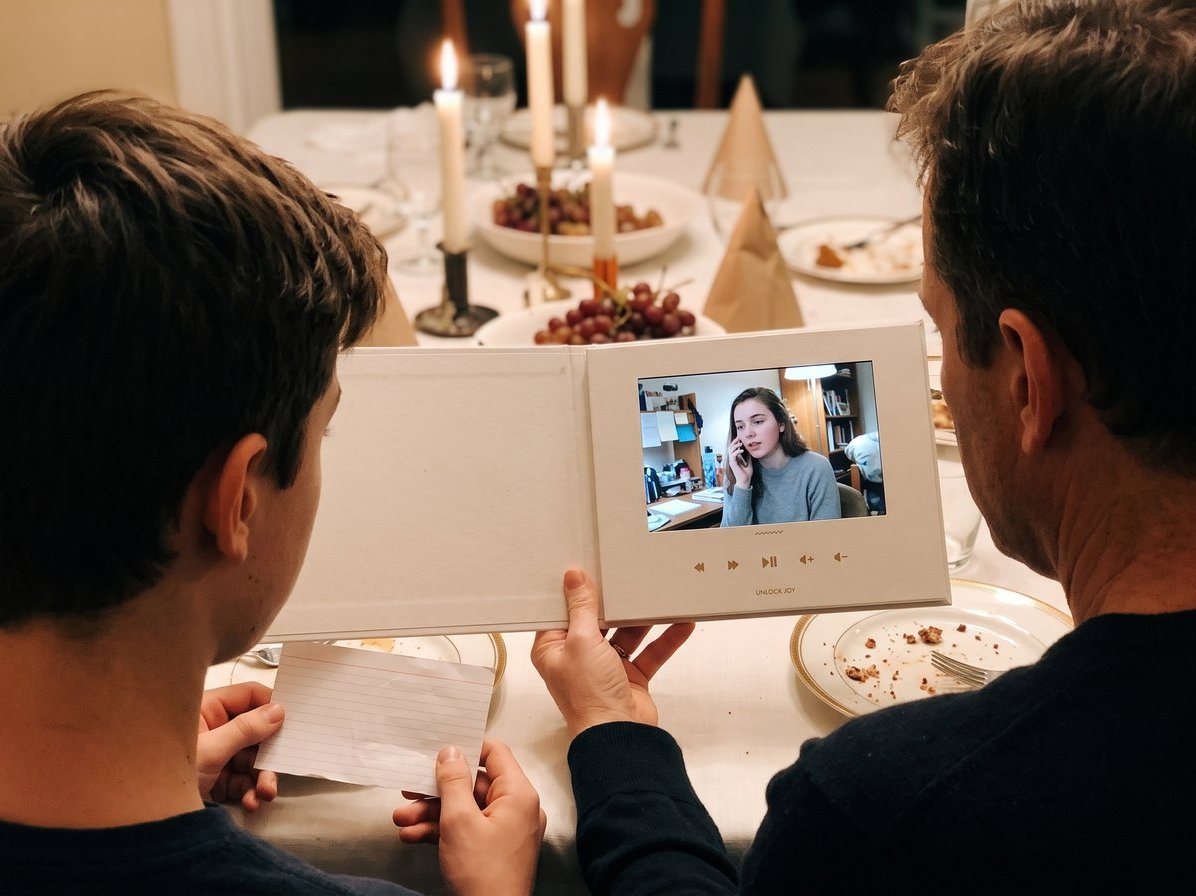
- Go around the table. Everyone answers the same question before moving on. Anyone can pass.
- Record or write it down. A notebook, a voice memo or a group video. You'll want it next year.
- Close with a toast. To the year that was, and the one that's coming.
Want to turn the answers into something to watch? Our guide to a family year in review covers videos, letters and albums, and our Christmas slideshow ideas pair photos with the stories. For the rest of the season, see our holiday season guide.

Frequently Asked Questions
What are good end of year reflection questions?
Ask about the best moment of the year, the hardest part and what it taught you, who made the year better, what you're grateful for and what you're looking forward to. Those five cover most of what matters.
How many reflection questions should you ask?
Three or four for a family dinner, so everyone gets a turn and nobody gets restless. For journaling alone, you can work through 10 to 20 over a few evenings.
When is the best time to reflect on the year?
The last week of December, between Christmas and New Year's, is a natural pause. Some families do it at the New Year's Eve dinner; others wait for a quiet Sunday in early January.
How do you get teenagers to answer reflection questions?
Start with the fun ones, such as favorite song or best meal, and let them pass. Questions that ask for a story work better than ones that ask for feelings.
Should you write down your answers?
Yes. Written or recorded answers let you compare one year with the next, and kids love hearing what they said when they were younger.
Can family who live far away take part?
They can. Some join by video call; others record their answers ahead of time in a group video that you play at the gathering.
👉 Start a Tribute and collect this year's answers from everyone you love.