
Memorial Keepsake Ideas: Meaningful Ways to Remember (2026)
The right memorial keepsake does more than sit on a shelf. It holds a piece of who they were, something you can return to on ordinary days and difficult anniversaries alike.
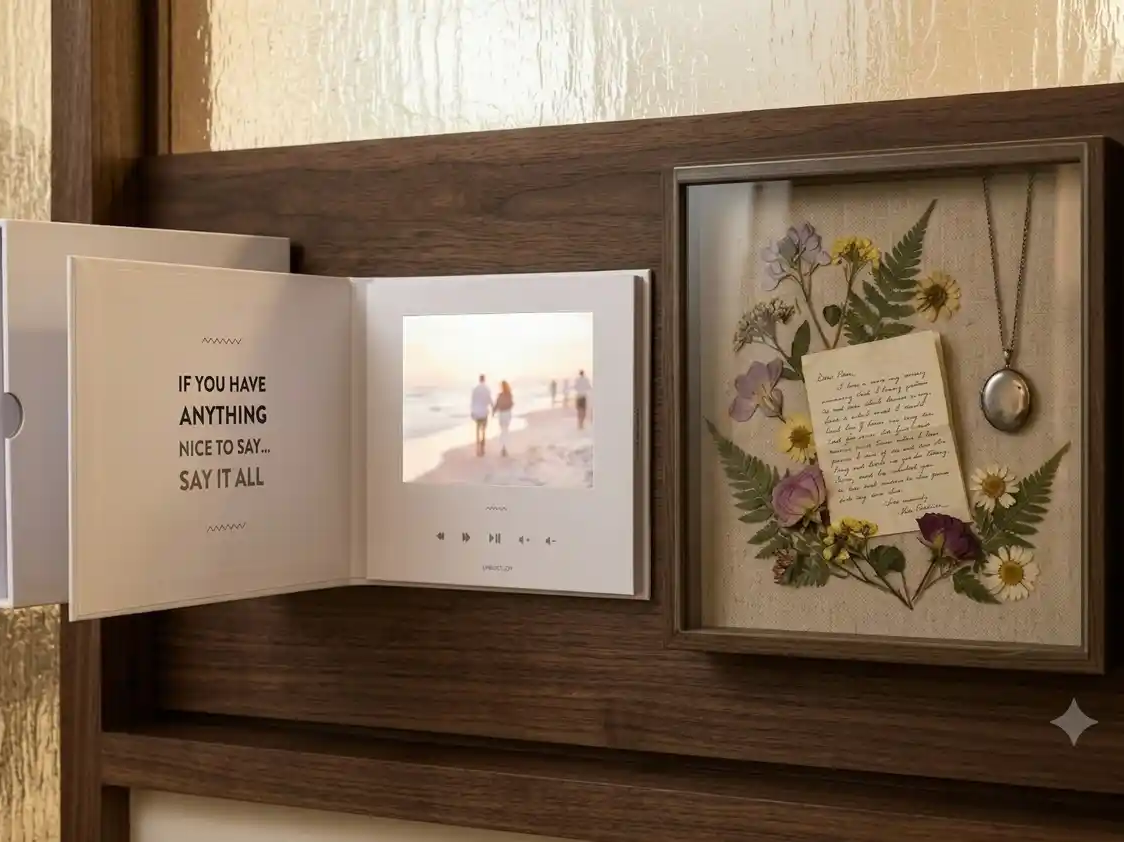
The right memorial keepsake does more than sit on a shelf. It holds a piece of who they were, something you can return to on ordinary days and difficult anniversaries alike. These memorial keepsake ideas range from handcrafted jewelry to living tributes, with one option that preserves something no object alone can hold: their actual voice.
What Makes a Memorial Keepsake Last?
A keepsake works when it carries meaning specific to one person, not generic comfort. The most lasting remembrance keepsakes connect to something real: a laugh, a handwriting sample, a flower from their garden. The physical form matters less than the story it holds.
According to the National Funeral Directors Association, families increasingly seek personalized, meaningful tributes that go beyond traditional arrangements. Memory keepsakes have become a central part of how people grieve and remember.
Which Keepsake for Loss Is Right for Your Situation?
The right fit depends on your relationship to the person, your budget, and how you want to engage with the memory. Some people need something to hold. Others need something to revisit and share. A few of these ideas work across both needs.
See also: Personalized Memorial Gifts and Memorial Gift Ideas
What Are the Best Memorial Keepsake Ideas?
1. Memorial Jewelry
Lockets, rings, and pendants engraved with initials, a birthdate, or a short phrase carry memory everywhere you go. Some jewelers work with a small amount of cremated remains to create memorial diamonds or glass beads.
Best for: Someone who wants a daily, wearable reminder that travels with them.
Why it works: Physical contact with the object offers comfort in moments of acute grief, and the jewelry becomes part of your personal story.
2. Shadow Box Display
A shadow box frames meaningful objects together: a military medal, a pressed flower, a handwritten recipe card, a photo. The arrangement tells a story a single photo cannot.
Best for: Families who have collected small, meaningful objects and want to display them as a cohesive tribute.
Why it works: Grouping objects creates narrative context. Visitors can read the life through the arrangement, not just a single image.
3. Memorial Garden Stone or Bench
An engraved stone or garden bench places the memory in a living space. Flowers bloom around it each spring. Grandchildren sit on it without always knowing why it feels significant.
Best for: Families with a shared outdoor space or anyone who loved the garden.
Why it works: The keepsake becomes part of the rhythm of the seasons, renewing its meaning without effort.
4. Custom Memory Quilt
A quilt made from their clothing, blankets, or fabric scraps carries texture and warmth that no photo can. Local quilters and online services can create these from items you send.
Best for: People who grieve with their hands and want something functional rather than purely decorative.
Why it works: Touch is a powerful memory trigger. A quilt made from their flannel shirt or childhood blanket brings physical closeness back.
5. Handwriting or Artwork Keepsakes
Services exist to engrave, embroider, or print a loved one’s handwriting onto jewelry, cutting boards, pillows, or prints. If you have old letters, birthday cards, or grocery lists, these become the source material.
Best for: Families with preserved correspondence, cards, or any written material in the person’s hand.
Why it works: Handwriting is one of the most personal traces a person leaves behind. Seeing it daily keeps the connection intimate.
6. Memorial Book or Photo Album
A printed photo book compiled with care, organized chronologically or by chapter of life, gives family members something to pass around and annotate over years. Services like Artifact Uprising or Chatbooks make this accessible.
Best for: Families spread across distances who want a shared physical artifact.
Why it works: Unlike a digital gallery, a physical book does not require a password or a device. It sits on a coffee table and invites itself to be opened.
7. Memorial Candle
A custom candle with their photo, a meaningful scent, or an engraved message creates a ritual moment. Many families light theirs on anniversaries, birthdays, and holidays.
Best for: People who find comfort in ritual and want a low-cost, giftable option.
Why it works: Ritual objects anchor grief to specific moments, giving loss a container instead of letting it arrive without warning.
8. Memorial Tree or Living Plant
Planting a tree, a rosebush, or a perennial in someone’s honor creates a living memory keepsake. Some organizations, including the Hospice Foundation of America, recognize tree planting as a meaningful part of the grief process.
Best for: Families who find comfort in watching something grow. Also a meaningful gift for a grieving friend who has outdoor space.
Why it works: Growth mirrors continuing life. Watching the tree change across seasons keeps the person present in a dynamic, living way.
9. Custom Portrait or Commissioned Art
A commissioned portrait from a photo, a watercolor of their home, or a painting of a meaningful landscape creates a one-of-a-kind piece. Artists on Etsy and through local galleries offer these at a range of price points.
Best for: Families who value art and want a statement piece rather than a small keepsake.
Why it works: An artist’s interpretation adds emotional weight that a printed photo does not carry. The piece exists nowhere else in the world.
10. Memory Jar or Box
Fill a jar or wooden box with handwritten notes from family and friends, each sharing a favorite memory. Read them on the first anniversary, or open one whenever the grief feels fresh.
Best for: Families gathering for a service who want a participatory activity that creates a lasting artifact.
Why it works: The act of writing activates memory. Reading others’ notes reminds you that your grief is shared, not carried alone.
11. Personalized Memorial Ornament
A glass or metal ornament engraved with their name, dates, and a short phrase becomes a yearly ritual. Hanging it on the tree is a moment of acknowledgment built into every holiday season.
Best for: Families who celebrate seasonal holidays and want a low-pressure way to include the person’s memory.
Why it works: Recurring rituals reduce the surprise of grief during holidays. The ornament transforms a potentially painful moment into a tender one.
12. Fingerprint Jewelry or Keepsakes
Ink or clay kits let you capture a fingerprint before or just after death. Jewelers then engrave or cast it into a pendant, ring, or small object. Hospitals and hospice organizations sometimes offer this service.
Best for: Families who want the most intimate, biologically specific keepsake possible.
Why it works: A fingerprint is entirely individual. No two are the same, and holding one carries a kind of closeness that goes beyond visual memory.
13. Memorial Recipe Book
Collect family recipes in their handwriting, or recipes associated with them, into a printed cookbook. Include photos and short stories alongside each dish. This is one of the more shareable memory keepsake formats.
Best for: Families with a food tradition or a person known for their cooking.
Why it works: Food is memory. Cooking a recipe they loved is a physical act of remembrance that also feeds people, which is a way of caring for others the way they did.
What Is the Keepsake That Holds Their Voice, Not Just Objects?
Every keepsake on this list holds something physical. But voice, laughter, and the specific way a person told a story are harder to preserve. That is where a video tribute becomes the keepsake that no shadow box or locket can replace.
Tribute (tribute.co) is a group video gift platform that lets you collect personal video messages from friends, family, and community into a polished memorial montage. It works by sharing a link, contributors record from any device, no app needed, and Tribute compiles everything automatically.
Unlike a single recorded eulogy, a Tribute video brings together dozens of voices, each sharing something specific: the way he laughed at his own jokes, the advice she always gave, the thing they did together every summer. Over 8 million messages have been sent through Tribute, and 82% of recipients cry tears of joy. It is free to start, with no app required and no watermark.
See how families use Tribute to collect and keep the voices of the people they loved.
14. The Tribute Video Book
For families who want the video tribute to live as a physical object, Tribute offers the Tribute Video Book: a linen-bound hardback with a built-in 7-inch screen that plays the video automatically when opened. It sits on a mantel, a bookshelf, or a bedside table. No phone, no login, no searching for a file. You open it and they are there.
Best for: Older family members who want to revisit the tribute without technology, or anyone who wants the video to have a permanent home in the physical world.
Why it works: The Video Book combines the tangibility of a keepsake with the emotional weight of video. Unlike static photographs, it holds movement, voice, and laughter, the things that feel most absent after a loss.
Unlike a framed photo or a memory quilt, the Tribute Video Book plays the voices of the people who loved them most, in their own words. That is not a record of who they were to you alone. It is a record of who they were to everyone.
👉 Create a memorial tribute video and Video Book
How Do You Choose Between So Many Remembrance Keepsakes?
Start with one question: how do you want to interact with this memory? If you want to hold it, choose jewelry or a quilt. If you want to display it, choose a shadow box or portrait. If you want to share it, choose a memory book or recipe collection. If you want to hear them again, a video tribute is the only option that actually works.
Many families choose more than one. A fingerprint pendant for daily wear, a shadow box for the living room, and a Tribute video for the days when you need more than an object can give.
See also: How to Preserve a Loved One’s Legacy and How to Honor the Memory of a Loved One
Frequently Asked Questions About Memorial Keepsakes
What is a memorial keepsake?
A memorial keepsake is an object created or set aside to preserve the memory of someone who has died. It can be physical, like jewelry or a shadow box, or digital, like a video tribute. The defining quality is that it holds meaning specific to that person.
What are the most popular remembrance keepsakes?
Memorial jewelry, shadow boxes, personalized photo books, and custom quilts are among the most common choices. Video tributes have grown significantly in popularity as families look for ways to preserve voice and personality, not just images.
How do I make a memory keepsake for a family member?
Start by collecting materials: photos, handwritten notes, small objects, and recorded stories from people who knew them. Many services can turn these materials into finished keepsakes, from engraved jewelry to printed books to video montages. A Tribute video is one of the few keepsakes you can create collaboratively with people across different locations.
What is the best keepsake for loss after a sudden death?
When time is short and materials are limited, a collaborative video tribute works well because contributors can share memories from anywhere with just a phone. Fingerprint or handwriting keepsakes may require planning ahead, but a video tribute can be started at any time.
Can you make a keepsake that includes multiple family members’ contributions?
Yes. Memory jars, recipe books, and video tributes all lend themselves to contributions from many people. A Tribute video is specifically designed for this: you share a link, and contributors from across the world add their own recorded messages at their own pace.
How long do memorial keepsakes last?
Physical keepsakes vary by material. Jewelry, engraved stone, and printed books can last generations with care. Digital video files backed up to cloud storage can also last indefinitely. The Tribute Video Book is built to sit on a mantel and be revisited for years.
Is a video tribute considered a memorial keepsake?
A video tribute is one of the most meaningful memorial keepsakes available because it preserves what physical objects cannot: voice, laughter, and the specific way a person expressed themselves. It is also one of the few keepsakes that multiple family members can contribute to and revisit together.
The Keepsake That Holds What Objects Cannot
Objects hold shape and texture. A video holds voice, laughter, and the particular way someone looked when they were happy. Both matter. Both serve different needs on different days.
The memorial keepsake ideas here cover the full range: from something to wear every day, to something to display for guests, to something to open on a hard night when you need more than silence. A Tribute video, and especially a Tribute Video Book, sits in a category of its own. It is the keepsake that lets the people who loved them speak, in their own voices, as many times as you need to hear them.


