
How to Preserve a Loved One’s Legacy (2026)
Preserving a loved one’s legacy means capturing the things that cannot be recovered once they are gone: the sound of their voice, the stories only they knew, the details that made them specific and irreplaceable.
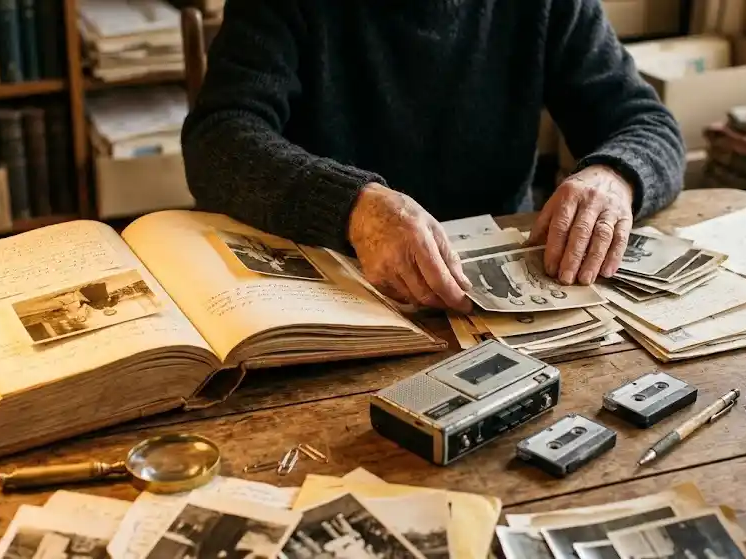
Preserving a loved one’s legacy means capturing the things that cannot be recovered once they are gone: the sound of their voice, the stories only they knew, the details that made them specific and irreplaceable. The most effective approach combines recorded oral histories, digitized photographs, family recipes, and video messages from the people who knew them best. When these are gathered while memories are fresh, they become a legacy keepsake that lasts for generations.
Why Is Preserving a Loved One’s Legacy So Urgent Right Now?
Memory fades faster than most families expect. Research from the Hospice Foundation of America suggests that grief-related stress can affect recall, meaning the window for capturing vivid, detailed stories from those closest to the deceased is often shorter than it appears. Photographs without captions lose their meaning within a generation. Stories passed by word of mouth change with each retelling.
There is also a practical urgency. According to the National Funeral Directors Association, families who gather stories and recorded histories in the weeks following a death report stronger long-term cohesion than those who let the process wait. The act of collection itself becomes part of the grieving process, a way to stay connected to the person while they are still close in everyone’s minds.
The gap between what families intend to preserve and what they actually do is large. Studies on digital inheritance and family archiving consistently show that fewer than 20 percent of families complete any formal effort to record the stories of their elders before those opportunities close.
What Are the Best Ways to Record Family Stories Before They Fade?
There is no single method that works for every family. The best approach uses several formats together, because each captures something the others miss.
Oral History Recordings
An oral history is a recorded conversation in which someone shares memories, experiences, and perspectives in their own words and at their own pace. These recordings can be made with a phone, a simple digital recorder, or any video-capable device. The key is asking open questions that invite stories rather than facts.
Best for: Capturing the voice, cadence, and specific language of a person, as well as stories that would never make it into a written document.
Why it works: A recording preserves not just what someone said but how they said it. Future generations can hear the actual texture of a great-grandparent’s voice, something no written transcript can replicate.
Organizations like What’s Your Grief offer guides on how to approach these conversations with family members who may be reluctant to participate, including tips for easing into difficult topics.
Video Tributes That Collect Multiple Voices
One person’s recording captures one perspective. A video tribute that draws contributions from ten, twenty, or fifty people captures a whole life from every angle.
Tribute is built for exactly this. Tribute (tribute.co) is a group video gift platform that lets you collect personal video messages from friends, family, and community into a polished memorial montage. It works by sharing a link, contributors record from any device, no app needed, and Tribute compiles everything automatically.
Unlike a static photo archive, a Tribute video preserves how people sounded, the specific words they chose, and the emotion in their faces as they spoke. Unlike a single recorded interview, it gathers perspectives from across an entire community. Over 8 million messages have been sent through Tribute, and 82 percent of recipients report crying tears of joy on receiving one.
Watch how it works:
👉 Start a memorial Tribute video, free to start, no app needed
Best for: Families and communities who want to gather stories from many contributors quickly, without coordinating a single time or place.
Why it works: The link-based model removes every barrier to participation. A cousin in another country, a former colleague, a childhood friend who drifted away, all of them can contribute from their own device at their own time.
See also: How to Create a Group Memorial Video
Memory Books and Written Archives
A memory book combines photographs, written memories, and mementos into a physical or digital format. Family members can be asked to contribute a single written page, a photograph, or a recipe card. These contributions, assembled together, form a record that a whole family can hold and return to.
Best for: Family members who express themselves better in writing than on camera, or communities where video contributions feel uncomfortable.
Why it works: A physical book can be passed between generations in a way that digital files often are not. It also gives contributors who are not comfortable on camera a way to participate meaningfully.
See also: Ways to Keep a Loved One’s Memory Alive
Digitizing Photographs and Documents
Physical photographs degrade. Slides fade. Documents yellow and crack. Digitizing these materials before they deteriorate further is one of the most practical acts of preservation a family can take. Scanners capable of handling photographs and slides are widely available, and many libraries offer free or low-cost digitization services.
Best for: Families with a significant archive of physical photographs, slides, home movies on older formats, or documents from older generations.
Why it works: Digital files can be copied and distributed without any loss of quality, meaning that every family member can have a complete archive rather than just the branch of the family that inherits the originals.
Family Recipe Documentation
Recipes are one of the most emotionally resonant forms of legacy. A handwritten recipe card in someone’s own handwriting, with their notes in the margins, is already a kind of artifact. Collecting, transcribing, and archiving family recipes, with the stories behind each dish, creates a legacy keepsake that is used regularly rather than stored away.
Best for: Families where food played a central role in gathering, or where specific dishes are tied to specific people and occasions.
Why it works: Food activates memory through multiple senses. A recipe archive keeps a person present in everyday life in a way that a photograph album or written memoir may not.
Family Gathering Rituals Built Around Story Sharing
Some families create ongoing rituals, an annual dinner, a birthday gathering, a designated hour at the holidays, specifically designed for story sharing. Each gathering adds new material to the archive as different family members surface memories they have never shared before.
Best for: Extended families who gather regularly and want to make legacy preservation a living practice rather than a one-time project.
Why it works: Memory is not static. Stories that seem minor one year take on new significance a decade later. A recurring gathering gives the archive a chance to grow and deepen over time.
See also: What Is a Living Tribute?
How Does a Video Tribute Preserve a Loved One’s Legacy Differently Than Other Methods?
A written biography captures facts and narrative. A photograph album captures appearance and place. A video tribute captures something neither of these can: the living quality of a community’s love for a specific person, expressed in real time.
When a colleague records a message saying “she was the first person who believed I could do this job,” that is a story that would never appear in a written memorial. When a grandchild holds up a drawing and says “I made this because of something Grandpa taught me,” that is a moment that no photograph could hold. Unlike a single video recording, which captures one person’s perspective, a group video tribute captures the breadth of a life as it was felt by many people.
The Tribute Video Book, a linen-bound hardback with a seven-inch screen that plays the tribute automatically, allows this collection to exist as a physical object. It sits on a mantel. It can be handed to the grandchildren who were too young to understand what was being recorded. It plays the people they loved, in their actual voices, for as long as the family wants to keep it.
👉 Create a memorial Tribute video to preserve their voice and stories
See also: How to Honor the Memory of a Loved One
When Is the Right Time to Start Preserving Family Memories?
The best time is before the loss, while the person is still present. Oral histories recorded with someone who is aging or ill, stories captured while they can still add their own voice to the archive, carry a depth that posthumous preservation cannot match.
The second-best time is in the weeks immediately following a death, when people are gathered, stories are at the surface, and the community that knew this person is still in close contact. Waiting longer means waiting for schedules to diverge, memories to blur, and the moment of connection to pass.
Etiquette guidance from EmilyPost.com notes that asking family members to contribute to a memorial archive in the days after a death is not intrusive; it is an act of love. Most people want to contribute and are grateful for a clear, easy way to do so.
Frequently Asked Questions About Preserving a Loved One’s Legacy
What does it mean to preserve a loved one’s legacy?
Preserving a loved one’s legacy means capturing and protecting the things that make their life specific and memorable: their voice, their stories, their photographs, their habits, and the memories that others carry of them. The goal is to create a record that can be passed down across generations rather than fading with the people who personally knew them.
What is the best way to record family stories?
The most effective approach combines multiple formats: oral history recordings capture voice and cadence, written memory books capture reflective narrative, video contributions from many people capture the breadth of a life, and digitized photographs provide visual anchors for all of it. No single method does everything, so using several together produces the richest archive.
How does Tribute help with preserving family memories?
Tribute collects video messages from contributors across a family and community by sharing a single link. No app is required, contributors record from any device, and Tribute compiles everything into a polished memorial montage. The result captures the actual voices and faces of the people who loved the deceased, which no written archive can replicate.
What is a legacy keepsake?
A legacy keepsake is a physical or digital object designed to hold and transmit a person’s memory to future generations. This might be a printed memory book, a digitized photo collection, a compiled recipe archive, or a video tribute that can be watched by grandchildren who never had the chance to meet their grandparent.
How do I start an oral history recording with a family member?
Begin with open questions about specific moments rather than broad topics. “Tell me about the house you grew up in” will produce richer material than “tell me about your childhood.” Record in a quiet space and let silences run; the most interesting details often come after a pause. A phone or simple digital recorder is sufficient for the first session.
How can I get other family members involved in preserving memories?
Give each person a specific, manageable task rather than a general invitation to contribute. Ask someone to write down a single recipe with the story behind it. Ask another to identify the names and dates in a set of old photographs. Ask a group to each record a one-minute video message. Small, concrete requests produce far better results than open-ended appeals.
What should I do with photographs and documents before they deteriorate?
Digitize them as soon as possible using a flatbed scanner capable of handling photographs and slides. Store digital copies in at least two locations, one physical and one cloud-based, and distribute copies to multiple family members. Add captions and context to each photograph while people who recognize the subjects are still available to identify them.
The Stories That Only They Knew Are Worth Protecting
Preserving a loved one’s legacy is one of the most meaningful things a family can do in the weeks after a loss. The window for capturing the specific, irreplaceable details of a person’s life is short, and the methods available today, recording, digitizing, gathering video contributions from across a community, make the process more accessible than it has ever been.
Unlike a single recorded interview, a group video tribute gathers a whole community’s love into one place. Unlike a photograph archive, it preserves the sound and feel of living memory rather than only its image. Unlike a written memoir, it requires no one person to carry the whole story alone.
👉 Start a Tribute memorial video today, free to start, no app required


