
Ways to Keep a Loved One’s Memory Alive (2026)
Keeping a loved one’s memory alive is about building habits and objects that return you to who they were over weeks and years, not just in the first weeks of grief.
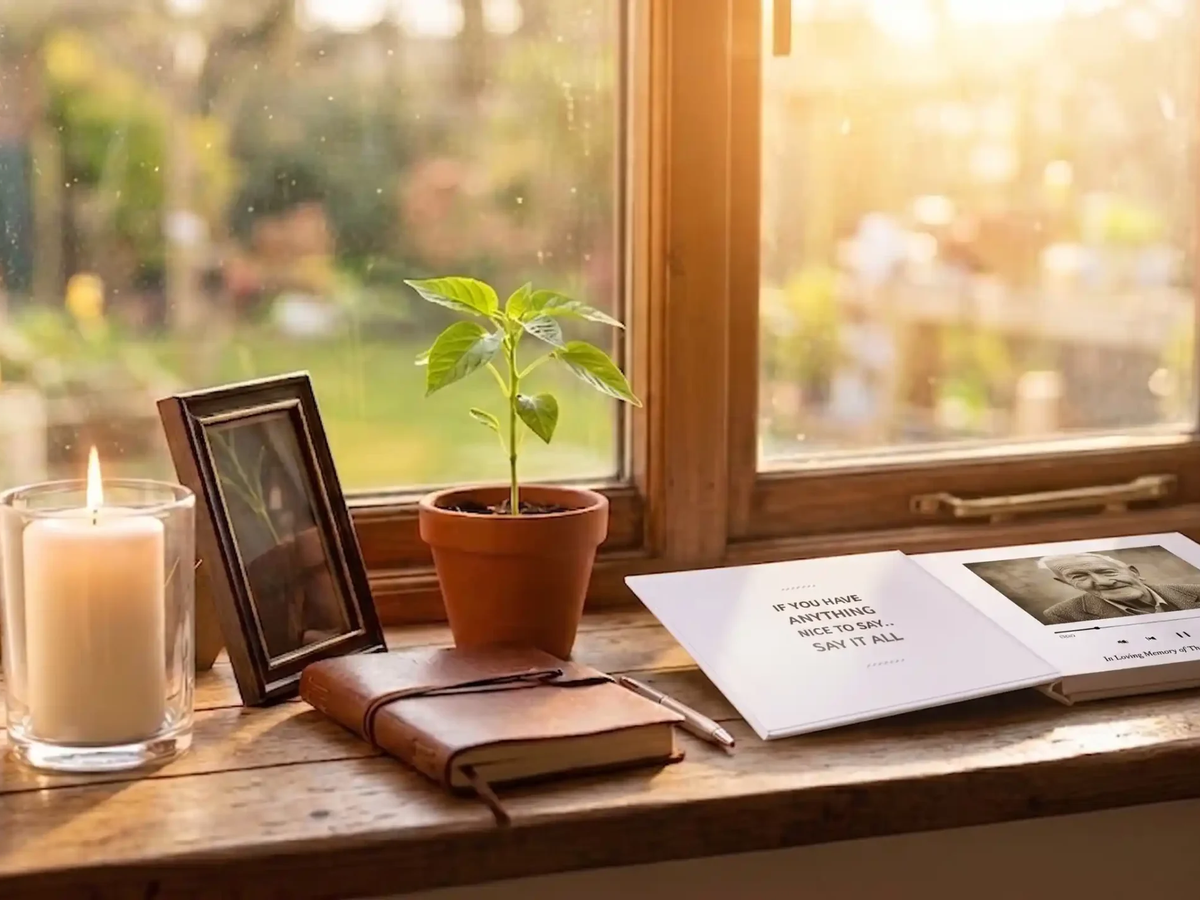
Keeping a loved one’s memory alive is about building habits and objects that return you to who they were over weeks and years, not just in the first weeks of grief. The 15 ideas below range from daily rituals to physical keepsakes to living traditions that grow with your family over time. Each one is chosen because it holds meaning across the long stretch of mourning, not just the acute early days.
Why Does Keeping Someone’s Memory Alive Matter for Grief?
Grief researchers at What’s Your Grief describe continuing bonds as a healthy part of mourning: the process of maintaining a living relationship with the person who has died rather than cutting it off. Remembering someone who died is not a failure to move on. It is a form of love that changes shape over time.
The Hospice Foundation of America notes that rituals of remembrance, especially shared ones, support grief processing for entire families and not just individuals. When a family builds practices together around honoring a loved one, the memory becomes part of the family’s culture rather than a private wound.
Studies consistently show that meaningful, ongoing remembrance rituals correlate with lower rates of complicated grief. The practices below are concrete enough to start this week.
See also: How to Honor the Memory of a Loved One
What Are the Best Ways to Keep a Loved One’s Memory Alive?
1. Create an Annual Remembrance Day
Choose the person’s birthday, the anniversary of their death, or another meaningful date and mark it with a consistent ritual: a meal they loved, a walk in a place they frequented, or a gathering where everyone shares one memory. Consistency is what turns a one-time gesture into a tradition.
Best for: Families spread across different locations who want a shared anchor date.
Why it works: Annual rituals create a structure for grief that does not require constant effort. The date does the work of bringing people together, and the ritual does the work of keeping the memory present.
See also: Death Anniversary Ideas That Actually Help
2. Plant Something That Grows
A tree, a perennial garden bed, or a potted plant named for the person gives grief something to tend. Each time it blooms or branches, it returns you to them without requiring a formal ritual.
Best for: Families who want a living memorial that changes with seasons and years.
Why it works: Growth is the opposite of loss. Tending something alive is an act of keeping memories alive that involves the hands and the body, not just the mind.
3. Cook Their Recipe on Repeat
Ask everyone who loved them to write down one recipe they associate with the person. Compile those recipes into a printed or digital booklet and commit to cooking at least one of them at every significant family gathering. The smell and taste of familiar food carries memory the way almost nothing else does.
Best for: Families where food was central to the person’s identity or to shared time together.
Why it works: Sensory memory is among the most durable kinds. A dish tied to a specific person keeps them present in a physical, not just conceptual, way.
4. Build a Video Tribute That Keeps Growing
A group video that collects messages from everyone who knew the person is one of the most thorough ways to memorialize meaning because it captures voices, faces, and specific memories that no single person could hold alone. Unlike a printed album or a static keepsake, a video tribute can be added to on anniversaries and holidays as new memories surface.
Tribute is a group video gift platform that lets you collect personal video messages from friends, family, and community into a polished memorial montage. It works by sharing a link: contributors record from any device, no app needed, and Tribute compiles everything automatically. The Tribute Video Book, a linen-bound hardback with a 7-inch screen, plays the video automatically when opened and sits on the mantel so the tribute stays visible rather than buried in a folder.
Unlike a static photo album that captures only what was photographed, a video tribute captures what was felt and said. Unlike a single eulogy written by one person, a group video holds the full breadth of how a person was known.
Best for: Families with contributors spread across different cities or countries, and for anyone who wants a keepsake that can grow with the family over time.
Why it works: A living, addable keepsake keeps honoring a loved one as an active practice rather than a one-time event. Families can add new messages on the first anniversary, at the holidays, and whenever someone has a memory they want to preserve.
👉 Start a group video tribute — free to start, no app needed
See also: How to Preserve a Loved One’s Legacy
5. Write Letters to Them
Set aside time once a month or once a year to write a letter to the person you lost. Tell them what happened, what you wish they had seen, and what you still find yourself wanting to ask them. The letters are not for sending. They are for you.
Best for: People who process grief through writing and who feel the loss of conversation most sharply.
Why it works: Letter writing keeps the relationship active without requiring an audience. Over years, the letters become a record of how you have changed and how the relationship has continued to shape you.
6. Establish a Scholarship or Named Fund
A scholarship in their name, even a small annual gift to a cause they cared about, creates an external record of who they were that extends beyond the family. Many community foundations can administer a named fund starting at modest amounts.
Best for: Families who want a public record of the person’s values and a way for the community to participate in remembering them.
Why it works: Named giving connects the person’s memory to their values rather than just their biography. Every year the fund operates, their priorities continue to have impact in the world.
7. Carry One of Their Objects
A watch, a piece of jewelry, a small tool, or any object the person used regularly can become a physical carrier of memory. The object does not need to be valuable. It needs to be familiar.
Best for: People who want an everyday, private way of staying connected to the person they lost.
Why it works: Objects carry associative memory in a way that photographs and words do not. Handling something they handled returns you to the texture of who they were.
8. Share Their Stories Out Loud
Make a habit of telling stories about the person at family dinners, to children who did not know them, and to anyone who asks how you are doing. The stories do not have to be polished. The act of telling them keeps them from fading.
Best for: Families with young children who will grow up knowing the person only through stories.
Why it works: Oral history is how communities have preserved their dead for as long as humans have grieved. A story told out loud carries more than the facts it contains.
See also: Memorial Keepsake Ideas Worth Making
9. Build a Memory Box Together
Gather the family and ask each person to contribute one object, one photo, and one written memory to a shared box. Seal it and open it together one year later. The act of building it is as important as what ends up inside.
Best for: Families with children and for households where multiple people are grieving the same person differently.
Why it works: A shared physical project channels early grief into something tangible. Opening it a year later shows the family how much has shifted and how much remains.
10. Play Their Music
Build a playlist of music they loved and return to it on meaningful dates. Share it with anyone who wants to add to it. Music carries emotional memory in the most direct possible way, faster than a photograph, more specific than a written description.
Best for: Anyone who shared music with the person or who connects their relationship to specific songs.
Why it works: Auditory memory is stored differently than visual or verbal memory and tends to be more resistant to fading. A song associated with a person can return them to you years after other memories have softened.
11. Volunteer in Their Name
Choose a cause the person cared about and spend time volunteering on their birthday or on a meaningful anniversary. Bring others if you can. The act of doing something in their name gives remembering someone who died a forward motion.
Best for: People who find comfort in action and who want to extend the person’s values beyond the family circle.
Why it works: Service in someone’s name connects grief to purpose. It transforms loss into a reason rather than only a weight.
12. Keep a Photo Visible, Not Stored
Choose one photo and put it somewhere you see it daily: the kitchen, the entryway, the desk. Not in an album. Not in a folder. Somewhere it is part of the room. Visibility is a form of honoring a loved one that costs nothing and requires nothing except a frame.
Best for: Everyone, but especially for people who worry that life moving forward means forgetting.
Why it works: A visible photo keeps the person in the daily visual field without requiring a formal act of remembrance. They become part of the texture of ordinary days.
13. Create a Memorial Garden or Space
Designate a corner of your yard, a windowsill, or a shelf as a dedicated memorial space. Include objects, plants, and photos that represent the person. Tend to it as you would tend to a relationship.
Best for: People who need a physical place to go when they want to feel connected to the person they lost.
Why it works: A dedicated space makes the act of remembrance intentional. Going to that place becomes a ritual that signals to your nervous system: this time is for them.
See also: Death Anniversary Ideas That Actually Help
14. Interview the People Who Knew Them
Ask the oldest members of the family, childhood friends, and long-time colleagues to sit down and talk about the person. Record the conversation on your phone. You are preserving a version of them that only those people carry, and that version will not always be available.
Best for: Families with elderly relatives who are the last living keepers of certain memories.
Why it works: Each person who knew the deceased carries a version of them that no one else holds. Collecting those versions is how a full portrait gets preserved rather than only the version the immediate family knew.
15. Gather the Family on Their Birthday
Choose the birthday rather than the anniversary of the death as the primary gathering date. It shifts the emotional center from loss to life. Celebrate with food they loved, stories told at the table, and whatever ritual has grown most meaningful to your family over time.
Best for: Families who want a remembrance tradition that is celebratory rather than primarily sad.
Why it works: The birthday gathers everyone around who the person was rather than around the fact of their absence. The mood is different and so is the memory it creates.
How Do These Practices Help Across Years of Grief?
The first year of grief is often the most structured, with formal services and rituals already in place. The harder work is years two through ten, when the formal supports have ended but the loss is still present. The practices above are chosen because they scale with time: a planted tree grows, a video tribute gets added to, a recipe gets passed to children who never met the person.
Keeping memories alive is not a project you complete. It is a way of continuing a relationship in the only form still available. The most consistent families build two or three small practices into their regular calendar rather than trying to do everything at once. Start with what feels most natural and let the others come with time.
👉 Collect everyone’s memories in a video tribute that lasts
Frequently Asked Questions About Keeping a Loved One’s Memory Alive
How do you explain keeping someone’s memory alive to young children?
Tell children that remembering someone is how we keep loving them after they are gone. Give them a specific, concrete job: tending a plant, keeping a photo, telling a story at dinner. Children understand love through action better than through abstraction.
Is it healthy to think about someone who died every day?
Yes. Grief research consistently supports continuing bonds with the deceased as healthy rather than pathological. Daily remembrance is not a sign of inability to move forward. It is a sign that the relationship was real and significant. The goal of grief is not to stop thinking about the person but to carry them without being unable to function.
What do you do when family members grieve differently?
Acknowledge that there is no correct way to remember someone who died. Some people need active rituals; others need quiet and privacy. Choose shared practices that work across different styles, like a birthday dinner or an annual donation, and allow individual practices to coexist. The What’s Your Grief website has extensive guidance on navigating family differences in mourning.
How do you keep a loved one’s memory alive when you live far from family?
Digital tools make distance less of a barrier than it once was. A shared playlist, a group video tribute, a family recipe document shared online, or a group call on the person’s birthday can connect family members across distance around shared remembrance. A video tribute platform like Tribute lets contributors record from anywhere and add messages over time without coordinating schedules.
What is the difference between grieving and honoring a loved one?
Grieving is the internal emotional process of adapting to loss. Honoring a loved one is the active practice of keeping their memory present through ritual, objects, stories, and shared time. The two are not the same, though they often happen together. Honoring practices can give grief a direction when the internal process feels formless.
How do you keep memories alive for children who never met the person?
Stories, photos, objects, and the person’s recipes are the primary tools for preserving someone for children who did not know them. A video tribute that captures the voices of people who did know them gives children something close to firsthand experience. The goal is to make the person feel real and specific rather than like a general concept of “someone who died.”
How long should you actively work to keep someone’s memory alive?
There is no end date. Many families maintain remembrance practices for decades, and the practices often outlive the original mourners when they get passed to younger generations. The shape of the practice changes over time, but the impulse to keep someone present is a normal and lifelong part of loving them.
Where Do You Start When Everything Still Feels Raw?
Start with one thing. The easiest practice from the list above is the one that requires no planning: put a photo somewhere you will see it every day. That single act is enough for the first week. The recipes and rituals and annual gatherings can follow when you have the space to build them.
Honoring a loved one is not a task to complete before grief ends. It is how you carry the relationship forward into a life that still has time in it. The love does not go anywhere. You just find it new places to live.
See also: How to Preserve a Loved One’s Legacy for Future Generations


