
How to Honor the Memory of a Loved One: The Complete Guide (2026)
Honoring the memory of a loved one means finding ways — personal, communal, or quiet — to acknowledge that they mattered, that their life had weight and meaning, and that the love you shared does not end because they are gone.
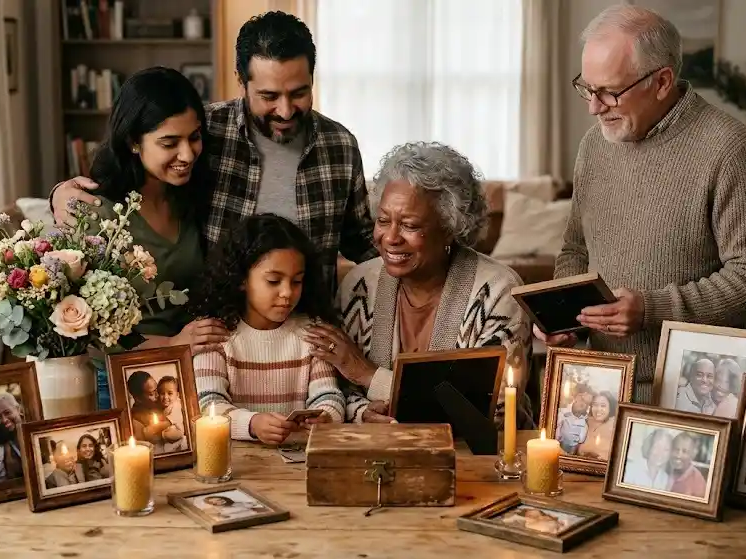
Honoring the memory of a loved one means finding ways — personal, communal, or quiet — to acknowledge that they mattered, that their life had weight and meaning, and that the love you shared does not end because they are gone. There is no single right way to do this. Some people find comfort in gathering with others; some need solitude and small private rituals. Some need to act, to build something, to give somewhere in their person’s name. What follows is a collection of more than 50 approaches — not a checklist to complete, but a menu to return to whenever you feel ready.
Grief does not follow a schedule, and honoring someone’s memory is not a one-time event. It is something that can happen in the weeks after a loss, and again on a birthday years later, and again on an ordinary Tuesday when something small reminds you of them. This guide is designed to be that kind of resource — something you can return to in different seasons of grief and find something useful each time.
Before diving in: not every idea here will fit every loss, every relationship, or every person reading this. A few will feel exactly right. Others will feel wrong for now and possibly right later. Some may never feel right at all, and that’s completely okay. Use what helps. Leave the rest.
1. Memorial Gatherings and Services: How Do You Bring People Together to Remember?
Coming together to grieve is one of the oldest human acts. It tells everyone present: this person was loved, this life mattered, and we are not alone in feeling its loss.
Hold a Celebration of Life
A celebration of life shifts the focus from mourning to honoring — it centers what the person loved, how they lived, and the joy they brought others. Unlike a traditional funeral, it can happen weeks or months after a death, giving the family time to plan something that truly reflects the person. Explore celebration of life ideas for inspiration, from backyard gatherings to destination events. If you’re deciding on format, see our guide to celebration of life vs. funeral for a side-by-side comparison.
Best for: Families who want to emphasize joy and story alongside grief.
Why it works: It creates space for laughter and memory-sharing that a formal service sometimes doesn’t allow.
Plan a Memorial Service
A traditional memorial service provides structure during a disorienting time. A thoughtful memorial service program — printed or digital — gives attendees something to hold and keep. The service doesn’t have to be religious or formal; it simply needs to feel true to who the person was. If you need a framework, our guide on how to plan a celebration of life covers logistics from venue to speakers to music.
Best for: Immediate family and close friends who need a dedicated time and space to grieve together.
Host a Virtual Memorial
When family and friends are scattered across cities or countries, a virtual memorial service makes it possible for everyone to be present. Online memorials have become increasingly meaningful — they allow people who genuinely cannot travel to speak, share stories, and grieve in real time with the community. They can stand alone or complement an in-person service.
Best for: Geographically dispersed families, or for honoring someone whose community was largely online.
Create a Memory Table
A memory table — displayed at a service or at home — brings together objects that tell a life’s story: photographs, meaningful items, a favorite book, a worn hat, a handwritten recipe. It invites guests to stop, look, and remember specific moments. It also gives children and older adults a way to engage that doesn’t require speaking.
Best for: Any service or gathering; particularly effective when the guest list spans multiple generations.
Attend the Service Even When It’s Hard
Sometimes honoring someone means showing up even when geography or circumstances make it difficult. If you can’t attend the funeral in person, there are still meaningful ways to participate — sending a message that will be read aloud, contributing to a group video, or watching a live stream of the service.
2. Creating Lasting Keepsakes and Tributes: What Can You Make to Keep Them Close?
Objects carry memory. The right keepsake becomes something a family returns to again and again — something that keeps a person’s presence tangible across time.
Commission a Tribute Video
A tribute video is among the most emotionally resonant keepsakes a family can create. It weaves together photos, video clips, and messages from everyone who loved the person — capturing voice, movement, laughter, and story in a way that photographs alone cannot. For practical guidance, see our step-by-step guide on how to make a memorial video. If you want to gather contributions from people in different locations, a group memorial video makes that collaborative process straightforward.
When Dan Fredinburg — a Google.org product manager and adventurer — died on April 25, 2015, in the Nepal earthquake while climbing Mount Everest, friends and colleagues from around the world contributed video clips and messages to a Tribute video in his memory. The result captured his spirit — the stories, the humor, the shared adventures — in a form his family could return to whenever they needed to feel close to him. It also gave a dispersed community a way to grieve and celebrate together across distance. That video is a reminder of what collective memory-keeping can do when people are too far apart to gather in one room.
If time is short, a last-minute memorial video is more achievable than you might think. Browse memorial video examples to see the range of what’s possible.
Best for: Any loss; especially powerful when contributors are spread geographically.
Why it works: Video captures what photos can’t — the sound of a voice, the way someone laughed, the specific energy they brought to a room.
The Tribute Video Book
If you want to go beyond a digital file, Tribute’s Video Book is a hardcover keepsake with a built-in 7-inch HD screen that plays the tribute video. It sits on a shelf like a book, opens like a book, and plays like a screen. For families who want something physical to pass down, something that doesn’t require a login or a device, it functions as a modern heirloom — a memory book that moves and speaks.
Best for: Families who want a physical, permanent memorial that can be passed between generations.
Why it works: It bridges the gap between a traditional photo album and digital media — tactile and lasting.
Create a Funeral Video
A funeral video is a dedicated visual tribute played during or after the service itself — typically combining photos, short video clips, and music to tell a life story for the gathered mourners. It sets the emotional tone of a service and gives attendees something to watch together when words feel insufficient.
Build a Funeral Slideshow
A funeral slideshow — displayed at a service or shared afterward — gives guests a visual journey through a life. Paired with music that meant something to the person, it can be deeply moving. Choose photos from across the decades: childhood, young adulthood, relationships, the everyday moments, not just the formal occasions.
Choose Meaningful Memorial Gifts
Finding the right memorial gift ideas for others in your circle — or for yourself — can be a form of honoring someone. Personalized memorial gifts carry more weight than generic sympathy items. Memorial keepsake ideas range from custom jewelry made from ashes to hand-cast impressions of a handprint to a framed collection of handwritten letters. See specific guides for memorial gifts for loss of mother, memorial gifts for loss of father, sympathy gifts for loss of spouse, and memorial gifts for loss of child.
Preserve a Digital Memorial
A digital memorial — a dedicated page, website, or online space — gives people a place to gather, share memories, and leave messages that can be visited by anyone, anywhere, at any time. It can include photos, stories, videos, and written tributes, and it remains accessible long after the formal services have passed.
Create a Memory Book or Scrapbook
A handmade memory book — filled with printed photos, handwritten notes from family members, ticket stubs, recipes in their handwriting, drawings from grandchildren — is something tactile and irreplaceable. It doesn’t need to be polished. The handwritten notes are often more meaningful than anything professionally printed.
3. Honoring Their Values Through Action: How Do You Carry Their Legacy Forward?
For many people, the most meaningful way to honor someone is to do something in their name — to let their values outlive them through action in the world.
Make a Memorial Donation
Memorial donations in lieu of flowers direct resources toward causes the person cared about. A donation to a hospital where they received care, a charity they supported, or an organization aligned with their values can feel like extending their reach in the world. It also gives others a concrete way to honor them.
Best for: People who were involved in causes, had a serious illness, or expressed strong values during their lifetime.
Why it works: It transforms grief into impact, which can give mourners a sense of purpose during a powerless time.
Establish a Scholarship
A named scholarship — at a school they attended, a program they cared about, or in a field they worked in — can support young people for decades. Even a small annual scholarship, funded by family and friends, carries a person’s name and story into communities they may never have known. Contact a school’s foundation office to learn how to set one up.
Plant Something in Their Name
A living tribute — a tree, a garden, a perennial plant — marks a physical place where people can go to feel close to the person. Many parks, community gardens, and conservation organizations accept memorial donations in exchange for planting. A tree planted at a meaningful location becomes a landmark of love.
Best for: People who loved nature, gardening, or the outdoors.
Why it works: Something that grows over time mirrors the ongoing nature of memory itself.
Volunteer for a Cause They Believed In
Give your time to an organization your loved one supported — or would have supported. If they were passionate about literacy, mentor a child. If they cared about food insecurity, volunteer at a food bank. The act of showing up for others in their name is a form of honoring who they were.
Create a Memorial Fund or Foundation
For families with the capacity and desire, a named foundation or memorial fund can channel ongoing giving toward a cause. This is a larger undertaking, but for someone whose loss has galvanized a community, it can become something that takes on a life of its own.
Honor Their Work or Craft
If your loved one had a trade, a craft, or a creative practice, find a way to continue or celebrate it. Commission a piece from an artisan who works in their tradition. Finish a project they started. Donate their tools to someone who is learning. Support organizations in their professional field.
4. Everyday Remembrance Rituals: How Do You Keep Them Present in Daily Life?
Grand gestures matter, but so do small, quiet ones. Many people find that the rituals that sustain them are not the big memorial events — they are the small daily or weekly acts that weave a person’s memory into ordinary life.
Light a Candle
A candle lit on a birthday, an anniversary, or simply on a hard day is a simple ritual with ancient roots. It marks a moment as sacred without requiring words or explanations. Some families keep a dedicated candle for this purpose; others light one at dinner on the anniversary of a loss.
Cook Their Recipe
Food is memory. Making a dish that belonged to someone — their Sunday gravy, their lemon cake, their chili — brings them into the kitchen in a way that is immediate and sensory. Share the recipe with younger family members. Write it down exactly as they made it, with their notes and their quirks included.
Carry a Small Object
A small item — a coin, a stone, a piece of their jewelry, a button from their coat — kept in a pocket or on a keychain is a form of physical connection. Many grieving people describe a quiet comfort in being able to touch something that belonged to the person they’ve lost.
Observe Remembrance Rituals After Loss
Creating intentional rituals around grief — a walk on a meaningful anniversary, a meal shared with family on their birthday, a moment of silence at a specific time — gives grief a container. It says: here is the time set aside for this. It can make the rest of life feel more manageable.
Why it works: Rituals reduce the randomness of grief. They give mourners agency and a sense of structure when loss feels chaotic.
Keep a Journal of Memories
Write down memories as they surface — before they fade. A sentence, a paragraph, a page. What did they smell like? What did they say when they were frustrated? What was their laugh? These details slip away over time, and capturing them preserves the texture of a person in a way that formal tributes often don’t.
Visit a Meaningful Place
Return to places that mattered to them — a park they loved, a restaurant they frequented, a body of water where you went together. You don’t need to do anything there. Simply being in a place where they were is a form of honoring the life they lived.
Say Their Name
This sounds simple, but it matters deeply: say their name out loud. In conversation. In toasts. In prayers. In passing. Many bereaved people describe the fear that others will stop mentioning the person they’ve lost — that they will become invisible. Saying their name keeps them present.
5. Honoring Milestones and Anniversaries: How Do You Mark the Days That Hurt Most?
Grief intensifies around dates — birthdays, wedding anniversaries, the anniversary of the death, holidays. These days don’t have to be endured; they can be shaped into something intentional.
Mark the Death Anniversary
Death anniversary ideas range from deeply private (lighting a candle alone) to communal (gathering the family for a meal). What matters is that the day is not simply absorbed into an ordinary week. Give it shape. Acknowledge it. Some families visit a grave; others release lanterns; others simply have dinner together and tell stories.
Best for: Anyone navigating the first several anniversaries of a loss, which research consistently identifies as particularly difficult.
Why it works: Acknowledging a hard day — rather than trying to push through it — tends to reduce its power to ambush you.
Celebrate Their Birthday
A loved one’s birthday after their death is often a grief minefield. One way to navigate it: turn it into a celebration of who they were rather than a mourning of their absence. Bake their favorite cake. Donate to a cause in their name. Gather the people who loved them for a meal. It won’t erase the sadness, but it gives the day a purpose beyond grief.
Honor Them on Major Holidays
The first holiday season after a loss is often described as one of the hardest periods of grief. Set an intentional place for them at the table. Hang their ornament on the tree. Share a story about what the holiday was like with them in it. Honoring their absence rather than pretending it isn’t there is almost always healthier than avoidance.
Mark Their Milestones From Afar
If your loved one died before reaching milestones they cared about — a grandchild’s graduation, a family reunion, a significant anniversary — find a way to include them. Leave a seat. Wear a color they loved. Read a passage they would have chosen. Their absence from the milestone is real; it helps to name it rather than leave it unspoken.
6. Digital and Video Tributes: How Do Technology and Media Serve Memory?
We live in an era where most people leave behind a digital presence — videos, voice messages, social media posts, photos. These materials are resources for memory-keeping that previous generations didn’t have.
Make a Memorial Video
A well-crafted memorial video does something no other medium does: it gives motion and voice back to someone who has died. Choosing the right memorial video songs is as important as the visuals — music shapes the emotional register of the entire piece. A memorial video maker tool can help even non-technical family members create something beautiful. If budget is a concern, a free memorial video maker is a solid starting point, or you can go the DIY memorial video route with step-by-step guidance.
Preserve Their Voice and Video Messages
If you have voicemails, videos, or audio recordings of your loved one, back them up immediately and in multiple places. These recordings are irreplaceable. Cloud storage, external hard drives, and shared family folders all provide redundancy. Consider transcribing voice messages so the words are preserved even if the recording degrades.
Archive Their Social Media
Most social media platforms allow you to memorialize or archive an account after death. Facebook, Instagram, and others have specific policies and processes for this. Consider downloading a full archive of their posts, photos, and messages while you still have account access — policies and platforms change, and materials can be lost.
Create a Tribute Page or Memorial Website
A dedicated online page brings together photos, videos, stories, and condolences in one place. It gives people who couldn’t attend services a space to participate in the community of grief. It also serves as a permanent record that can be shared with future generations. See our guide on digital memorial options for a range of platforms and approaches.
Share a Tribute to a Friend Who Passed Away
Writing and sharing a public tribute — on social media, in a newsletter, in a community publication — honors a person while also giving others permission to mourn. It says: this person was here and mattered, and the people who loved them want the world to know.
Consider the Tribute Video Book
For families who want the video tribute to live as a physical object rather than a file on a phone, the Tribute Video Book provides exactly that — a hardcover keepsake with a built-in screen that plays the tribute video, designed to sit on a bookshelf and be passed between family members for years to come.
Best for: Families who want something permanent that doesn’t require a device or internet connection.
Why it works: It treats a digital tribute with the permanence and dignity of a physical heirloom.
7. Honoring Through Writing and Words: How Can Language Carry Memory?
Words are among the most durable forms of tribute. A well-written eulogy, a heartfelt letter, a collection of condolence messages — these things are read and reread for years.
Write and Deliver a Eulogy
A eulogy is one of the most lasting gifts you can give a family. It doesn’t need to be eloquent — it needs to be true. Our guide on how to write a eulogy walks through every step, from gathering memories to structuring the talk to managing nerves at the podium. Browse eulogy examples for models across different relationships and tones.
Best for: Anyone asked to speak at a service — or who wants to speak even when not asked.
Why it works: A personal eulogy anchors a service in specificity and truth, and families often describe it as the part they remember most.
Write an Obituary
An obituary is both a public announcement and a permanent record. A good one is more than dates and survivors — it captures a person’s character, their relationships, the things that made them distinctly themselves. Our guide on how to write an obituary covers both format and tone. The National Funeral Directors Association also offers resources for families navigating this process.
Send Condolence Messages
If you are supporting someone else in grief, finding the right words can feel paralyzing. Our guide to condolence messages and what to write in a sympathy card offers language for dozens of different situations. The most important principle: say the person’s name, acknowledge the specific loss, and don’t try to fix the grief. See also our guide on what to say to someone who is grieving — being present, honest, and specific matters more than being perfectly articulate.
Read or Write a Poem
Poetry has always been a language of grief — it compresses feeling into a form that can be carried in memory. Reading a meaningful funeral poem at a service, or writing one even if you’ve never written poetry before, is a legitimate act of tribute. The imperfect, personal poem written by someone who loved the person is often more moving than the polished professional one.
Collect Quotes That Remind You of Them
Gather in loving memory quotes that capture something true about the person or about grief itself. Frame them. Include them in service programs. Use them as in memory of captions on social media posts marking anniversaries. Words chosen with care carry weight.
Write a Letter to Them
Some people find it profoundly helpful to write letters to the person they’ve lost — telling them what happened after they died, how the family is doing, what they wish they’d said. These letters don’t need to go anywhere. They are a form of continued conversation that many grief therapists recommend as a healthy processing tool. For more on grief practices, What’s Your Grief is an excellent evidence-based resource.
Speak at the Celebration of Life
Knowing what to say at a celebration of life — whether you’re the organizer or a guest — helps transform a gathering into something genuinely meaningful. Stories are always better than abstractions. Tell the specific one: the trip, the argument that became a family joke, the thing they always said.
8. Honoring Through Creativity: What Can You Make as a Form of Tribute?
Creative expression is one of the most ancient forms of grief processing — and one of the most lasting forms of memorial.
Commission or Create a Portrait
A painted, drawn, or photographed portrait — made by a family member or commissioned from an artist — becomes an heirloom. It captures a specific image of the person that will outlast any photograph in terms of cultural staying power. Many artists specialize in memorial portraits, and the result can be displayed in a family home for generations.
Best for: Families with an appreciation for visual art; also meaningful as a gift to elderly parents who lose a child.
Why it works: Art communicates feeling that photography sometimes doesn’t — it’s an interpretation, an act of love rendered visible.
Write a Song or Record Music
If you or someone in your family is musical, write a song for them. It doesn’t need to be professionally recorded. A simple acoustic song performed at the memorial, or recorded on a phone and shared with family, can be more meaningful than any commercially produced piece. Music was how humans expressed love and loss long before language.
Create a Photo Book
A professionally printed photo book — organized chronologically or thematically — is a tactile, beautiful keepsake. Services like Artifact Uprising, Chatbooks, or Shutterfly make this easier than ever. Include photos from family members who might not otherwise be represented in the archive — grandchildren’s phone photos, friends’ candid shots, workplace pictures.
Make Art in Their Medium
If your loved one painted, took photographs, knitted, woodworked, or created in any medium, make something in that medium yourself. You don’t need to be skilled. The act of sitting at their wheel, or picking up their brushes, or working from their pattern is a form of honoring their practice — even if the result is imperfect.
Plant a Garden in Their Name
Design a garden — even a small container garden or window box — around plants they loved. Include a small marker or stone with their name. Tend it. A garden requires presence and attention, which makes it an ongoing form of memorial rather than a one-time act.
Create a Quilt from Their Clothing
A memory quilt made from pieces of a loved one’s clothing — their flannel shirts, their concert tees, their work uniforms — is a uniquely tactile keepsake. Many quilters specialize in this kind of memorial work. The quilt becomes something to sleep under, to hold, to wrap around yourself on hard days.
9. Involving Family and Community: How Do You Honor Someone Together?
Grief is both deeply personal and deeply communal. Bringing others into the process of honoring a loved one can lighten the weight and create something larger than any individual could build alone.
Organize a Group Memorial Video
A group memorial video invites everyone who loved the person — family, friends, colleagues, neighbors — to contribute a clip, a story, or a message. The result is something no single person could have created: a mosaic of love from the full breadth of someone’s life. It is particularly powerful because it shows the person’s loved ones all the other people who also loved them.
Host a Memory-Sharing Gathering
A memory-sharing event — informal, perhaps at someone’s home — gives attendees a structure for story-telling. Provide prompts: “Tell me something they taught you.” “What made them laugh?” “What would they say right now?” These conversations often surface stories that even close family members have never heard.
Involve Children Meaningfully
Children grieve differently than adults and need different forms of participation. Drawing a picture for the person, contributing a photo to the memorial, releasing a balloon, or planting a seed in the garden are all age-appropriate ways for children to participate in honoring someone. Their inclusion matters — both for their own grief and for the collective memory of the family.
Support Others Who Are Grieving
One powerful way to honor someone is to support others who loved them. Grief can be isolating — check in on the friends and siblings and colleagues who may not be in the center of the family’s grief circle but who are struggling nonetheless. Find thoughtful suggestions in our guides on gifts for someone who lost a parent, sympathy gifts for a coworker, and what to send a grieving family.
Coordinate a Community Response
When a loss affects a whole community — a school, a workplace, a neighborhood — coordinating the response matters. Meal trains, shared memorial funds, organized childcare for the bereaved family: these acts of collective support honor the person by surrounding those they loved with care.
Honor Someone Who Couldn’t Be There
If someone important to the grieving family cannot attend the memorial — due to distance, illness, incarceration, or other circumstances — find a way to bring the memorial to them. Share a recording, send a printed program with handwritten notes, organize a small gathering in their location. Grief at a distance is still grief.
10. Honoring Specific Relationships and Losses: How Do Different Losses Call for Different Approaches?
Every relationship is different, and the way you honor someone is shaped by who they were to you specifically.
Remembering a Grandparent
Grandparents often hold a family’s living history. Ways to remember a grandparent often involve preserving that history — collecting their stories, digitizing their photos, making their recipes, documenting what they remembered of earlier generations. A grandparent’s death can close a window on family history unless someone actively works to keep it open.
Honoring a Sibling
Sibling loss is among the least-discussed forms of bereavement — siblings are sometimes called “forgotten mourners,” overlooked because attention focuses on parents or spouses. Honoring the memory of a sibling requires naming that specific, irreplaceable relationship. No one else in the world shared your childhood the way they did. Honor that.
Honoring a Veteran
The loss of someone who served carries particular weight — a whole category of experience and sacrifice that many civilian family members may not fully know. Our guide on how to honor a veteran who passed away covers military-specific tributes, grave registration, flag ceremonies, and ways to engage the veteran community in memorial activities.
Honoring a Pet
Pet loss is real grief, often disenfranchised by people who haven’t experienced the depth of the bond. Pet memorial ideas — from garden stones to custom portraits to memorial boxes — honor the relationship on its own terms without diminishing it.
11. Long-Term Legacy: How Do You Preserve Someone’s Memory Across Decades?
The most meaningful memorial work is often not what happens in the weeks after a death — it’s what happens in the years that follow. Long-term legacy projects give grief a constructive outlet and ensure that a person’s influence continues to grow.
Preserve a Loved One’s Legacy
Our guide on how to preserve a loved one’s legacy covers everything from oral history projects to memoir writing to legacy letters that future generations can read. A legacy preserved is a life extended — not in the magical sense, but in the real sense that their values, stories, and ways of being in the world continue to shape the people they loved.
Best for: Anyone who wants to ensure the person is known not just as “grandmother” or “the one who died young” but as a full human being with a specific life.
Why it works: Future generations don’t have to lose someone they never met. Legacy work makes that possible.
Create a Living Tribute
A living tribute is something that grows and continues beyond the immediate mourning period — an annual event, a community garden, an ongoing scholarship, a foundation. It gives the community around a loss a shared ongoing project, which research suggests helps sustain connection and reduces prolonged grief.
Keep Their Memory Alive Through Storytelling
Find and share ways to keep a loved one’s memory alive across years: tell their stories to children who are born after their death, include their name in family toasts, share a photo of them on social media on their birthday. The goal is to make them a continuing presence in the family’s ongoing story — not a closed chapter.
Use Celebration of Life Themes to Guide Annual Gatherings
Some families develop celebration of life themes for annual gatherings — a theme drawn from the person’s passions, a place they loved, a cause they championed. These gatherings become a tradition in their own right, and younger family members grow up knowing who this person was and why they mattered.
Oral History Recording
If your loved one is still alive and aging, or if there are elders in your family who knew the person well, record oral histories now. A simple phone recording of an older relative telling stories about the person who died can become one of the most precious documents in a family’s archive. Organizations like StoryCorps provide free tools and training for exactly this kind of recording.
12. Supporting Yourself and Others Through Grief: What Helps?
Honoring a loved one and caring for yourself are not separate projects. You cannot pour from an empty vessel, and grief is one of the most exhausting experiences a human being can go through.
Allow Yourself to Grieve Fully
Grief is not a problem to be solved or a phase to move through as quickly as possible. The Hospice Foundation of America emphasizes that grief is a natural response to loss — not a disorder, not a weakness, not something to be managed into the background. Give yourself permission to feel it fully, in whatever form it takes for you.
Seek Support When You Need It
Grief support comes in many forms: therapy, support groups, faith communities, trusted friends. If grief is interfering with your ability to function after several months, or if it is accompanied by thoughts of self-harm, please reach out to a mental health professional. There is no pride in suffering alone, and seeking help is entirely compatible with loving someone deeply.
Let Others Help
In the acute phase of loss, many people find it hard to accept help. Accept it anyway. Let someone bring a meal. Let someone sit with you without talking. Let someone help with logistics. Allowing others to show up is itself a form of honoring the relationships your loved one valued — and it keeps you connected at a time when isolation is dangerous.
Mark the Grief Milestones
The first birthday, the first holiday, the first anniversary — these are recognized grief milestones for good reason. Acknowledge them. Plan for them in advance if you can. Talk to others about what you’re anticipating. The dread before a difficult anniversary is often worse than the day itself, but having a plan helps.
Putting It Together: Where Do You Start?
If you’ve arrived at this guide in the immediate aftermath of a loss, the full scope of it can feel overwhelming. You don’t need to do all of this, or any of it, on a timeline. Start with one thing that feels true and manageable right now.
If you need something immediate: write down three specific memories of the person before the day is out. Those memories are the raw material for everything else — the eulogy, the tribute video, the memorial page, the letter to their grandchildren that hasn’t been written yet.
If you have a little more time and capacity: gather photos and video clips from the people in your circle and consider a group memorial video that brings everyone’s contributions together. Tools like Tribute make this process collaborative and accessible even for non-technical families — you don’t need editing skills to create something beautiful.
If you’re thinking long-term: the most lasting gift you can give to future generations is a preserved, documented account of who this person was — their voice, their stories, their values. Whether that takes the form of a video, a memoir, an oral history, or a simple collection of written memories, start now while the details are still sharp.
Whatever you choose: there is no wrong way to love someone after they are gone.
Frequently Asked Questions
What is the best way to honor the memory of a loved one?
There is no single best way — the right approach depends on the person who died, your relationship to them, your own grieving style, and the community around you. The most meaningful tributes tend to be specific and personal: they capture something true about who the person was, rather than reaching for generic gestures. That said, gathering loved ones to share memories, creating a lasting keepsake like a video or memory book, and doing something in their name — a donation, a scholarship, a volunteer commitment — are among the most commonly cited as meaningful across cultures and relationships.
How do you keep a loved one’s memory alive over time?
Keeping a loved one’s memory alive over time requires both ritual and documentation. Rituals — annual gatherings, candle-lighting on their birthday, cooking their recipe on a holiday — maintain an ongoing connection. Documentation — videos, recorded stories, written memories, preserved photographs — ensures that the specific texture of their life isn’t lost as the people who knew them age. Telling their stories to children and younger family members is one of the most important long-term memory-keeping practices.
Is it normal to feel like you’re forgetting details about someone who died?
Yes, and it is one of the most common and painful aspects of grief. Memory is imperfect and reconstructive — details fade over time, and the fear of losing the specifics of someone’s face, voice, or mannerisms is a nearly universal grief experience. This is exactly why memorial videos, oral histories, and written memory archives are so valuable: they capture details that human memory alone cannot hold. If you have recordings or videos of the person, preserve them urgently.
How do you honor someone’s memory when family members disagree about how?
Family disagreement around memorial practices is common and can be genuinely painful, particularly when it layers conflict on top of grief. A few principles that tend to help: focus on what the person would have wanted rather than what any individual family member prefers; allow multiple forms of tribute to coexist rather than insisting on a single approach; and recognize that different people grieve differently, and someone who wants a formal religious service and someone who wants an informal backyard gathering may both be honoring the same person sincerely. A mediator — a trusted family member, a funeral director, or a grief counselor — can help when conflict becomes significant.
What do you say when someone asks how to honor a loved one’s memory?
Start by asking what feels right to them. Honoring someone’s memory is deeply personal, and the best first step is usually identifying what form of tribute would have resonated with the person who died — what they valued, what they cared about, what made them feel loved. Then look for something that aligns with those values while also being genuinely sustainable for the people left behind. A tribute that everyone resents maintaining is not a tribute — it’s a burden. The best memorial practices are ones that feel like connection rather than obligation.
How can children be involved in honoring a loved one’s memory?
Children can and should be involved in age-appropriate ways. Younger children often do well with concrete, tangible activities: drawing a picture for the person, helping plant something in the garden, contributing a photo to a memory book, releasing a flower into a body of water. Older children can contribute stories to a memorial video, write something for a service, or participate in planning an annual memorial gathering. The key is not to shield children from grief entirely — research consistently shows that children who are included in family mourning processes develop healthier grief responses than those who are excluded from them.
When should you seek professional grief support?
Grief is a natural response to loss and doesn’t require professional intervention for everyone. However, it may be time to reach out to a grief counselor or therapist if grief is significantly interfering with daily functioning after several months; if you’re experiencing persistent thoughts of self-harm or suicide; if you find yourself unable to accept that the death occurred; or if you’re using substances to manage the pain. Grief support is also valuable as a proactive measure — you don’t have to be in crisis to benefit from talking with someone trained in bereavement. The Hospice Foundation of America’s website at hospicefoundation.org maintains a directory of grief support resources.
Looking for more specific guidance? Explore our full library of memorial resources, including guides to how to make a memorial video, celebration of life ideas, memorial gift ideas, how to write a eulogy, and how to preserve a loved one’s legacy — as well as relationship-specific guides for remembering a grandparent, honoring a sibling, honoring a veteran, and more.


