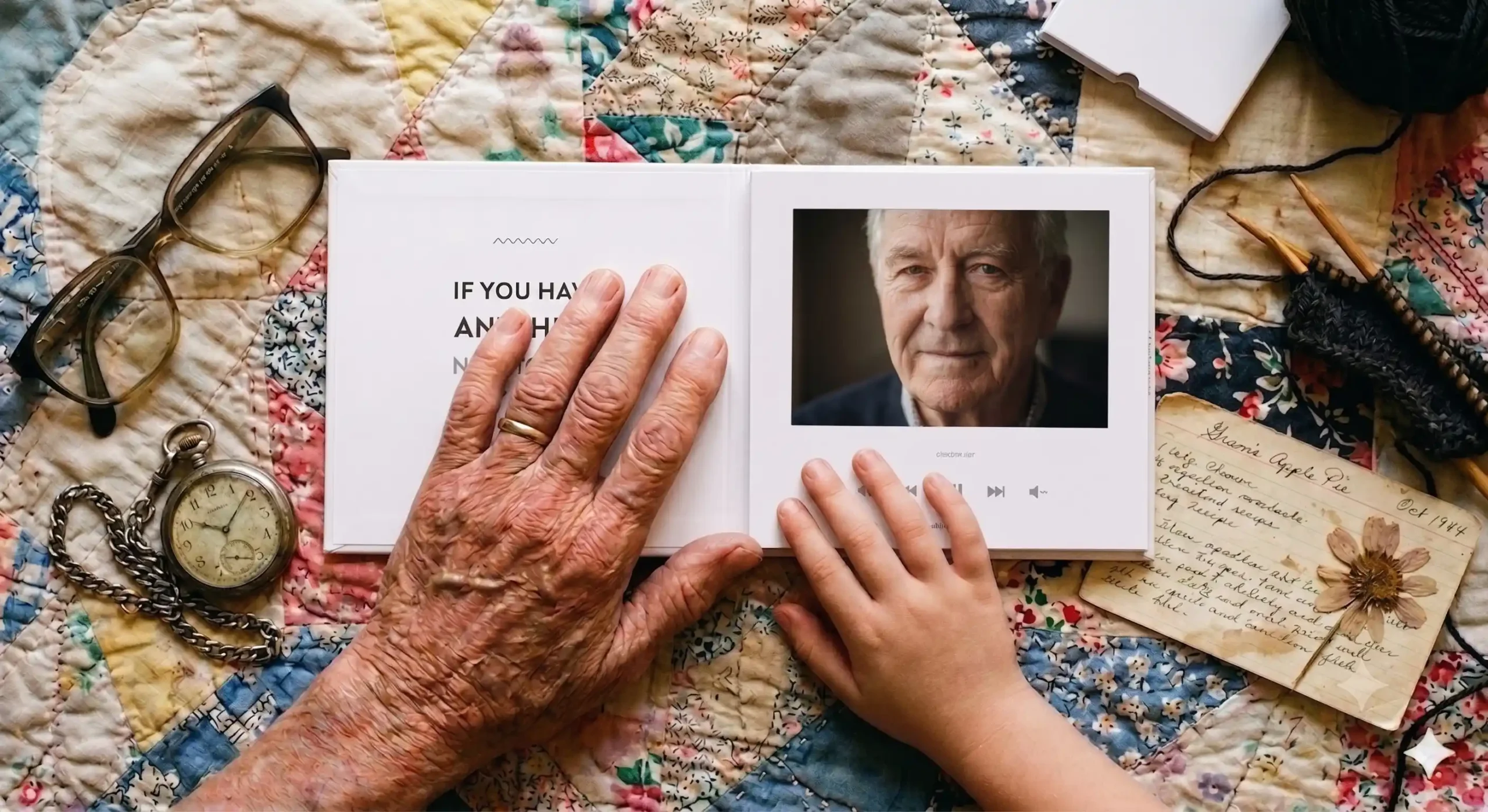
The most beautiful ways to remember a grandparent are the ones that keep something real of them alive: a recipe in their handwriting, a voice recorded by a grandchild, a quilt made from their clothes. These are the ways to honor a grandparent that pass meaning across generations rather than fading with time. The grandparent memorial that lasts is the one built from the actual textures of their life.
Why Does Remembering a Grandparent Feel So Important?
Grandparents are often the living link to family history. When they die, that link risks being lost unless someone makes a deliberate effort to hold onto it. The stories, the recipes, the sayings, the way they moved through the world: those things do not preserve themselves.
Research from the Hospice Foundation of America notes that ritual and remembrance are central to healthy grieving, particularly for children and young adults who may be experiencing a significant loss for the first time. Acts of remembrance give grief a shape and give the family a shared language for what they have lost.
What follows are ideas for ways to remember a grandparent that are personal, lasting, and something the whole family can take part in.
What Are the Most Meaningful Ways to Keep a Grandparent’s Memory Alive?
The most meaningful remembrance ideas share one quality: they are specific to the person. Generic gestures fade. A detail that was only true of your grandmother, the way she folded napkins, the phrase she used before every story, the garden she tended every spring, is something no one else will ever carry in the same way.
Preserve a Recipe in Their Handwriting
If your grandparent cooked, their recipe cards are primary documents. The handwriting alone carries something that a typed recipe cannot. If the original cards have been lost, ask cousins and aunts and uncles to photograph any they have saved.
Best for: Families with a cooking tradition or a dish that defined gatherings.
Why it works: A recipe in handwriting is both functional and irreplaceable. Every time someone makes the dish, they are connected to the person who taught them how.
Frame the original card, or have it printed large on canvas. Create a small cookbook with several of their recipes and give a copy to each grandchild. The act of making the food is itself a form of remembering.
Cook Their Signature Dish Together
Gather the family and make the dish they were known for. This is not about producing the perfect result. It is about recreating the process, the smell of a kitchen that mattered, the conversation that happened while something was cooking, the moment when you realize you remember more than you thought you did.
Best for: Families who can gather in person, especially in the months after a loss when the initial rituals are over and everyday life has resumed.
Why it works: Food memory is among the most durable forms of human memory. Cooking activates the recollection in a way that looking at photos does not.
Frame Their Handwriting
Letters, birthday cards, grocery lists, the note tucked inside a gift. Any document in their handwriting is a relic. Framing a piece of their handwriting and hanging it somewhere in your home is a quiet way to keep their presence in your daily life.
Best for: Any grandchild who has access to a letter, card, or written note.
Why it works: Handwriting is a physical trace of a person in a way that printed words are not. It is one of the few things that survives in a form that is genuinely unrepeatable.
Create a Memory Quilt From Their Clothes
A quilt made from a grandparent’s clothing, their shirts, their aprons, their favorite sweaters, is a physical object that carries texture, color, and scent in a way a photograph cannot. Many quilters and small studios offer memory quilt services if no one in the family sews.
Best for: Families who want a physical object to pass down.
Why it works: A memory quilt distributes the remembrance into the fabric of daily life. It is used, touched, and held, not stored.
See also: Ways to Keep a Loved One’s Memory Alive
How Can Every Grandchild Contribute to Remembering a Grandparent?
One of the most powerful ways to honor a grandparent is to collect what every grandchild remembers. Each grandchild knew a slightly different person. The grandmother who was patient with one grandchild was fierce with another. The grandfather who told the same stories to everyone told them differently each time. Those versions of the person are worth capturing before time blurs them.
A group video where every grandchild records their own memory, their own story, the one specific thing they will not forget, becomes a document of an entire life as seen from multiple angles. It is also something the family can return to in five years or twenty, when the details of the person have started to soften at the edges.
Tribute (tribute.co) is a group video gift platform that lets you collect personal video messages from friends, family, and community into a polished memorial montage. It works by sharing a link: contributors record from any device, no app needed, and Tribute compiles everything automatically.
For a grandparent memorial, the Tribute format is especially well suited to families spread across cities and countries. A grandchild in one city records a memory on their phone. A grandchild across the country records the next day. A great-grandchild records something short and sweet. The platform sends reminders to anyone who has not yet contributed, so the family organizer is not coordinating individually with a dozen people across multiple time zones.
Here is a short video showing how a Tribute memorial comes together:
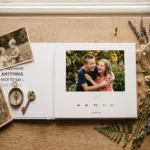
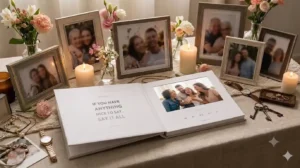
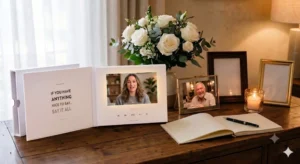
Unlike a shared photo album that requires someone to organize and upload, Tribute collects contributions automatically and assembles them into a finished video. Unlike a memory book that only those in the room can read, a Tribute video can be shared with family members anywhere in the world. The completed video can also be ordered as a Tribute Video Book: a linen-bound hardback with a seven-inch screen that opens and plays automatically, the kind of object that gets placed on a shelf next to the photo of them.
Tribute is free to start. More than 8 million messages have been sent through the platform, and 82 percent of recipients cry tears of joy when they receive a completed video.
ð Collect every grandchild’s memory in one video, free to start
See also: How to Make a Group Memorial Video
What Are Some Ways to Remember Grandma Specifically?
Remembering grandma often means holding onto the particular forms her care took. The objects in her kitchen. The songs she sang. The way she pronounced certain words. The advice she gave that seemed confusing at the time and obvious later.
Ask every cousin and sibling to write down one piece of advice they remember from her. Collect those into a small booklet or a framed print. The advice itself is often surprising, and the combination of voices is a portrait of who she was to different people at different times in their lives.
Plant something she loved in a garden. A rosebush, a row of herbs, the tomatoes she grew every summer. A living plant connected to her habits is a reminder that returns every growing season.
If she had a favorite chair, a particular window where she sat, a kitchen table where the real conversations happened, photograph that place. Photograph it at the time of day she was most often there. That image will mean more in ten years than almost any posed photograph.
According to the What’s Your Grief resource library, preserving specific, personal details about a loved one is one of the most effective ways to maintain a continuing bond with someone who has died. The details that feel too small to matter are often the ones that carry the most weight.
What Are Some Ways to Remember Grandpa Specifically?
Remembering grandpa often means preserving the things he made with his hands or the knowledge he carried in his head. Woodworking, gardening, the way he fixed things, the stories he told about places that no longer exist in the form he described them.
If he made things, display them. A shelf he built, a birdhouse he made, a piece of furniture that was in his workshop. Objects he made with his hands are proof of skill and care that no photograph fully captures.
Record the stories while people still have them. Ask your parent to sit down and tell you three stories about their father that they have never told you. Record the conversation on your phone. Those recordings are irreplaceable, and the act of asking often reveals things the storyteller did not know they remembered.
If he had a garden, a workshop, or a regular walk, consider returning to that place with family. Being in a space someone inhabited activates a kind of memory that sitting at home looking at photos does not reach.
See also: How to Preserve a Loved One’s Legacy
How Do You Pass a Grandparent’s Stories to the Next Generation?
The stories a grandparent told are at risk of disappearing with the generation that heard them firsthand. Making those stories available to grandchildren who were too young to hear them, or to great-grandchildren who will never remember them, requires an act of deliberate preservation.
Oral history recordings are one of the most durable forms of family memory. If grandchildren are old enough, organize a recording session where they ask the grandparent about their childhood, their arly years, the choices they made. If the grandparent has already died, ask the people who knew them best to share the stories they heard directly.
Written compilations work for families who prefer text. A short document of ten to twenty paragraphs, each one a specific story or memory, is something that can be emailed, printed, and kept. The format does not matter as much as the specificity of the content.
A group video where every family member adds their own memory creates something different from any single-source account: a multi-perspective portrait of one person, told in the voices of the people who loved them most. That kind of document is what future generations will return to when they want to understand where they came from.
See also: How to Honor the Memory of a Loved One
Frequently Asked Questions About Remembering a Grandparent
What is the best way to honor the memory of a grandparent?
The best grandparent memorial is one that captures something specific to who they were: a recipe, a handwritten note, a story told in someone’s own words. Collective acts of remembrance, where multiple family members contribute their own memories, tend to produce something richer than any single tribute. A group video where every grandchild records their memory is one of the most lasting forms this can take.
How do you help children remember a grandparent?
Children remember through objects, stories, and rituals more than through abstract recollection. Cooking a dish the grandparent made, reading a card they wrote, or watching a video where family members talk about who they were gives children access to a person through the senses and through the voices of people they trust. Make the remembrance concrete and recurring rather than a single event.
What should I do with a grandparent’s belongings after they die?
Give family members, especially grandchildren, the chance to choose one object that meant something to them before any decisions are made about donations or sales. Objects that connect to specific memories, the chair they sat in, the tools they used, the cards they wrote, carry weight that is disproportionate to their material value. Preserve those before anything else.
How do you preserve a grandparent’s recipes?
If original recipe cards exist in their handwriting, photograph them before anything else. Scan or photograph them at high resolution and save copies in multiple places. Compile them into a small family cookbook to give to each grandchild. If original cards are lost, ask extended family members if they have any, or reconstruct the recipe together through the process of cooking it.
How do you collect memories from a whole family for a grandparent memorial?
A shared link through a platform like Tribute lets every family member record their own memory from any device without needing to coordinate travel, schedules, or technical skills. The platform sends reminders to contributors who have not yet recorded, and the completed video is ready to share the moment the last message comes in. It is the most practical way to gather memories from a geographically scattered family.
What is a grandparent memorial that the whole family can contribute to?
A group video is the most inclusive form of grandparent memorial because every person contributes in their own voice and from wherever they are. It does not require anyone to be in the same city, to have editing skills, or to manage a complicated coordination process. Platforms like Tribute make the collection and assembly automatic so the family organizer can focus on reaching out rather than managing technology.
How do you remember a grandparent who died before you knew them well?
The people who knew them best are your primary source. Ask your parent, your aunts and uncles, and any surviving contemporaries to share specific memories. Record those conversations. Photographs, documents, and objects that belonged to them become more meaningful when you hear the stories attached to them. A video where family members speak about the person can be especially valuable for grandchildren who were too young to form their own memories.
The Memories Worth Keeping
The ways to remember a grandparent that last are the ones that keep something real of them present: the handwriting on a recipe card, the voice of a cousin telling a story they heard firsthand, the smell of a garden they tended for decades. These are not museum pieces. They are materials that families use to stay connected to where they came from.
A grandparent memorial built from many voices, where every grandchild and every family member adds what they remember, is one of the most honest forms of tribute. It does not try to summarize a life. It lets everyone say what the life meant to them.
If you want to collect those memories into a single video that every member of the family can return to, Tribute makes that possible without requiring travel, technical skill, or a complicated coordination process. It is free to start, and the video is ready when the last person records.
ð Start collecting grandchildren’s memories in one tribute video