Not being able to attend a funeral does not mean you cannot honor the person who passed or support the people grieving. Long-distance grief is real grief, and there are meaningful ways to show up even when you cannot be in the room. From contributing a personal video message to a group tribute, to arranging a meal for the family, to writing something that will be read aloud at the service, the distance between you and the people you love does not have to feel like absence.
Why Does Missing a Funeral Feel So Hard?
Missing a funeral often compounds grief with guilt. The feeling of “I should be there” sits alongside the loss itself, creating a kind of double weight that is hard to carry. For many people, the funeral is not just a formal ceremony. It is the gathering where grief becomes shared, where presence becomes proof of love, and where the community of people who cared for someone comes together in the same space for the last time.
Long-distance grief, missing that gathering, is a recognized experience. What’s Your Grief has written about the particular pain of losing someone when you are far away, noting that the isolation of not being able to participate in communal grief rituals can intensify the overall experience of loss.
What helps is action. Doing something specific, something that connects you to the person who passed and to the people grieving, is the most direct way to move through the helplessness of being far away.
What Can You Do When You Can’t Attend a Funeral?
Contribute a Video Message to a Group Tribute
One of the most meaningful things a person missing a funeral can do is record a short video message for the family. Unlike a sympathy card, it carries your voice, your face, and the specific things only you can say about the person you lost. Unlike a phone call, it can be watched again and again by the family on their hardest days.
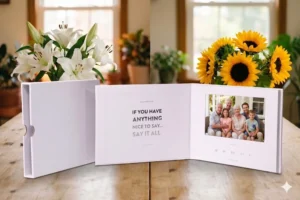
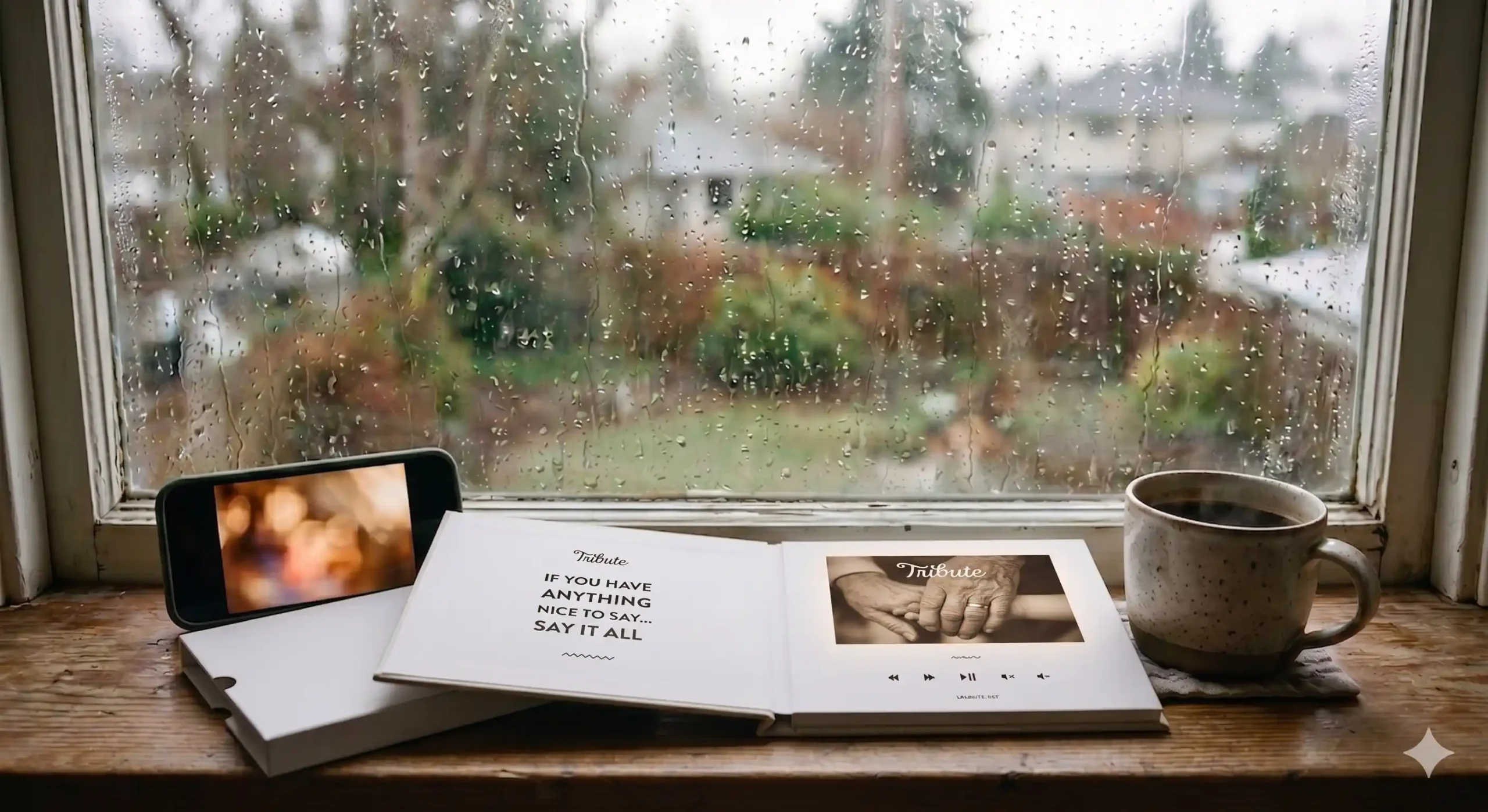
Tribute (tribute.co) is a group video gift platform that lets you collect personal video messages from friends, family, and community into a polished memorial montage. It works by sharing a link: contributors record from any device, no app needed, and Tribute compiles everything automatically. It is free to start, requires no app download, and the finished video can be played during the memorial service itself or given to the family afterward.
If you are the one organizing the tribute, share the link with everyone who loved the person and cannot attend. If someone else is organizing it, ask to be included. Either way, your two-minute video becomes part of something the family will carry forward.
Unlike sending flowers, which fade, a group tribute video is something the family returns to. Unlike a written card, it puts your voice in the room. Families who receive tribute videos report that hearing the voices of people who could not be there is one of the most comforting parts of the entire memorial experience.
👉 Add your video message to the family’s memorial tribute from wherever you are
See also: How to Create a Group Memorial Video
Ask to Attend Virtually
Many funeral homes and families now offer live-streamed or recorded services for those who cannot attend in person. If no one has mentioned it, it is appropriate to ask gently. “Would it be possible to join by video?” is a reasonable request, and many families are glad to make it happen.
Best for: Anyone who wants to be present for the service itself, not just the surrounding expressions of sympathy.
Why it works: Virtual attendance allows you to grieve alongside the people you love in something close to real time. Being in the space together, even across a screen, matters in a way that deferred mourning does not.
See also: How to Host a Virtual Memorial Service
Write Something That Can Be Read Aloud
Reach out to whoever is organizing the service and ask if you can submit something to be read aloud during the ceremony. A eulogy, a short memory, a poem the person loved, or a letter addressed directly to the family. Hearing your words spoken in the room you could not reach is a way of being present without being physically there.
Best for: People who had a close relationship with the deceased but cannot travel, and who want their voice to be part of the formal service.
Why it works: It gives the people in the room the experience of your presence. It also gives you something to do with the grief that might otherwise feel formless from far away.
Send a Meal or Have One Delivered to the Family
In the days surrounding a funeral, the family is often surrounded by the demands of planning, greeting people, and managing their own grief while taking care of everyone else. Food is one of the most practical expressions of care you can offer from a distance.
Best for: Close friends and family members who want to support the people organizing the service in a concrete way.
Why it works: It removes one decision from an overwhelming week. And food carries a specific kind of warmth that a sympathy card cannot. The Emily Post Institute notes that sending food is one of the most universally appreciated gestures of condolence.
Send a Handwritten Letter
Email is immediate, but a handwritten letter is something a grieving person can hold. Write specifically about the person who passed: one memory, one quality, one moment you are glad you had with them. Avoid general statements like “they were a wonderful person.” Specificity is what makes a letter worth reading more than once.
Best for: Anyone, but especially people with a longer or more complex relationship with the deceased or the family.
Why it works: A physical letter does not disappear into an inbox. Many families keep letters received after a death for years, and specific memories preserved in writing become part of how the person is remembered.
Offer to Help With Something Specific
The most well-meaning offer a grieving family receives is also the hardest to act on: “Let me know if there’s anything I can do.” From a distance, a more useful offer is a specific one. “Can I help manage responses to the online tribute?” or “I’d like to coordinate meal deliveries for the week, can I reach out to a few mutual friends?” gives the family something to say yes or no to instead of something they have to think through.
Best for: People who are organized and want to take on a coordination role to reduce the family’s burden.
Why it works: It removes the invisible labor of delegating from people who are already overextended. Specific offers are a form of care that general ones are not.
How Do You Send Virtual Condolences That Actually Mean Something?
Virtual condolences range from a Facebook comment to a personal video message, and they are not all equal in what they offer the grieving person who receives them.
The most meaningful virtual condolences are specific to the person who passed. They name something real: a quality, a memory, a moment. They are addressed to a specific person in the family. And they acknowledge the loss directly without trying to minimize it.
“I am so sorry. I keep thinking about the way [name] always knew what to say when things were hard. I miss them already and I miss you. I’m so glad I got to know them through you.” That lands differently than “Thinking of you in this difficult time.”
A video message, even a brief one, is the form of virtual condolence that carries the most weight. Hearing a voice is different from reading words. Seeing a face is different from reading words. Both together create the closest thing to presence that technology can provide.
How Do You Support Someone Grieving from a Distance After the Funeral?
The hardest period of grief for many people is not the week of the funeral. It is the weeks and months that follow, when the support structure falls away and the absence becomes more ordinary and therefore somehow harder.
From a distance, consistent small contact matters more than occasional large gestures. A text on the one-month anniversary. A call on the deceased’s birthday. A note in early December if the holidays are going to be hard. These contacts say: I am still thinking about this. You are not carrying it alone.
According to the Hospice Foundation of America, social support in the weeks and months following a loss is one of the most significant factors in how people navigate grief. Showing up over time, even imperfectly, is more valuable than a single large gesture that does not recur.
See also: What to Say to Someone Who Is Grieving
See also: How to Honor the Memory of a Loved One
How Do You Process Your Own Grief When You Can’t Be There?
Missing a funeral is its own kind of loss. Many people who cannot attend describe a feeling of incompleteness, as if the grief has nowhere to go without a gathering to anchor it. That feeling is valid, and it deserves its own attention.
Create a private ritual for the day of the service. Light a candle. Visit a place that reminds you of the person. Write them a letter. If you have a video from the tribute, watch it. These acts give your grief a shape on a day when it might otherwise feel formless and unmoored.
Consider talking to someone who knew the person. A phone call with a mutual friend or family member on the day of the service can provide the sense of shared grief that the formal gathering would have offered. You do not need to be in the same room to grieve together.
👉 Contribute your video message to the family’s memorial tribute from wherever you are
Frequently Asked Questions About Not Being Able to Attend a Funeral
What do you do when you can’t attend a funeral?
Record a video message for the family, ask if you can attend virtually via video call, send a handwritten letter with a specific memory of the person, have a meal delivered to the family, and reach out with something concrete you can do to help from a distance. Taking action, even small action, helps long-distance grief move rather than stay stuck.
Is it okay to not attend a funeral?
Yes. There are many valid reasons someone cannot attend a funeral: distance, cost, illness, work obligations, or caregiving responsibilities. What matters is that you find a way to acknowledge the loss and support the people grieving, whether that is in person or from far away.
How do you send meaningful virtual condolences?
The most meaningful virtual condolences are specific rather than general. Name the person who passed, share one specific memory or quality, and address your message to a particular person in the family. A video message carries more weight than written words because it puts your voice and face in front of the grieving person.
What is the best thing to send when you can’t go to a funeral?
A personal video message is the most meaningful thing you can send because it carries your voice and face. A meal delivery or grocery gift card is the most practical. A handwritten letter with specific memories is the most lasting. Flowers are traditional but fade within a week.
How do you cope with long-distance grief when you can’t attend a funeral?
Create a private ritual for the day of the service. Reach out to someone who knew the deceased and grieve together, even over the phone. If a tribute video exists, watch it. Allow yourself the space to mourn without the framework of a formal gathering. Long-distance grief is real grief and deserves the same care.
Can you contribute to a memorial from far away?
Yes. Platforms like Tribute allow anyone to record a short video message from any device, no app required, and add it to a group memorial tribute that the family receives. It is one of the most direct ways to participate in a memorial when you cannot be there physically.
What should you say in a virtual condolence message?
Say the deceased person’s name. Share one specific memory or quality. Acknowledge the grief of the person you are writing to directly. Avoid minimizing language like “they are in a better place” or “at least they are no longer suffering” unless you know the recipient finds comfort in that framing. Specific, present, and direct is better than general and soft.
How do you support someone grieving from a distance over time?
Small, consistent contact over the weeks and months after the funeral matters more than a single large gesture. Text on the one-month anniversary, call on the deceased’s birthday, check in before difficult holidays. The Hospice Foundation of America identifies ongoing social support as one of the most significant factors in how people move through grief.
Distance Is Not the Same as Absence
Not attending a funeral is not the same as not caring, and the people grieving closest to the loss usually know that. What helps is not a perfect gesture. It is a genuine one, made with specificity and made now rather than later.
Your voice in a group tribute video. A letter with one real memory. A meal on a hard week. A text on the day no one else remembered to send one. These things reach across distance in ways that matter to the people receiving them.
Long-distance grief is real grief. And the love behind it is just as real as the love in the room.