Planning a celebration of life means choosing a space, a program, food, and a way for everyone present to feel connected to the person being honored. This guide walks through each step in order, from setting a date to the final keepsake, so you can build a memorial that feels like the person rather than like a generic service. Most families can organize a meaningful event in two to four weeks with a clear checklist.
What Is a Celebration of Life and How Is It Different from a Funeral?
A celebration of life is a memorial gathering that centers on who the person was rather than on the formality of their passing. It can happen weeks or months after death, in any setting, with any format. A traditional funeral tends to follow a set structure and timeline. A celebration of life gives families the latitude to design something personal.
According to the National Funeral Directors Association, requests for personalized memorial services have increased for more than a decade. Families want the gathering to feel like the person. That shift is the foundation of celebration of life planning.
See also: What Is a Celebration of Life?
How Do You Set a Date and Choose a Venue?
Start with the practical question of who needs to travel. If immediate family is coming from out of state, build in two to three weeks of lead time. If the gathering will be local, one week can be enough for an informal event.
Venue options range from backyard gatherings and community halls to parks, restaurants, and houses of worship. Choose a space that connects to the person’s life: a restaurant they loved, a park they walked in, the living room where everyone gathered. The space sets the emotional tone before a single word is spoken.
Venues to consider:
- Home or backyard (intimate, no venue fee)
- Community or recreation center (flexible capacity, affordable)
- Restaurant private dining room (catering handled, relaxed atmosphere)
- Park or botanical garden (open air, especially suited to outdoors-loving individuals)
- Faith community space (familiar and meaningful for many families)
- Museum, gallery, or cultural institution (if it reflects their passions)
How Do You Invite Guests and Communicate the Details?
For a gathering of 20 to 50 people, a group text or email with a simple note covers the basics. For larger gatherings, an event page or a printed card gives guests a clear reference. Include the date, time, location, parking details, and whether children are welcome.
Be specific about the tone. “Come as you are, bring a story” signals something different than a formal service announcement. Guests who know what to expect arrive more present and more able to contribute. The Emily Post Institute recommends including a brief note about what the family needs from guests, whether that is shared memories, a dish to share, or simply their presence.
How Do You Build the Program and Run of Show?
A celebration of life program does not need to be formal, but it benefits from an order. A loose structure gives guests a sense of movement and prevents the gathering from losing momentum after the first hour.
Sample run of show:
- Arrival and gathering (20 to 30 minutes) — Music the person loved, photo display, guests connect
- Welcome and opening (5 to 10 minutes) — A family member or close friend opens, sets the tone
- Eulogies and memories (20 to 30 minutes) — Two to four speakers, each with a time limit
- Video tribute moment (10 to 15 minutes) — Shown to the full room, followed by silence or a short reflection
- Open sharing (15 to 20 minutes) — Guests invited to stand and share a memory or a word
- Food and informal gathering (60 to 90 minutes) — Relaxed, music playing, photo tables available
- Closing and keepsake moment (10 minutes) — A closing word, planting, candle lighting, or keepsake distribution
The video tribute moment in step four is worth planning with the same care as the eulogies. A group video that collects messages from people who could not attend, or who are too emotional to speak in the room, extends the circle of voices beyond who is physically present.
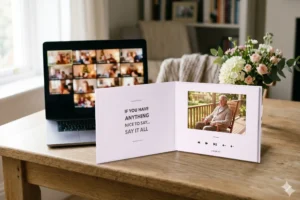
Tribute is a group video gift platform that lets you collect personal video messages from friends, family, and community into a polished memorial montage. It works by sharing a link: contributors record from any device, no app needed, and Tribute compiles everything automatically. You can start collecting messages weeks before the service and play the finished video at the event.
👉 Start your video tribute for the celebration of life
See also: Celebration of Life Ideas for Any Personality
What Are Good Celebration of Life Food Ideas?
Food at a celebration of life is an act of hospitality and memory. The most meaningful menus connect to the person: their heritage, their cooking, the dishes that showed up at every family gathering.
A potluck format, where guests bring a dish the person loved, creates conversation and distributes the planning work. Catering works well for larger events or when the family has enough logistical demands already. Restaurant private rooms handle food completely, which frees the family to be present rather than hosting.
Food formats that work well:
- Potluck with a theme — “Bring a dish [Name] would have eaten first at the table”
- Grazing table — Cheese, fruit, bread, charcuterie; easy for guests to pick up and move around
- Catered comfort food — Barbecue, Italian, or whatever matched the person’s background
- Dessert table only — Works for mid-morning or afternoon gatherings; easier to plan and budget
- The person’s signature dish — One family member makes the recipe everyone remembers; it becomes a centerpiece of the event
- Cultural food traditions — Food that reflects the person’s heritage honors both the individual and the community they came from
Celebration of life food ideas work best when they tell a small story. A dish with a history gives guests something to talk about and remember beyond the service itself.
How Do You Plan the Decor and Atmosphere?
Decoration at a celebration of life is not about aesthetics for their own sake. It is about surrounding guests with reminders of the person. Photo displays, favorite objects, and sensory cues like music and scent do more work than floral arrangements alone.
Decor elements that carry meaning:
- Timeline photo wall or display table with labeled photos by decade
- A memory table with objects the person loved: books, tools, sports gear, instruments
- Their playlist playing on arrival
- A memory jar where guests write a note and drop it in
- A seed or plant giveaway at the end as a living keepsake
- Candles in colors they loved
See also: Celebration of Life Themes for Every Personality
What Should the Keepsake Moment at the End Look Like?
Ending with intention matters. Guests who leave without a closing moment often feel the event simply ran out of time. A closing ritual, however brief, gives the gathering a proper end.
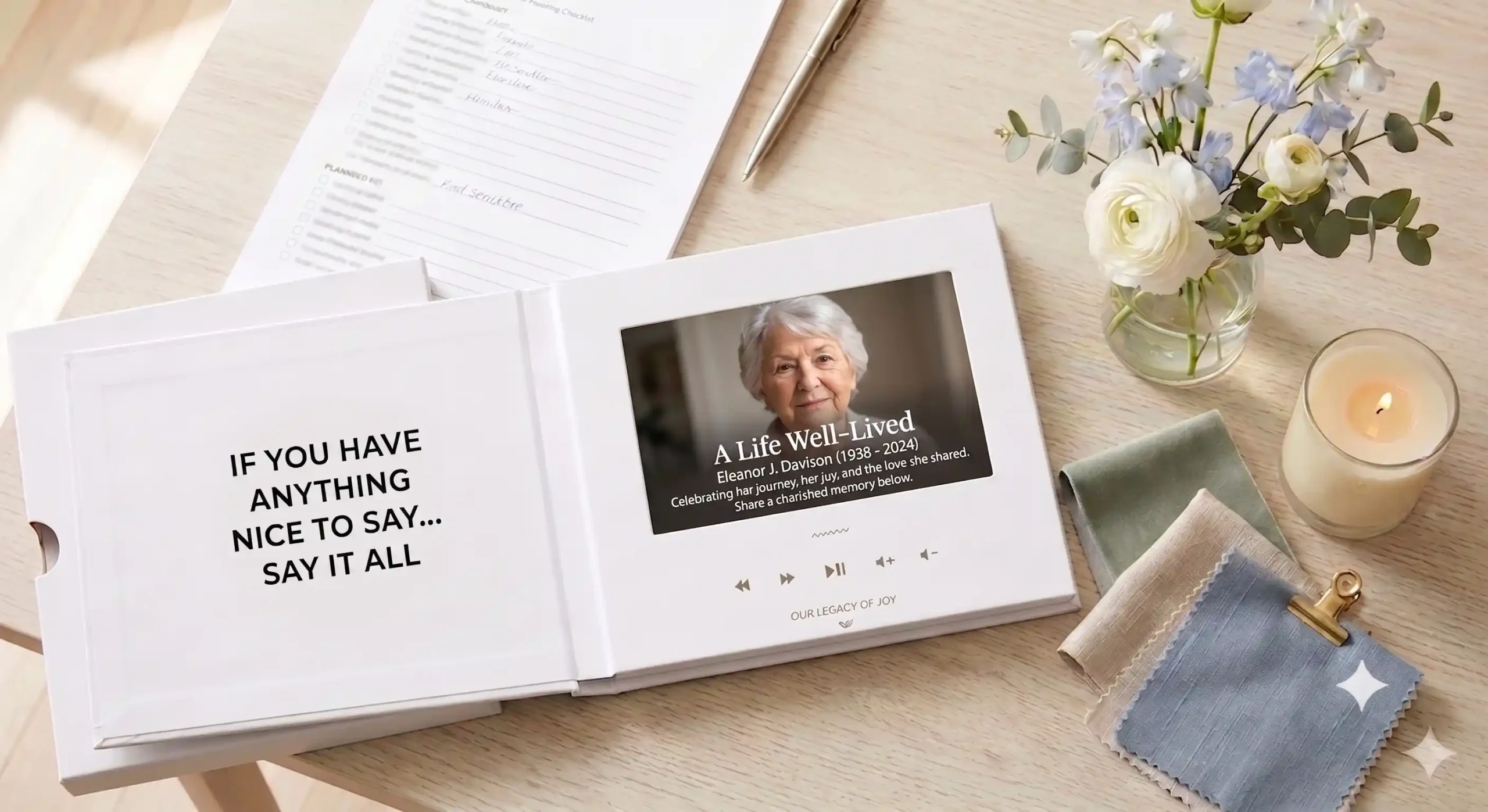
Options include a candle lighting, a group toast with a specific phrase, releasing flowers into water, planting a seed together, or distributing a small printed card with a quote or photo. The Tribute Video Book, a linen-bound hardback with a 7-inch screen that plays the memorial video automatically when opened, is one keepsake that families have used to close a service with something guests can take home and return to for years.
Unlike a printed program that gets set in a drawer, a video keepsake stays active. Unlike a digital link that gets lost in an inbox, a physical Video Book sits on the mantel and plays the tribute every time it is opened.
What Is a Celebration of Life Planning Checklist?
Use this memorial planning checklist to track each step from first decision to final farewell.
Two to four weeks before:
- Set the date and time
- Book the venue
- Begin collecting video messages for the tribute
- Invite guests with date, location, and tone
- Designate a program host or emcee
- Ask two to four speakers to prepare a memory or reflection
One week before:
- Finalize the run of show
- Confirm food: caterer, potluck coordination, or restaurant
- Gather photos and objects for display
- Create or print the program if using one
- Finalize the video tribute
- Test the AV setup at the venue
- Designate a day-of coordinator (not a family member carrying grief)
Day of:
- Arrive 60 to 90 minutes early to set up
- Place photo displays and memory tables
- Start music on arrival
- Cue the video tribute for the right moment in the program
- Prepare the closing keepsake or ritual
After the event:
- Send the video tribute link to anyone who could not attend
- Distribute any remaining keepsakes
- Write thank-you notes within two weeks
- Store the memory jar notes and other collected materials together
See also: How to Honor the Memory of a Loved One
How Do You Help Guests Who Are Not Sure What to Do?
Some guests arrive at a celebration of life uncertain about how to participate. A brief note in the invitation, a sign near the entrance, or a word from the host at the opening helps them understand what is expected and what is welcomed.
If you have a memory jar, put a prompt on the table: “Write one word that describes [Name]” or “Write a memory you are bringing with you today.” If you have a video tribute playing, let guests know they can contribute a message from their phone before the event. Clear invitations to participate turn passive attendees into active members of the memorial.
The Hospice Foundation of America notes that active participation in memorial rituals supports the grieving process for both hosts and attendees. The celebration of life format is specifically suited to this kind of shared mourning.
Frequently Asked Questions About Planning a Celebration of Life
How much does a celebration of life typically cost?
Costs range from under $500 for a home gathering with potluck food to $5,000 or more for a catered venue event. The biggest variables are venue rental and catering. Many families keep costs low by hosting at home, asking guests to bring food, and sourcing decor from items the person already owned.
How far in advance should you plan a celebration of life?
Two to four weeks is typical for a local gathering. If out-of-town guests need flights and accommodations, four to six weeks gives everyone time to make arrangements. Unlike traditional funerals, which often happen within a week, celebrations of life allow more planning flexibility.
Who should speak at a celebration of life?
Two to four speakers is the right range for most services. Choose people who knew different sides of the person: a sibling, a longtime friend, a colleague, and perhaps a younger family member who can offer a different generational perspective. Brief speakers stay around three to five minutes; longer tributes can run up to ten.
What is a good celebration of life theme?
Themes work best when they come directly from the person’s life. A gardener might inspire a botanical theme. A musician might inspire a concert-style gathering. A traveler might inspire decor and food from places they loved. Visit celebration of life themes for a full list of ideas organized by personality type.
Should children attend a celebration of life?
Most grief counselors support including children in memorial gatherings, particularly celebrations of life, which tend to be less somber than traditional funerals. Giving children a small role, like placing flowers or holding a sign, helps them feel part of the remembrance rather than protected from it.
What food should you serve at a celebration of life?
Focus on food that connects to the person’s life. A potluck with dishes people associate with them creates natural conversation. Grazing tables and buffet formats work better than plated meals because they allow guests to move, mingle, and spend time at photo displays. The celebration of life food ideas section above offers a full breakdown by format.
How do you collect video tributes from people who cannot attend?
Share a link with out-of-town friends and family before the event and ask them to record a short message. Services like Tribute handle the collection, compilation, and formatting automatically, so no one needs to download an app or send files. The finished video can be played at the service and shared afterward.
What Makes a Celebration of Life Feel Like the Person?
The celebrations that guests remember years later are the ones where the person showed up in every detail: the music, the food, the objects on the table, the stories told in the room, and the words spoken aloud. Generic services feel interchangeable. Personal ones do not.
Start with one clear truth about who the person was and build outward from there. If they were the one who always made people laugh, let the program reflect that. If they were quiet and steady, let the space reflect that. The planning is logistics. The point of it is love.