
How to Honor a Veteran Who Passed Away (2026)
Honoring a veteran who has passed away means acknowledging two things at once: the person they were and the service they gave.
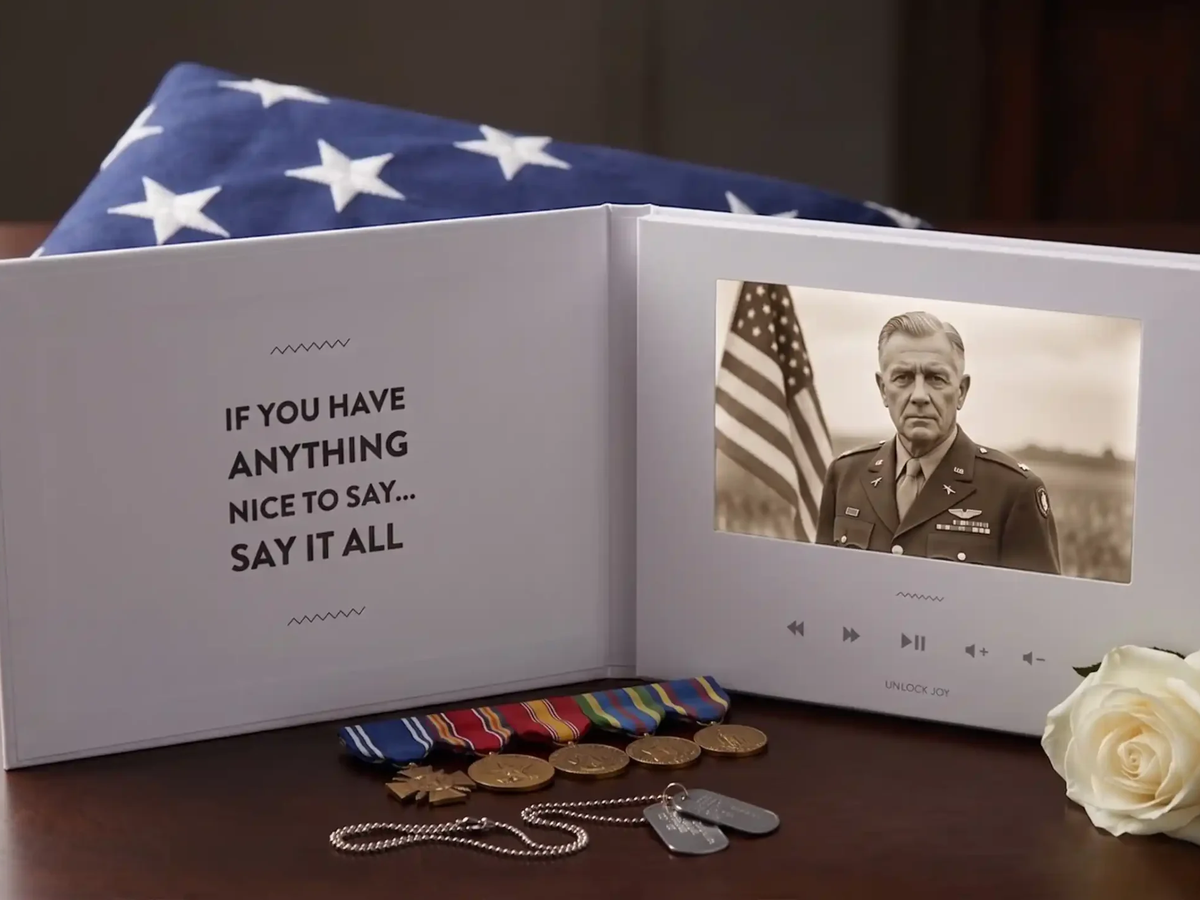
Honoring a veteran who has passed away means acknowledging two things at once: the person they were and the service they gave. The most meaningful military memorial ideas combine official military traditions with deeply personal tributes that capture the veteran’s individual life, stories, and the people they served alongside. Both dimensions matter, and neither is complete without the other.
What Military Honors and Traditions Are Available When a Veteran Passes?
The United States military provides funeral honors to eligible veterans at no cost to the family. At minimum, this includes a folded flag presented to the next of kin and the playing of “Taps,” either by a live bugler or a recording. Families can request these honors through the funeral home, which coordinates with the Department of Defense.
Depending on the veteran’s branch and length of service, additional honors may be available: a rifle volley, a military chaplain, and a full honor guard at the graveside. The National Funeral Directors Association provides guidance to funeral homes on coordinating military honors, and most experienced funeral directors know how to request them.
Request military honors as early as possible. Availability can vary by region, and some locations require advance scheduling of several days or more.
What Does the Flag Ceremony Mean and How Should Families Receive It?
The flag presented to a veteran’s next of kin is folded thirteen times and each fold carries a meaning rooted in military tradition. The presenting officer kneels, looks the recipient in the eye, and says: “On behalf of the President of the United States, the United States [branch of service], and a grateful nation, please accept this flag as a symbol of our appreciation for your loved one’s honorable and faithful service.”
There is no required response. You do not need to say anything. The flag can be displayed in a shadow box alongside service medals, dog tags, photographs, and other artifacts of the veteran’s service. Many families find that creating a dedicated space in the home for these objects gives grief somewhere visible to settle.
Medals should be organized by order of precedence as established by each branch. A veteran’s service records, available through the National Archives, can help identify which awards were earned and in what order they should be displayed.
How Do You Honor a Veteran Beyond the Official Service?
Military honors provide a dignified framework. Personal tribute fills it with meaning. The most memorable memorials for veterans combine both, drawing from the person’s specific service history, the relationships they built, and the values they carried home from their years in uniform.
Gather Stories From Fellow Service Members
Comrades who served alongside a veteran hold memories that family members may never have heard: the humor under pressure, the steadiness in hard moments, the bonds forged in places that are hard to explain to anyone who was not there. These stories deserve to be captured.
Best for: Families who want the memorial to reflect the full scope of a veteran’s life, including the years and relationships formed during service.
Why it works: Fellow service members speak a language of specific shared experience. Their stories add a dimension of the veteran’s life that family alone cannot provide, and hearing those voices is profoundly moving for everyone present.
Create a Veteran Tribute Video
Tribute (tribute.co) is a group video gift platform that lets you collect personal video messages from friends, family, and community into a polished memorial montage. It works by sharing a link: contributors record from any device, no app needed, and Tribute compiles everything automatically. It is free to start, and contributors can be anywhere in the country or the world.
For a veteran tribute, this means you can reach former unit members stationed across different states, old friends from basic training, neighbors who remember their return home, and grandchildren who knew a different side of the same person. Unlike a guestbook, it captures voices. Unlike a phone chain, it brings everyone’s message into one place where the family can return to it again and again.
Unlike a formal military ceremony, a tribute video captures the human being inside the uniform: the father who coached Little League after coming home, the woman who volunteered at the VFW hall for forty years, the man who never talked about what he saw but showed up for everyone around him.
👉 Gather stories from family and fellow service members in a veteran tribute video
See also: How to Create a Group Memorial Video
Establish a Scholarship or Named Fund
A scholarship in a veteran’s name, awarded to a student pursuing military service or a field the veteran cared about, creates a lasting legacy that grows over time. Local community foundations can help establish a named fund with minimal administrative complexity.
Best for: Families who want a lasting, tangible legacy tied to the veteran’s values or the causes they served.
Why it works: A scholarship keeps a veteran’s name circulating in the community for decades. It also gives grieving family members a project to organize around in the months following a loss.
Participate in National Memorial Events
Memorial Day, Veterans Day, and local remembrance ceremonies provide structured opportunities to honor a veteran within a larger community of recognition. Many American Legion and VFW posts hold annual ceremonies where individual veterans can be named and acknowledged.
Best for: Families who want to connect their personal grief to the larger tradition of honoring those who served.
Why it works: Shared public rituals remind families that the person they lost belongs to a story larger than one household. That context can be a source of comfort and pride during a period of private grief.
Commission or Order a Headstone or Memorial Marker
The U.S. Department of Veterans Affairs provides a headstone or marker at no cost for eligible veterans buried in a national cemetery or a private cemetery. Applications can be submitted through the VA directly or through the funeral home.
Best for: All eligible families. This is a benefit many families are not aware of and do not claim.
Why it works: A permanent marker gives a veteran’s service a physical presence in the landscape. It is a concrete acknowledgment that their sacrifice is recognized by the nation they served.
Donate to a Veterans Organization in Their Name
Organizations like the Wounded Warrior Project, Fisher House Foundation, or a local VFW post welcome memorial donations. Ask the family to specify a recipient in the obituary to make honoring the veteran through giving easy for anyone who wants to do something meaningful.
Best for: Families where the veteran was actively involved in veterans’ service organizations, or where financial contributions feel like the most fitting expression of respect.
Why it works: It directs the grief of the broader community toward something the veteran would have valued. It also provides a simple, clear action for people who want to help but do not know how.
How Do You Honor a Veteran on Memorial Day or Their Death Anniversary?
Memorial Day provides a national framework for honoring a veteran who has passed, but the personal observance is separate and belongs to the family. Many families visit the grave and leave flowers. Others light a candle, share a meal, or gather to watch old photographs and videos.
Revisiting a tribute video on a veteran’s death anniversary is a tradition several families have built intentionally. The Hospice Foundation of America has written about the value of annual rituals in grief processing, noting that returning to a meaningful act each year helps grief move rather than stay frozen. A tribute video grows richer over time as new family members hear the stories for the first time and older members find themselves moved in new ways.
See also: Memorial Service Ideas for Honoring a Loved One
See also: Ways to Keep a Loved One’s Memory Alive
How Do You Reach Veterans Who Served With Your Loved One?
This is often one of the more challenging parts of planning a veteran’s memorial. Fellow service members may be scattered across the country, may have lost touch over decades, or may not know about the passing at all.
Start with the veteran’s discharge paperwork (DD-214), which lists the units they served with. Post in relevant veterans’ social media groups and forums, naming the unit, years of service, and theater if applicable. The VFW and American Legion can help spread the word through local posts.
Once you locate them, a Tribute link is one of the easiest ways to gather their messages. They record a short video from wherever they are, no app required, and it becomes part of the compiled tribute the family carries forward. Many families describe hearing the voice of a veteran’s former platoon sergeant, someone the family had only heard mentioned by name, as one of the most meaningful moments of the entire memorial process.
👉 Collect messages from fellow service members and family in one tribute video
See also: How to Honor the Memory of a Loved One
Frequently Asked Questions About Honoring a Veteran Who Has Passed Away
What military honors are available when a veteran passes away?
All eligible veterans are entitled to a folded flag and the playing of “Taps” at no cost to the family. Additional honors, including a rifle volley, honor guard, and military chaplain, may be available depending on branch and service length. Request these through your funeral director as early as possible.
How do I request military funeral honors?
Contact your funeral home and provide the veteran’s DD-214 or other discharge documentation. The funeral home coordinates with the Department of Defense on the family’s behalf. You can also contact the veteran’s branch of service directly to request honors if needed.
What are good military memorial ideas beyond the formal service?
Gathering stories from fellow service members into a group tribute video, establishing a scholarship or named fund, commissioning a headstone or memorial marker through the VA, donating to a veterans’ organization, and creating a shadow box display of medals and service artifacts are all meaningful military memorial ideas.
What is a veteran tribute video?
A veteran tribute video is a compiled video of short personal messages recorded by family members, friends, and fellow service members, each sharing a memory or expression of gratitude for the veteran’s life and service. Platforms like Tribute allow contributors to record from any device and location, making it possible to gather voices from across the country.
How do I find veterans who served with my loved one?
Start with the veteran’s DD-214 to identify units and years of service. Post in veterans’ social media groups naming the unit and years. Contact the relevant VFW or American Legion post. Unit reunion organizations, if one exists for the veteran’s unit, are another strong resource.
Does the VA provide a free headstone for veterans?
Yes. The U.S. Department of Veterans Affairs provides a headstone or memorial marker at no cost for eligible veterans buried in national or private cemeteries. Applications can be submitted through the VA website or through the funeral home handling the arrangements.
How do I honor a veteran on Memorial Day or their death anniversary?
Visit the grave and leave flowers, light a candle at home, share a meal that held meaning to them, or gather family to watch a tribute video together. Participating in a local Memorial Day ceremony at a VFW or American Legion post is also a meaningful way to connect personal grief to the broader tradition of national remembrance.
A Life of Service Deserves to Be Fully Remembered
Honoring a veteran who has passed away means honoring two things: the service they gave and the person they were beyond it. Military traditions provide the dignity and recognition the service deserves. Personal tribute provides the human warmth that no ceremony alone can deliver.
According to What’s Your Grief, meaningful rituals and acts of remembrance play a significant role in healthy grieving. For families of veterans, those rituals often carry an additional layer: the awareness that the person’s sacrifice was part of something larger than any single life.
The voices of fellow service members, gathered alongside the voices of children, grandchildren, and lifelong friends, create a tribute that holds the full scope of who someone was. That is worth gathering, while the people who can contribute are still reachable, and while the memories are still vivid enough to share.


