Honoring the Memory of a Sibling (2026)
Honoring the memory of a sibling means holding onto the bond that began before you understood what bonds were. A sibling was your first companion, your earliest witness, the person who shares more of your history than almost anyone else alive. A memorial for a sibling is not just a tribute to someone who died. It is a tribute to a whole shared world.
Whether you lost a brother or lost a sister, recently or long ago, this guide offers genuine and lasting ways to keep their memory present in your life.
Why Does the Loss of a Sibling Carry Such a Particular Weight?
A sibling occupies a category no one else fills. They are the person who knew your parents the way you knew them. The person who was there in childhood rooms, at family tables, through decades of change. Losing a brother or a sister means losing the only other person who shared that specific version of your family history.
Grief after loss of a sister or loss of a brother is also often layered with the grief of watching parents lose a child, of becoming an only child, of losing the future you expected to share. The Hospice Foundation of America recognizes sibling grief as a distinct and significant form of loss that can be complicated by the fact that much of the community’s attention goes to parents and spouses, leaving adult siblings to grieve with less support than they need.
Your grief for your sibling is real, whole, and worth honoring fully.
What Are the Most Meaningful Ways to Honor the Memory of a Sibling?
Some of these ideas are private. Some involve the wider family. Some are one-time gestures. Others become rituals that carry you through years. Take what fits and leave the rest.
Write Down Everything You Remember
Memory fades. The specific sound of a laugh, a phrase they used, the exact way they told a story: these details erode over time. Writing them down while they are still vivid is both a tribute and a gift to your future self. Write for yourself first. Write for the family second. If you want to share it, share it. If you want to keep it private, that is enough.
Best for: Honoring a sibling whose voice and personality you want to preserve with precision.
Why it works: It gives the details somewhere to live outside your head. When the memory starts to soften around the edges, the page holds the sharp version.
Gather the Family’s Stories in One Place
Your parents, aunts and uncles, cousins, and childhood friends all hold pieces of your sibling that you do not have. A sibling had a whole interior life, a school self and a work self and a version of themselves you never saw. Gathering stories from the people who knew different sides of them builds a portrait that no single person could make alone.
A shared document, a printed memory book, or a collected group tribute are all ways of bringing those pieces together. What results is often surprising: you learn things about your sibling that you did not know, and the family, in the act of contributing, grieves together rather than in separate rooms.
Best for: Honoring a sibling by involving the whole family in the memorial process.
Why it works: It distributes the weight of remembering. No one person carries the archive alone.
See also: Ways to Keep a Loved One’s Memory Alive
Create a Family Video Tribute with Everyone’s Voice
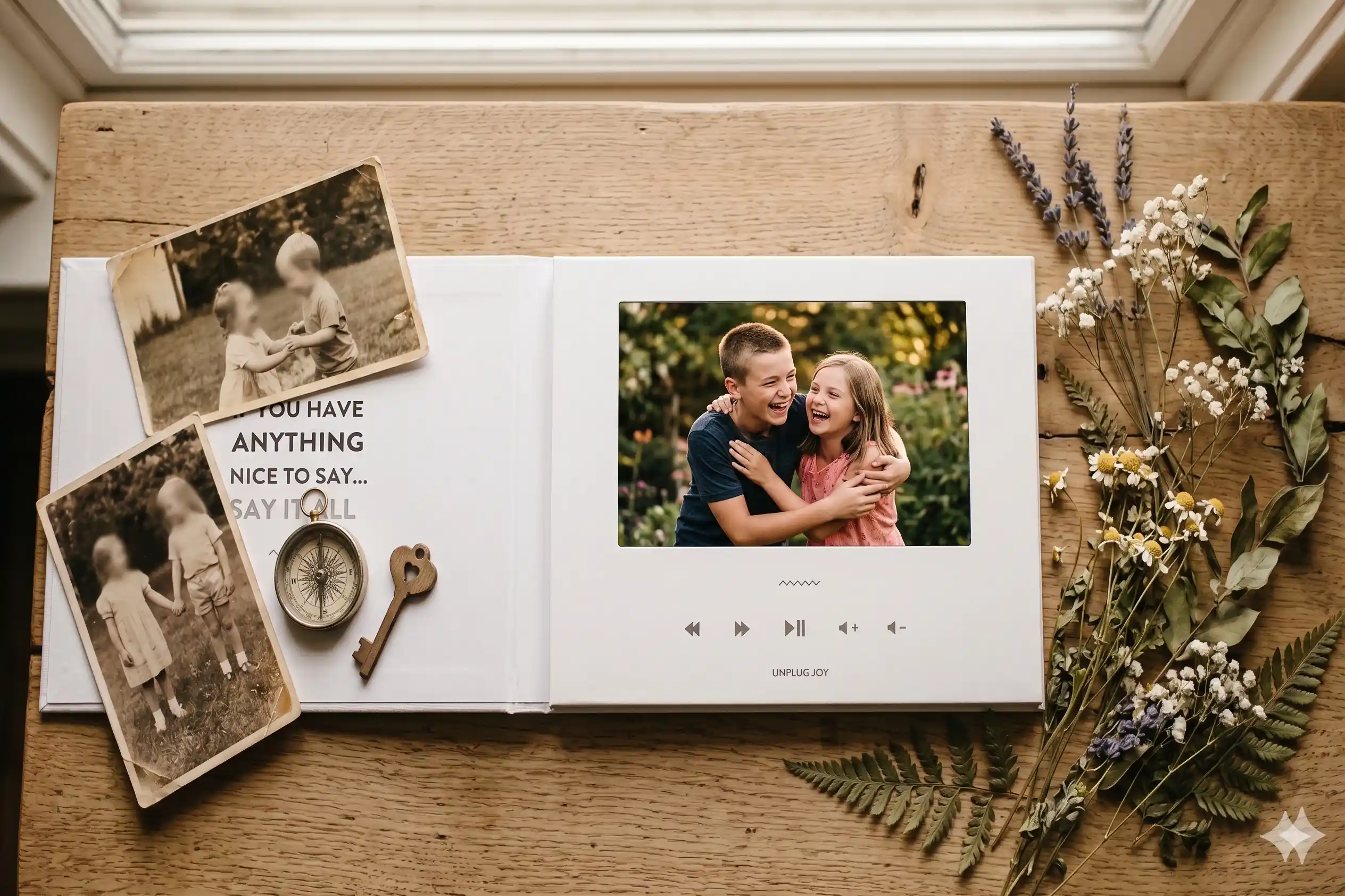
One of the most lasting things a family can make together after losing a sibling is a video tribute that collects the voices of everyone who loved them. Not a slideshow set to music, but actual people speaking: parents, cousins, childhood friends, people who met them late in life. All of them, together, in one place.
Tribute is a group video platform that lets you collect personal video messages from friends, family, and community into a polished memorial montage. It works by sharing a simple link. Contributors record from any device with no app needed, and Tribute compiles everything automatically. It is free to start.
Unlike a single eulogy delivered once and heard by the room, a group video stays. It can be watched again on the first anniversary, on their birthday, when a younger family member grows old enough to want to know who their aunt or uncle was. The voices do not fade the way memory does.
Best for: Families who are geographically spread and want to gather in one tribute even when they cannot gather in one room.
Why it works: It captures the actual voices and faces of the people who loved your sibling. It is a memorial for a sibling that can be passed down.
ð Say it in a video: start a group tribute for your sibling
See also: Group Memorial Video: How to Make One
Return to the Places You Went Together
The places of a shared childhood carry a particular weight. The bedroom you shared. The backyard. The route you walked to school. A grandparent’s kitchen. Returning to those places, alone or with family, is a way of standing in the physical record of your shared life.
Best for: Honoring a sibling through memory and place, rather than objects or events.
Why it works: Place holds what words cannot. Standing in a meaningful location is itself a form of tribute.
Keep the Traditions You Shared
Siblings carry traditions: the way your family celebrated certain holidays, the movies you watched every year, the food that appeared at every birthday. Keeping those traditions, even after the loss of a brother or a sister, is a form of honoring them. The empty chair at the table is hard. But filling the table anyway is a way of saying they are still part of how the family gathers.
Best for: Families who find comfort in structure and continuity.
Why it works: Traditions are a form of memory kept in practice rather than in objects. Each repetition is a small act of honoring a sibling.
Name Something in Their Honor
A charitable fund, a scholarship, a community garden bed, a room at a local library: naming something in a sibling’s honor gives their memory a public presence in the world. It does not need to be large or expensive. A small annual donation to a cause they loved, made in their name on their birthday, is enough.
Best for: Honoring a sibling who had a cause, a passion, or a field they cared about.
Why it works: It extends their impact into the future. It tells the world their name and what they stood for.
See also: Memorial Keepsake Ideas
Plant Something That Grows With Your Grief
A tree planted in a sibling’s name changes as the years pass. It grows as your children grow. It blooms in a color they might have chosen. Tending it becomes a ritual that asks nothing of you except presence, and over time, presence is what it gives back.
Best for: Anyone with outdoor space or access to a community planting site.
Why it works: A living memorial grows alongside you. Unlike a stone or a plaque, it is always in process, always becoming something.
Create a Keepsake Box of Shared Objects
A ticket stub from a concert you went to together. A photograph from childhood. A card they wrote you. A small object from a shared trip. Gathering these into a beautiful box gives grief a physical home. The box is not for forgetting. It is for keeping.
Best for: A personal, private tribute for honoring a sibling in your own home.
Why it works: Having objects associated with a person in one place gives you somewhere to go when the grief is fresh. Opening the box is its own small ritual of remembrance.
Mark the Significant Dates
A sibling’s birthday, the anniversary of their death, the first holiday without them: these dates arrive every year whether you are ready for them or not. Making a plan for those days, rather than dreading them, can help. Light a candle. Visit a meaningful place. Call the family member who is also struggling. Do something they loved.
Best for: Anyone who finds that significant dates arrive as a wave of grief.
Why it works: Anticipating the date and planning a small ritual gives the grief somewhere to go. It turns a dreaded anniversary into an act of love.
Talk About Them Out Loud
Grief specialists at What’s Your Grief and the National Funeral Directors Association both note that one of the most common fears bereaved people have is that the person they lost will be forgotten. The antidote to that fear is simple: keep saying their name. Tell stories about them. Introduce people to who they were. Bring them into conversations where they belong.
Best for: Everyone, in every context, for the rest of your life.
Why it works: Memory is kept alive by speaking. Every time you say their name, you are honoring a sibling in the most fundamental way there is.
See also: How to Honor the Memory of a Loved One
How Does Sibling Grief Change Over Time?
Grief after the loss of a brother or loss of a sister does not end. It changes shape. In the first weeks it is acute and exhausting. In the first year it is marked by the sharp edges of all the firsts: the first birthday without them, the first holiday, the first time you reached for your phone to call them and remembered.
Over years, grief often softens into something carried rather than something that overwhelms. The memories become less about absence and more about presence: the ways your sibling shaped who you are, the qualities you inherited from them, the parts of yourself that are an inheritance from growing up alongside them.
The Hospice Foundation of America notes that continuing bonds with those we have lost is a healthy model for grief, not “moving on” but integrating the loss into a life that still honors the person. Honoring a sibling is not something you do once. It is something you do for the rest of your life, in small ways, on ordinary days.
Frequently Asked Questions About Honoring the Memory of a Sibling
What is the best way to honor a sibling who passed away?
The best way to honor a sibling who passed away is the one that feels most true to who they were. This might be a gathered family video tribute, a planted tree, an annual ritual on their birthday, or simply talking about them to people who never knew them. The most meaningful memorials are specific to the person, not generic to loss.
How do I cope with the loss of a brother?
Coping with the loss of a brother takes time and does not follow a predictable path. Allowing yourself to grieve, finding community with others who loved him, marking significant dates with intention, and keeping him present in your daily life through stories and ritual are all things that grief counselors recommend. Resources like What’s Your Grief offer specific support for sibling loss.
How do I cope with the loss of a sister?
The loss of a sister is a loss of someone who knew you across your whole life. Grief after a sister’s death can include the loss of a confidante, a shared history, and a future you expected to have together. Many people find that keeping their sister present through stories, rituals, and shared family memories helps. Do not feel pressure to “process” grief on any timeline. Let it be as long and as complicated as it needs to be.
What do you say as a tribute to a sibling?
Speak about who they were, not just what they meant. Tell the room something specific: a phrase they used, a quality only people close to them would know, a moment that captures their personality. The most moving tributes are ones that make the audience feel they are truly hearing about that person. If you knew your sibling, you have the material. Trust it.
How can I involve the whole family in a memorial for a sibling?
Ask everyone to contribute something: a written memory, a photograph, a recorded video message. A group video tribute is one of the most effective ways to gather the whole family’s voices into one place, particularly when family members are geographically separated. Platforms like Tribute make this process straightforward. Contributors record from wherever they are and everything comes together automatically.
How do I keep my sibling’s memory alive for younger generations?
Tell stories. Show photographs. Cook their favorite food on their birthday. Introduce your children or younger cousins to the music they loved, the books they read, the causes they cared about. A group video tribute is also a meaningful way to preserve voices and stories for family members who were too young to know them, or who will be born after they are gone. The memorial for a sibling can become part of a family’s living history.
Is there a way to gather everyone’s memories in one place?
Yes. A shared document, a printed memory book, or a group video tribute can all gather stories from across a family or community. A group video is particularly valuable because it preserves actual voices and faces rather than just written words. Starting a tribute is free, and contributors can record from any device without downloading anything.
The Lifelong Work of Remembering
A memorial for a sibling is not a single event. It is a practice: the accumulation of small acts of remembrance over months and years. Speaking their name. Returning to places you shared. Keeping their birthday on the calendar. Telling younger family members who they were.
Honoring a sibling means refusing to let the world forget them. It means carrying them with you into every room you enter, as someone who shaped you and who will go on shaping the family long after the initial grief has settled into something quieter.
If you want to gather the family’s voices into one tribute, the option is there when you are ready.
ð Say it in a video: bring your family’s memories together in one place