A living tribute is a collection of heartfelt messages, stories, and expressions of love gathered for someone while they are still alive, so they can hear every word themselves. It is one of the most powerful things you can do for a person who is aging, facing a serious illness, or simply someone you want to celebrate before it is too late. Unlike a memorial, a living tribute belongs entirely to the present: the person opens it, watches it, and knows exactly how much they are loved.
What Makes a Living Tribute Different From a Memorial?
A memorial honors someone after they are gone. A living tribute honors them while they are here to receive it. That distinction changes everything.
With a memorial, the person being celebrated never hears the words spoken about them. The stories, the gratitude, the love expressed at a funeral or in an obituary arrive too late for the one person who most needed to hear them. A living tribute closes that gap. It says: we are not waiting. You deserve to know this now.
This is especially true for someone in hospice care, navigating a terminal diagnosis, or simply growing older in a way that makes family aware that time is not indefinite. An end of life tribute made while someone is still present is a gift unlike any other, because the person receives it, and the people who created it know it was received.
Who Is a Living Tribute For?
A living tribute fits any situation where the words “I should tell them how much they mean to me” have crossed someone’s mind. That covers more situations than people realize.
Someone in Hospice or End of Life Care
A hospice tribute is perhaps the most common and most urgent form of a living tribute. When someone is in their final weeks or months, family often struggles to know what to do or say. Gathering video messages from everyone who loves them and playing it at their bedside is something that can be done now, and it matters enormously.
Best for: Family members who want to give a person in hospice care something tangible that communicates how many people love them.
Why it works: Hearing voices, seeing faces, and watching someone speak directly to you is irreplaceable. Written cards and phone calls are meaningful, but a video tribute brings a room full of people to a bedside.
An Aging Parent or Grandparent
Many families say the same thing after a parent dies: “I wish I had told them more.” A living tribute is the answer to that regret, made before it has to be a regret. Gather messages from children, grandchildren, former colleagues, and lifelong friends.
Best for: Adult children who want to give a parent or grandparent a concrete expression of the family’s love, especially around a significant birthday or health milestone.
Why it works: Older adults often underestimate their own impact. Watching grandchildren describe how they changed their lives is one of the most profound things a person can experience.
Someone Facing a Serious Illness
A diagnosis of cancer, ALS, dementia, or another serious illness can leave a person feeling isolated and uncertain of their place in the world. A tribute while still alive tells them, in the voices of everyone who loves them, exactly what their presence has meant.
Best for: Friends and family who want to act now rather than wait, and who want to give the person something to return to on harder days.
Why it works: A video tribute can be rewatched. On a hard day in treatment, watching it again is a source of strength that does not run out.
A Retirement or Life Milestone
A living tribute also fits joyful occasions: a major retirement, a 50th wedding anniversary, a life-changing birthday. These are moments when someone deserves to hear the full weight of what they have built and given.
Best for: Organized friends or family members who want to create something lasting for a milestone celebration.
Why it works: A video tribute captures the voices of people who cannot attend in person, making a milestone feel complete rather than limited by geography.
How Do You Create a Living Tribute?
The process is simpler than most people expect. The hardest part is making the decision to start. Once you do, the rest tends to come naturally.
Tribute (tribute.co) is a group video gift platform that lets you collect personal video messages from friends, family, and community into a polished memorial montage. It works by sharing a link: contributors record from any device, no app needed, and Tribute compiles everything automatically. It is free to start, requires no app download, and handles the editing automatically so you do not need any technical skill.
Here is how the process works in practice:
- Create your Tribute and name it for the person you are honoring.
- Share the link with family members, friends, former colleagues, neighbors, anyone whose voice would mean something to them.
- Contributors record a short video clip from their phone or computer. No app needed. Tribute sends automatic reminders so you do not have to chase anyone.
- Tribute compiles all the clips into a polished video. You can watch it on a phone, a computer, or a TV.
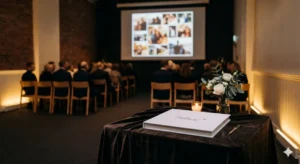
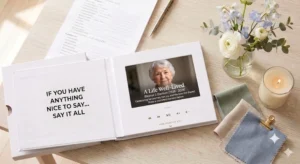
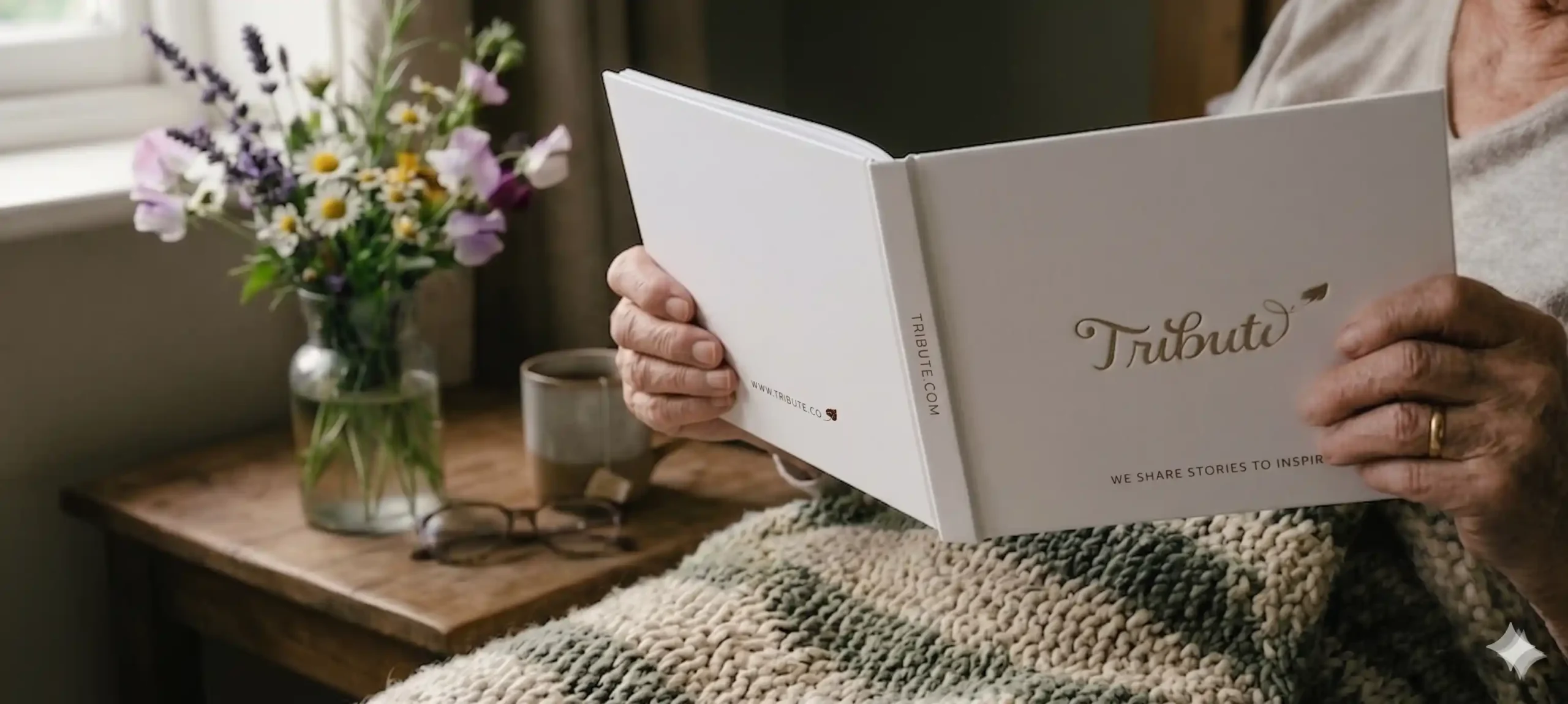
- You can also order a Tribute Video Book: a linen-bound hardback with a seven-inch screen built in, which plays the video automatically when opened. It sits on a nightstand or mantel and can be picked up and watched whenever the person wants to feel surrounded by love.
Families who use Tribute for a living tribute describe the moment of first watching as unforgettable. Eighty-two percent of recipients cry tears of joy. That number comes from over eight million messages sent through the platform.
See how Tribute works:
👉 Start a living tribute for someone you love, while they can still see it
What Should Contributors Say in a Living Tribute Video?
Most people know they want to say something meaningful but freeze when the camera is on. A simple prompt removes the hesitation.
Ask contributors to answer one of these:
- “Tell [name] one thing you have always wanted them to know.”
- “Describe a moment when [name] changed your life.”
- “What do you love most about [name]?”
- “Tell them one memory you will carry with you always.”
Short is fine. Two minutes is enough. The goal is not a polished speech. It is a genuine, specific, personal message that the person will carry with them. Contributors do not need to worry about production quality. An imperfect video recorded on a kitchen table lands harder than a polished one precisely because of its honesty.
How Do You Give a Living Tribute to Someone in Hospice?
A hospice tribute requires a little additional care in how it is delivered. The person receiving it may be fatigued, emotionally tender, or physically limited in their ability to hold a device.
Consider sitting with them when they watch it for the first time. Do not make a big event of it unless they would want that. A quiet afternoon, a comfortable position, good lighting, and a phone or laptop propped so they do not have to hold it up. Press play and stay beside them.
The Tribute Video Book was designed with exactly this moment in mind. Its seven-inch screen plays automatically when opened. A person can pick it up from their nightstand and watch it as many times as they want, alone or with whoever is in the room. It does not require login, password, or any interaction beyond opening the cover.
According to the Hospice Foundation of America, meaningful connection and the experience of love expressed openly are central to the quality of life and the sense of peace a person carries into their final days. A living tribute delivers that connection in one of its most concrete possible forms.
👉 Create an end of life tribute they can watch today
See also: How to Create a Group Memorial Video
See also: How to Make a Tribute Video
What Is the Difference Between a Living Tribute and a Legacy Video?
A legacy video typically captures a person telling their own story: their memories, their values, their life history. It is documentary in nature, recorded by or for the person themselves.
A living tribute is the reverse. It captures everyone else telling their story about the person. It is the voices of the people who loved them, gathering from different cities and different chapters of their life, all saying the same essential thing: you mattered to me, and here is exactly how.
Both are valuable. They do different things. A living tribute answers the question every person carries quietly: “Did I matter?” with a chorus of specific, personal, unreserved yes.
See also: How to Preserve a Loved One’s Legacy
Is It Too Soon to Start a Living Tribute?
No. The most common regret families express is that they waited too long.
There does not need to be a diagnosis. There does not need to be a milestone. If someone is in your life and you feel the pull to gather people and tell them what they mean to you, that feeling is worth acting on. People in good health receive living tributes and describe them as transformative. People in their final weeks receive them and hold them as one of the most meaningful things that ever happened to them.
Unlike a memorial, a living tribute does not require loss. It only requires love, and the decision to say it out loud before the chance is gone.
👉 Start a tribute while still alive, free, with no app needed
See also: How to Honor the Memory of a Loved One
Frequently Asked Questions About Living Tributes
What is a living tribute?
A living tribute is a collection of video messages, stories, and expressions of love gathered for someone while they are still alive so they can hear and watch them. Unlike a memorial, it is received and experienced by the person it honors. It is particularly meaningful for someone in hospice care, facing a serious illness, or approaching a major life milestone.
How is a living tribute different from a memorial?
A memorial honors someone after they have passed away. A living tribute honors someone while they are still here. The key difference is that the recipient actually sees and hears the tribute, making it an act of connection in the present rather than a form of remembrance after loss.
What is a hospice tribute?
A hospice tribute is a living tribute created for someone who is in end of life care. Family and friends record short video messages expressing their love, gratitude, and memories, and the compiled video is played for the person at their bedside. The Hospice Foundation of America recognizes that meaningful connection and expressed love are central to quality of life in a person’s final weeks.
How do I ask people to contribute to a living tribute video?
Share a link with a simple prompt: “Record a 1 to 2 minute video telling [name] one thing you want them to know.” A specific prompt removes hesitation and produces more personal, meaningful clips than an open-ended ask. Tribute sends automatic reminders so contributors do not fall through the cracks.
Can someone receive a living tribute if they are not tech-savvy?
Yes. The Tribute Video Book is a linen-bound hardback with a built-in seven-inch screen that plays automatically when opened. There is no login, password, or streaming required. It can sit on a nightstand and be picked up and watched whenever the person wants.
How many people can contribute to a living tribute?
A Tribute video can include 15 to 50 or more individual clips, drawn from friends, family, colleagues, neighbors, and community members across any number of locations. Contributors record from any device with no app required, so geography is not a barrier.
Is it appropriate to make a living tribute for someone who is not terminally ill?
Absolutely. A living tribute is appropriate any time you want someone to know the full weight of what they mean to the people in their life. Retirements, milestone birthdays, anniversaries, or simply the feeling that someone deserves to hear this now are all valid reasons to start one.
What should I say in a living tribute video message?
The most powerful messages are specific. “You changed my life when you did X” lands harder than “you are a wonderful person.” Answer the prompt “What is one thing I want this person to know?” and speak directly to them as if they are in the room. You do not need to speak for long. Two genuine minutes is more than enough.
Say It While You Still Can
The words we most want someone to hear are often the ones we never quite say out loud. A living tribute changes that. It gathers the voices of everyone who loves a person and places them in that person’s hands while they are still here to receive them.
Unlike a card or a call, it does not disappear. Unlike a memorial, it is not too late. Of all the things you can do for someone you love, very few carry the weight of letting them hear, in the voices of the people who know them best, exactly how much they matter.
That opportunity exists right now.