
Memorial Video Ideas: How to Honor a Life (2026)
The most treasured memorial videos share video messages from the people who loved the person, set to meaningful music, so the family can watch and re-watch whenever they need to feel close.
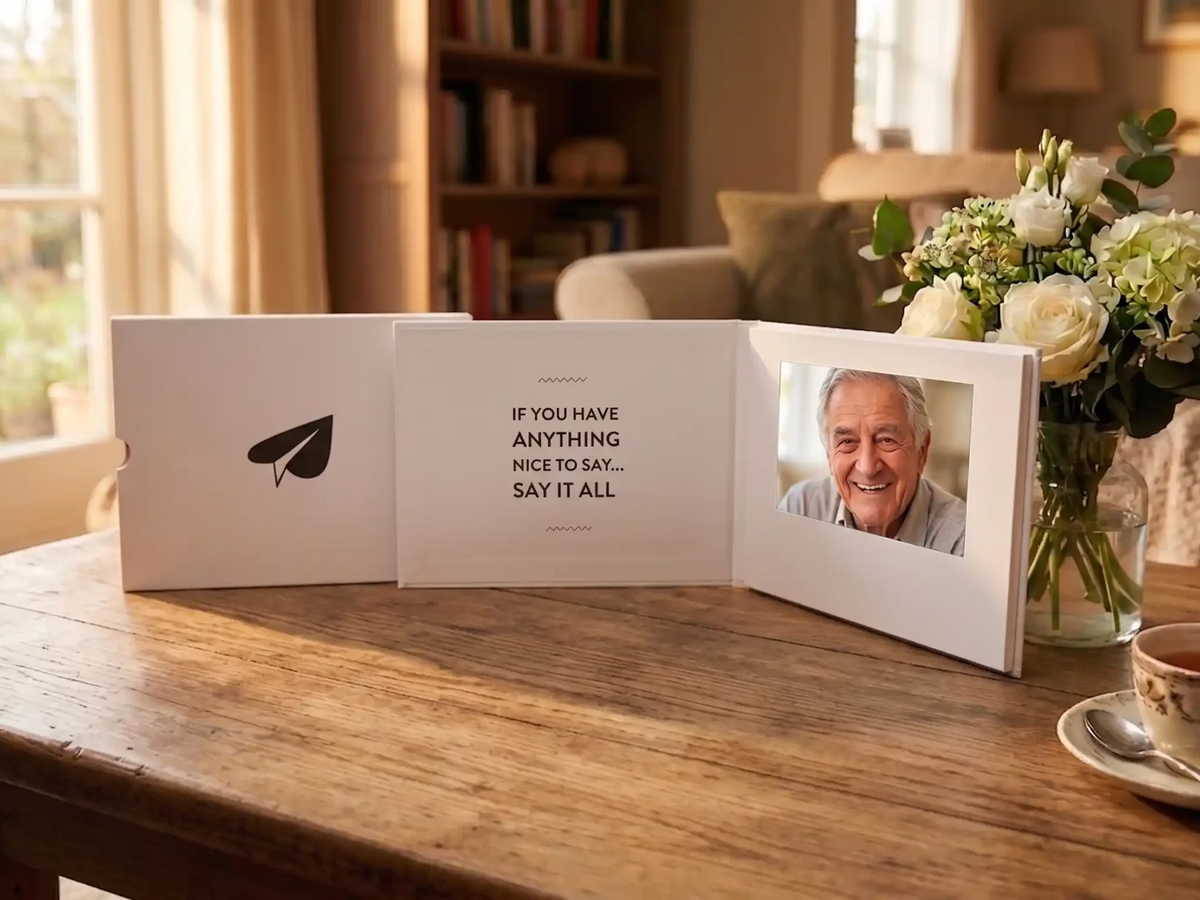
The most treasured memorial videos share video messages from the people who loved the person, set to meaningful music, so the family can watch and re-watch whenever they need to feel close. A photo slideshow is a classic starting point, a collaborative video montage gathered from friends and family goes deeper, and a filmed tribute shown at the service carries the whole room. Any of these approaches can be combined, and the right one depends on how much time you have and how many people you want to involve.
What Makes a Memorial Video Worth Keeping?
Grief researchers at What’s Your Grief describe the act of gathering memories together as a form of continuing bonds, a way of staying connected to someone after they are gone. A memorial video does exactly that. It gives the people who loved someone a place to put their stories.
The difference between a video families watch once and one they return to every year is usually the people in it. A polished slideshow of photographs is moving. A video where a college roommate laughs while describing the time your dad burned Thanksgiving dinner, then cries telling you what he meant to them, is something else entirely.
Tribute (tribute.co) is a group video gift platform that lets you collect personal video messages from friends, family, and community into a polished memorial montage. It works by sharing a link, contributors record from any device with no app needed, and Tribute compiles everything automatically.
What Are the Best Memorial Video Ideas for 2026?
Below are eight proven approaches, each with a note on who it suits best and why it works for grieving families. Many families combine two or three of these into a single service.
1. Collaborative Video Tribute (Collected from Friends and Family)
A link goes out to everyone who knew the person. Each contributor records a short video message from their phone or laptop, no app required. The clips come in from colleagues, cousins, childhood friends, and neighbors spread across the world, and they are arranged into a single montage.
Best for: Families who want the service to feel like a reunion, and anyone with a community that spans cities or countries.
Why it works: A typical tribute on Tribute.co gathers between 15 and 50 individual clips. Each one captures a different facet of who the person was, and together they build a portrait that no single person could have created alone. Over 8 million video messages have been sent through Tribute, and 82% of recipients cry tears of joy when they first watch.
See also: Group Memorial Video: How to Gather One from Far Away
2. Photo Slideshow with Music
A sequence of photographs set to a meaningful song is the most familiar form of memorial video. It is also one of the most accessible, since most families already have hundreds of photos on their phones. Free tools and simple editing software let anyone put one together in an afternoon.
Best for: Families who need something ready for the service within 24 to 48 hours, or as a companion piece to a longer video tribute.
Why it works: Photographs carry a specific kind of memory. Seeing a face at a birthday party twenty years ago, or hands at work in a garden, brings back a whole afternoon in an instant. Music amplifies that effect, turning a sequence of images into a felt experience rather than a record.
See also: Best Songs for a Memorial Video
3. Life Story Documentary
This format structures the video like a short documentary: childhood, formative years, relationships, career, and the final chapter. Narration or text cards guide the viewer through each era. Some families hire a videographer; others piece it together from home footage and photographs.
Best for: Families who want something that can be shared with grandchildren and future generations, a document of who the person was across a whole life.
Why it works: Structure helps audiences who did not know the person well, and it gives close family members a frame for memories that might otherwise feel scattered. A documentary format also ages well, remaining meaningful to people who watch it decades later.
4. Memorial Montage Shown at the Service
A memorial montage played during the service or reception, on a projector or large screen, gives the room a shared experience. The National Funeral Directors Association reports that personalized memorial experiences are among the most requested additions to modern services.
Best for: Families who want a moment during the service where the room stops and remembers together, rather than in private.
Why it works: Watching a video in a group, surrounded by people who are grieving the same loss, is a different experience from watching alone. Shared laughter and shared tears in that room become part of the memory of the day itself.
5. Video Messages from Those Who Cannot Attend
When family members, old friends, or colleagues cannot travel to a service, video messages let them still be present in a meaningful way. Contributors record a short clip sharing a memory or saying goodbye, and the clips are played during the service or reception.
Best for: Any service where important people are separated by distance, illness, or other circumstances.
Why it works: Absence is its own kind of grief. For the people who could not be there, recording a message is a way to participate. For the family watching, seeing a face from far away say “I loved them too” closes a gap that nothing else quite reaches.
6. Tribute Video Book
The Tribute Video Book is a linen-bound hardback that opens to a built-in 7-inch screen with speakers. When the cover opens, the video montage plays automatically. It sits on a shelf or a mantel the way a framed photograph does, but it holds the voices and faces of everyone who contributed.
Best for: Families who want a physical keepsake that lasts, something the grandchildren can pick up fifty years from now and hear their grandmother’s voice telling a story about the person being remembered.
Why it works: Digital files get buried in folders and lost when phones are replaced. A physical object with a built-in screen does not require a device, an account, or a password. It is always ready. Unlike a printed photo book or a framed image, the Video Book holds the actual voices, laughter, and stories of the people who loved them most.
7. Celebration of Life Highlight Reel
A highlight reel drawn from home videos, recorded at the service, or captured at a gathering afterward, gives families a way to remember not just the person but the day they gathered to honor them. It is often assembled after the service from footage taken by attendees.
Best for: Families holding a celebration of life gathering rather than a traditional service, where the atmosphere is warmer and more social.
Why it works: The service itself becomes part of the story. Years later, watching a clip of a cousin who has since moved away laughing with an aunt at the reception adds a layer of memory that photographs alone cannot provide.
8. Written Tribute Read Aloud and Filmed
A eulogy or written tribute, read by a family member and recorded, becomes a permanent part of the memorial record. Combined with photographs or video clips playing in the background, it bridges the spoken word and the visual.
Best for: Families with a gifted writer or speaker who wants their words preserved, and for services where reading the eulogy again in the room feels too difficult.
Why it works: A written tribute captures a specific voice, a specific relationship, in a way that cannot be replicated. Recording it preserves not just the words but the breath and feeling behind them.
What Did a Real Memorial Tribute Look Like for One Family?
One of the most powerful examples of what a collaborative memorial video can become started with a tragedy on the other side of the world.
Dan Fredinburg was a 33-year-old Google.org product manager and devoted adventurer who died on April 25, 2015, when a massive earthquake struck Nepal while he was climbing Mt. Everest. When news of his death reached his global community, the people who loved him created a Tribute. Google colleagues, climbing partners, family members, and friends from across the world recorded video messages. The final montage captures his infectious energy, his love of exploration, and the breadth of connection he built in 33 short years.
That video is what Tribute does at its best. A life is measured not just in what a person accomplished, but in the people whose lives changed from knowing them. When those people speak directly into a camera, that measurement becomes something you can watch and return to, again and again.
👉 Start a memorial tribute for your loved one on Tribute
How Does Tribute Work as a Collaborative Memorial Platform?
Tribute was built for exactly this kind of moment. You start by creating a page for the person being honored, then share a link with everyone who knew them. Contributors record from any device with no app required, and automatic reminders help gather videos even during a hard week when follow-up is the last thing anyone wants to manage.
Once the clips arrive, you can drag and drop them into the order that tells the right story, choose a theme, and add music. Tribute offers a concierge editing service for families who want a hands-off option, where the team handles the arrangement and finishing for you.
The finished video can be delivered digitally, which means it is ready the same day for families who need something for a service on short notice, or shipped as a Tribute Video Book, the linen-bound hardback with the built-in 7-inch screen that plays the montage the moment you open the cover. Unlike a USB drive or a shared folder link, the Video Book requires nothing from the person holding it. It simply opens and plays.
Tribute is free to start, so families can begin collecting videos before they have made any decisions about format or delivery.
See also: How to Make a Memorial Video: A Step-by-Step Guide
How Do You Choose Music for a Memorial Video?
Music carries emotional weight that images alone cannot. The right song can hold the whole feeling of a person in three minutes. The wrong one can make a deeply personal video feel generic.
Start with songs that meant something to the person being honored. A song they played on road trips, sang while cooking, or requested at every family gathering will resonate with the people who knew them in a way that no perfect-for-funerals playlist ever will. The Hospice Foundation of America encourages families to use rituals and personal objects as anchors during grief, and music is one of the most powerful of those anchors.
If you are not sure where to start, ask a few contributors to suggest a song when they submit their video message. You will often find one name coming up more than once.
See also: Best Songs for a Memorial Video
How Long Should a Memorial Video Be?
For a service, three to seven minutes is the range most families find workable. Long enough to feel complete, short enough that the room stays present with it. A collaborative tribute with 20 to 30 clips naturally lands in that range when each clip runs 20 to 45 seconds.
A longer version, 10 to 20 minutes, works well for a reception or a family gathering afterward, where people have more time and the mood is less formal. The Video Book format is well suited to longer versions, since it plays at the person’s own pace rather than in a room full of people.
What Do You Do with a Memorial Video After the Service?
The service is one day. The video lives much longer than that. Families who think about this early tend to end up with something they are glad they have years later.
A digital version can be shared with family members who were not able to attend. A Tribute Video Book can be given to the person’s partner, their children, or their parents, a physical object that holds all the voices and faces from the people who showed up. Some families order multiple copies and give one to each branch of the family.
See also: How to Honor the Memory of a Loved One
Frequently Asked Questions About Memorial Videos
What is a memorial video?
A memorial video is a video created to honor someone who has died. It can include photographs, home video footage, video messages from friends and family, music, and text. Memorial videos are shown at services, shared with family, or kept as long-term keepsakes. The format ranges from a simple photo slideshow to a full collaborative montage gathering messages from dozens of contributors.
How do I make a memorial video if I have no editing experience?
Platforms like Tribute are designed for people with no editing background. You share a link, collect video messages from contributors, and the platform arranges and compiles them. Tribute also offers a concierge editing service where the team handles everything for you. For a simpler slideshow, tools like Apple Photos or Google Photos have built-in slideshow features that require no editing knowledge.
How many people should contribute to a collaborative memorial video?
There is no wrong number, but a tribute with 10 to 30 contributors tends to feel full without becoming overwhelming to watch. Tribute gathers an average of 15 to 50 clips per tribute. Even a handful of short messages from the closest people in someone’s life can be more meaningful than a long production.
Can contributors record from their phones?
Yes. With Tribute, contributors record from any device including phones, tablets, and laptops with no app required. They receive a link, tap to record, and submit. The platform handles the technical side so contributors only have to focus on what they want to say.
What if I need the video ready in 24 hours?
Tribute’s digital delivery is instant once the video is ready, which makes it one of the better options for families working on short timelines. You can share the collection link, gather clips over a day or two, and have a finished video before the service. The concierge editing service can also move quickly when families flag that they are working against a deadline.
What is a Tribute Video Book?
The Tribute Video Book is a linen-bound hardback book with a built-in 7-inch screen and speakers. It plays the memorial montage automatically when the cover is opened. It is designed to sit on a shelf or mantel and does not require a device, an account, or a Wi-Fi connection. Families order it as a keepsake after the digital video is complete.
How do I choose what photos and videos to include?
Prioritize variety across time periods: childhood, young adult years, relationships, and later life. Include candid moments alongside formal ones. If you are gathering contributions from others, ask each person to share one photograph along with their video message. The combination of personal stories and personal photographs is what makes a memorial video feel true to who the person was.
Is it appropriate to use humor in a memorial video?
Yes, and often the funniest clips become the most treasured. Laughter and grief sit side by side in most memorial services, and a video that captures both is more honest than one that stays solemn throughout. If the person being honored had a sense of humor, let the people who contributed show it. That irreverence is often the most specific and recognizable thing about someone.
Where Do You Start When You Are Ready to Begin?
Start with the people. Before you think about format, music, or editing, reach out to the friends, family members, and colleagues who would want to be part of this. Their voices and stories are the material everything else is built from.
Unlike hiring a videographer or spending weeks in editing software, a collaborative video tribute can be started today and completed by the weekend, with the people who mattered most already part of it.
👉 Start gathering video messages for your memorial tribute on Tribute


