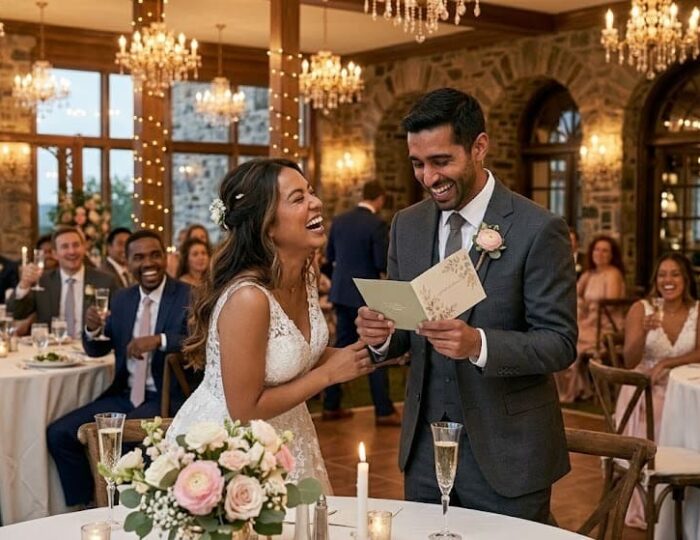
A great wedding toast does three things: it gets the room’s attention, it says something true and specific about the couple, and it raises a glass to something worth celebrating. A poor toast does none of these. The difference is almost never about eloquence — it is about preparation and honesty. Here are the best wedding toast ideas, structures, and examples for every relationship and tone.
What Makes a Wedding Toast Memorable?
The most memorable wedding toasts share one quality: they say something that could only be said about this particular couple by this particular person. Generic praise (“they are so perfect for each other!”) is fine but forgettable. A specific observation — the moment you realized they were serious, the quality you have always admired that their partner now gets to live with every day, the story only you could tell — is what people remember when they drive home from the reception.
Length matters too. Most wedding toasts run too long. Three to five minutes is the ideal. Anything over seven minutes is asking guests to stay attentive while emotionally full, physically tired, and surrounded by food, music, and competing conversations. Say the important thing and stop.
What Is the Best Structure for a Wedding Toast?
The most reliable wedding toast structure has four parts: open with something that gets attention, share a specific story or observation, say what the couple means to you, and close with the actual toast. This structure works because it moves from specific to universal — from a particular memory to a broad wish — which mirrors the emotional journey a good toast creates in the room.
Part 1: The Opening
Do not open with “Hi, I’m [name] and I’m the [role].” Everyone already knows. Open instead with a line that commands attention: a surprising observation, a short story already in motion, or an honest acknowledgment of the moment. “The first time I met [partner’s name], I thought one thing: finally.” is more compelling than any introduction.
Part 2: The Story or Observation
One specific, well-chosen story is worth a dozen generic compliments. Choose the story that best captures something true about the couple — how they met, a moment you witnessed that confirmed they were right for each other, or a quality one of them has that their partner brings out. Keep it to one to two minutes. More than one story and the toast starts to feel like a highlight reel rather than a message.
Part 3: What They Mean to You
Tell the couple directly — not the room — why they matter to you and what you wish for their marriage. This is where the toast turns from entertainment to something the couple carries. Be honest. Be brief. This is not the moment for elaboration — it is the moment for sincerity.
Part 4: The Toast Itself
Close with a clear, directed toast that asks the room to raise their glasses. It can be simple: “To [Name] and [Name].” It can be more: “To two people who make every room better just by being in it together — congratulations.” Signal clearly that the toast is ending so the room knows when to drink.
What Are the Best Wedding Toast Ideas by Role?
Best Man Toast Ideas
“[Name] and I have been friends since [time]. In that time, I have watched him make some truly memorable decisions. I have also watched him meet [partner’s name] and become someone who makes better ones. I do not know if [partner’s name] knows what they signed up for, but I do know that whoever they got is the best version of my friend that has ever existed. To [Name] and [Name].”
“I was told this toast should be funny, then moving, then brief. I will try all three. [Funny story about the groom.] [One honest observation about what the couple means to you.] To [Name] and [Name] — the best is absolutely yet to come.”
Best for: Best men who want a structure that works regardless of whether they are naturally funny or more heartfelt
Why it works: The best man has the credibility to be funny and the standing to be honest — this structure lets both happen without forcing either
Maid of Honor Toast Ideas
“I have known [name] for [time], which means I have been watching her choose [partner’s name] from the beginning. Not just on the wedding day — every day before it. The way she talks about [him/her/them], the way she changes in [his/her/their] presence, the way she looks when she thinks no one is watching. I have seen all of it. And I want [partner’s name] to know: you are everything she said you were. To [Name] and [Name].”
“She asked me to keep it short. She knows I cannot keep anything short. But I will try. [One specific story.] I love you. I love who you are with [partner’s name]. I cannot wait to watch what you build. To [Name] and [Name].”
Best for: Maids of honor who want to be personal, warm, and specific without over-explaining or running too long
Why it works: The maid of honor’s toast lands hardest when it shows she has been paying attention — the bride will know immediately if the toast is personal versus generic
Parent Toast Ideas
“I have watched [name] become the person you see today, and what I want to say is this: the qualities that make [him/her/them] who they are — [specific quality or two] — are the same qualities I hope for them in their marriage. I can already see those qualities reflected in the way [partner’s name] loves them. What more could a parent want? To [Name] and [Name].”
“On behalf of our family, I want to welcome [partner’s name] fully and completely. You were already ours before today. Today just makes it official. [Name], you chose well. We are proud of you. To [Name] and [Name] — with all our love.”
Best for: Parents who want to acknowledge both the couple and the joining of families in a way that feels genuine rather than formal
Why it works: A parent’s toast carries the weight of the couple’s full history — even a short, simple parent toast lands with emotional force that longer toasts from friends cannot always match
Sibling Toast Ideas
“Growing up with [name] was [honest description]. Watching [him/her/them] with [partner’s name] is different. It is [specific quality] I have never seen as clearly as I see it now. I am proud of you. I love you. To [Name] and [Name].”
“I have been preparing what to say for [time]. I deleted everything and am saying this instead: I love you. I love who you are with [partner’s name]. I could not be happier. To [Name] and [Name] — let’s go.”
What Are Wedding Toast Lines Worth Using?
Sometimes the closing line is the hardest part to write. Here are toast-worthy closing lines that work across different tones.
“May your love be the constant thing when everything else changes.” “To two people who make each other better — and make all of us glad to know them.” “May every year together be richer than the last.” “Here is to the beginning — and to everything that comes after it.” “To [Name] and [Name]: you deserve everything good. Congratulations.” “May you always choose each other. And may choosing always feel easy.” “To the couple — the best thing I get to witness today.”
What Are Common Wedding Toast Mistakes to Avoid?
Three things ruin a wedding toast more reliably than anything else: going over time, mentioning exes (even briefly), and reading directly from a phone the entire time. Eye contact matters — guests need to feel like you are speaking to the room and to the couple, not reciting. If you need notes, print them in large text and hold a small card. Do not scroll through your phone while toasting.
Avoid toasts that focus almost entirely on the speaker. A toast should be about the couple, not about how emotional you feel about them. The feeling matters — but the couple and their relationship should be the subject, not your reaction to it.
See also: Wedding Speech Video: How to Capture and Share Toasts That Last
How Do Group Video Messages Complement a Wedding Toast?
A wedding toast reaches everyone in the room — but only the people in the room. A group tribute video through Tribute includes everyone who wanted to speak, whether or not they were there. The grandmother who could not fly in. The college roommate who was at another wedding. The mentor who watched the couple fall in love from a professional distance.
Tribute is a group video gift platform that lets you collect personal video messages from friends and family into a polished wedding montage. It works by sharing a link — contributors record from any device, no app needed, and Tribute compiles everything automatically. A tribute video shown at the rehearsal dinner — before the formal toasts at the reception — creates a separate emotional moment that complements rather than competes with the live toasts the couple will hear the next day.
👉 Create a group tribute video to complement the wedding toasts with Tribute
Frequently Asked Questions About Wedding Toast Ideas
How long should a wedding toast be?
Three to five minutes is ideal. This is long enough to say something meaningful and short enough to hold the room’s attention. Time yourself in rehearsal — toasts almost always run longer out loud than they seem when written.
Should you memorize a wedding toast or read from notes?
Most speakers do best with a combination: know the structure and key lines well enough to deliver them naturally, and use a printed card for anything you are worried about forgetting. Reading word-for-word from a phone looks unprepared. Having nothing is risky if nerves hit. A brief printed reference card is the professional middle ground.
Is it okay to be nervous when giving a wedding toast?
Yes — and the couple knows it. A speaker who is visibly moved by the moment, who takes a breath before a difficult line, or who pauses to collect themselves often creates more emotional impact than a polished performance. Do not try to hide genuine emotion. Let it be there.
What if you do not know the partner well?
Focus on the person you do know. A toast that says “I have known [name] for years — here is what I know about them, and here is what I can see about who they are with you” works beautifully without requiring intimate knowledge of both people.
What is the difference between a wedding toast and a wedding speech?
Technically, a wedding speech is the longer address (like a father of the bride speech) and a toast is the shorter closer (ended by raising a glass). In practice, the terms are used interchangeably. The key is to end with a clear signal that the room should raise their glasses and drink.
Can you give a wedding toast if you are not in the wedding party?
Yes. Many couples invite close friends or family members outside the formal wedding party to speak. Ask the couple or the wedding planner in advance about the program and timing. Surprise toasts — offered without clearing it with the couple first — can disrupt the flow of the reception and are generally best avoided.
What is the most common thing people forget in a wedding toast?
The actual toast. Many speakers talk for several minutes and then trail off without a clear, directed closing that asks the room to raise their glasses. Write your closing line first, practice it until it feels natural, and let everything build toward it.
Say the Thing That Only You Can Say
Every great wedding toast comes back to the same thing: something specific, true, and personal that only the speaker could have said about these particular people at this particular moment. The room feels it when a toast is working — there is a quality of attention that is different from polite listening. That attention comes from specificity. From knowing. From the sense that the speaker was genuinely paying attention.
That is what a wedding toast can be. Not a performance, not an obligation, not a polished piece of rhetoric. A moment where someone who loves the couple says exactly what they mean.
See also: Wedding Wishes: What to Say to a Couple on Their Wedding Day
👉 Record your wedding message as part of a group tribute on Tribute