The First Christmas Without Mom: Ways to Get Through It and Remember Her
The first Christmas without Mom is hard in specific ways: her ornaments in the box, her recipes nobody has tried yet, the phone call that won't come on Christmas morning. Most people get through it by keeping the plan small, deciding with their siblings which of her traditions to keep, and finding one way to remember her out loud, such as cooking her dish or hanging her ornament first. You don't have to make it a good Christmas this year; getting through it is enough.

A note before we begin: we make Tribute, the group video maker, and near the end we describe one way families use it to share memories of someone they've lost. If you're not ready for that, the rest of this guide stands on its own.
Why is the first Christmas without Mom so hard?
In many families, Mom was Christmas. She kept the address list for the cards, knew everyone's sizes, hid the gifts and decided when dinner was ready. When she's gone, the season loses its organizer as well as its heart, and the small jobs she did without thanks turn into reminders.
Many people carry this loss. A U.S. Census Bureau analysis of 2021 survey data found that about 30.8% of people in the United States have lost their biological mother. Every one of them had a first December after it.
Unlike the weeks after a funeral, when people check in and bring food, Christmas arrives with music in every store and cheerful plans on every calendar. The world expects joy right when you have the least of it. That gap is what makes the first one so heavy.
How do you get through the first Christmas without Mom?
If you've been typing "first Christmas without my mom" into a search bar late at night, you're not the only one. There's no trick that makes it painless. What helps is planning ahead, lowering the bar and leaning on people.
Grief expert Kenneth Doka of the Hospice Foundation of America suggests the Three Cs of choose, communicate and compromise for days like this. Choose what you can face, tell your family what you've decided, and accept that a brother or a parent may grieve in a different way than you do.
- Divide her jobs. Make a list of everything she did for Christmas and hand each task to a person. One sibling takes the cards, another takes the turkey.
- Shrink the plan. Fewer events, fewer gifts, a shorter day. Nobody will hold it against you.
- Plan the hardest hour. For many people it's opening gifts, or the moment she would have said grace. Decide ahead what you'll do then.
- Take care of your body. Grief is tiring. Sleep, eat something warm and get outside once a day, even for ten minutes.
- Say yes to help. When a friend offers, give them a real job: "Can you pick up the pies?"
It's also fine to change everything this year. Some families travel, eat out or spend Christmas at a sibling's house so the day doesn't happen in her kitchen.
Which of her traditions should you keep this year?
Sort them into three piles with your family: keep, change and rest. Keep the ones that bring comfort, such as her Christmas Eve soup or the movie she watched every year. Change the ones that hurt in their old form; maybe someone else reads the Christmas story, or you open gifts at a different time. Rest the ones nobody can face yet, with the understanding that they can come back next year.
Picture three siblings at the kitchen table in early December with her recipe box. One wants to bake every cookie she made, one can't stand to, and the youngest wants only the sugar cookies with the cracked icing. They bake those together, and that's the tradition this year.
What are ways to remember her this Christmas?
Remembering her doesn't have to be a big moment. A few small acts, chosen with the people who loved her, can make room for her in the day without taking it over.
1. Hang her ornaments first
Before anyone else decorates, take out her ornaments and hang them together. Let each person choose one and say where it came from. If there are too many to keep, give each grandchild one to start their own tree with.
Best for: Families who decorated with her every year.
Why it works: It turns the hardest box to open into a shared moment.
2. Cook from her recipes
Make her dish, even if it doesn't taste right the first time. Copy her recipe cards, stains and margin notes included, and give a set to each sibling. Her handwriting on the counter can be as much of a comfort as the food.
Best for: Moms who showed love through the kitchen.
Why it works: Taste and smell carry memories that photos can't.
3. Keep her place, or her stocking
Hang her stocking and invite everyone to drop in a note to her over the season. Or leave a candle at her place at the table. Read the notes on Christmas night, or keep them sealed for next year.
Best for: Families who want her named without a speech.
Why it works: People can say what they need to say in private, at their own pace.
4. Give in her name
Donate to a cause she cared about, volunteer where she volunteered, or buy a gift for a child the age you were when she made Christmas for you. Tell the family what you did and why.
Best for: Moms who were the first to help a neighbor.
Why it works: It carries her habits forward into the season.
5. Gather everyone's memories of her (an In Memory Tribute)
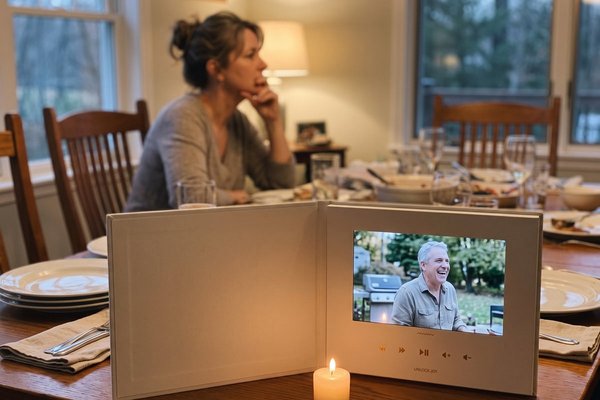
Her sisters, her friends from church, the neighbor she walked with every morning: each of them knew a side of her you may not have seen. An In Memory Tribute brings those stories together. Tribute is a group video maker that turns messages from friends and family into one surprise video. It works by inviting everyone to record a short clip from their phone; Tribute compiles the clips, music and photos into a finished video you share or play together.
To make an In Memory video, you start a page with her photo and a few words, then share the link with anyone who loved her. They record from any phone or computer, with no app or account. Compared to a video call on Christmas Day, nobody has to be online at the same time or speak in front of a crowd, and the family can watch it together or alone, whenever they feel ready.
- Time needed: A minute or two per person to record; open it two to three weeks before Christmas so everyone has time
- Cost: Free to start a draft; you pay from $35 when you publish and start collecting videos
Best for: Families spread across states, and friends of hers you won't see over the holidays.
Why it works: You hear stories about her that you didn't know, in the voices of the people who told them.
See how an In Memory Tribute works
How can you help your dad or your kids through it?
Your father, or whoever shared her life, may be carrying the heaviest grief in the house. Ask him what he wants rather than guessing. Some widowed parents want the house full; others want one quiet meal with their children.
Children need honesty and a role. Tell them it's okay to be sad and okay to have fun, sometimes in the same hour. Give them a job, such as hanging Grandma's ornament or lighting her candle, so they feel part of remembering her.

When is it more than holiday grief?
Grief after losing a mother can stay raw for a long time, and that's normal. For some people, though, it doesn't ease. The American Psychiatric Association estimates that 4% to 15% of bereaved adults experience the persistent symptoms of prolonged grief disorder, where intense longing and distress continue at least a year after the loss.
Reach out to a doctor, a grief counselor or a hospice bereavement program if you can't sleep, eat or work, or if the season feels unbearable. If you are thinking about harming yourself, call or text 988 in the United States to reach the Suicide and Crisis Lifeline.
For more on getting a whole family through the season, see our guide to grief during the holidays. If this year also brings something new, such as a first Christmas married or a new baby, it's okay to hold both feelings at once. Our holiday season guide is there for the lighter plans when you want them.
Frequently Asked Questions
Is the first Christmas without Mother the hardest one?
It is for many people, because every tradition is happening for the first time without her. Later Christmases still bring hard moments, but they tend to come with more warning and more of your own rituals to hold on to.
Should we still celebrate Christmas after Mom died?
You can celebrate, scale it down or skip it this year. Decide together with your family, tell others what you've chosen, and remember that you can change the plan next year.
What do you do with her Christmas decorations?
Nothing has to be decided this year. Many families hang a few of her ornaments, store the rest, and share them out among children and grandchildren later, when it feels right.
How do I talk about Mom at Christmas dinner?
Say her name early, with a toast or a short story, so others know it's welcome. Most relatives are waiting for someone to go first.
What can I say to a friend facing the first Christmas without their mom?
Name her: "I'm thinking of you and your mom this Christmas." Offer something concrete, like a meal or a walk, and check in again in January, when most people stop asking.
When you're ready, make an In Memory Tribute and gather the stories of everyone who loved her in one place.