Grief During the Holidays: How Families Remember Together
Grief during the holidays tends to show up in small places: the empty chair, the stocking nobody hangs, the recipe nobody makes the same way. What helps most families is to plan less than usual, choose one or two ways to remember the person out loud, such as lighting a candle or sharing stories at the table, and let each person grieve at their own pace. There is no right way to do this season, and you can change your mind as you go.
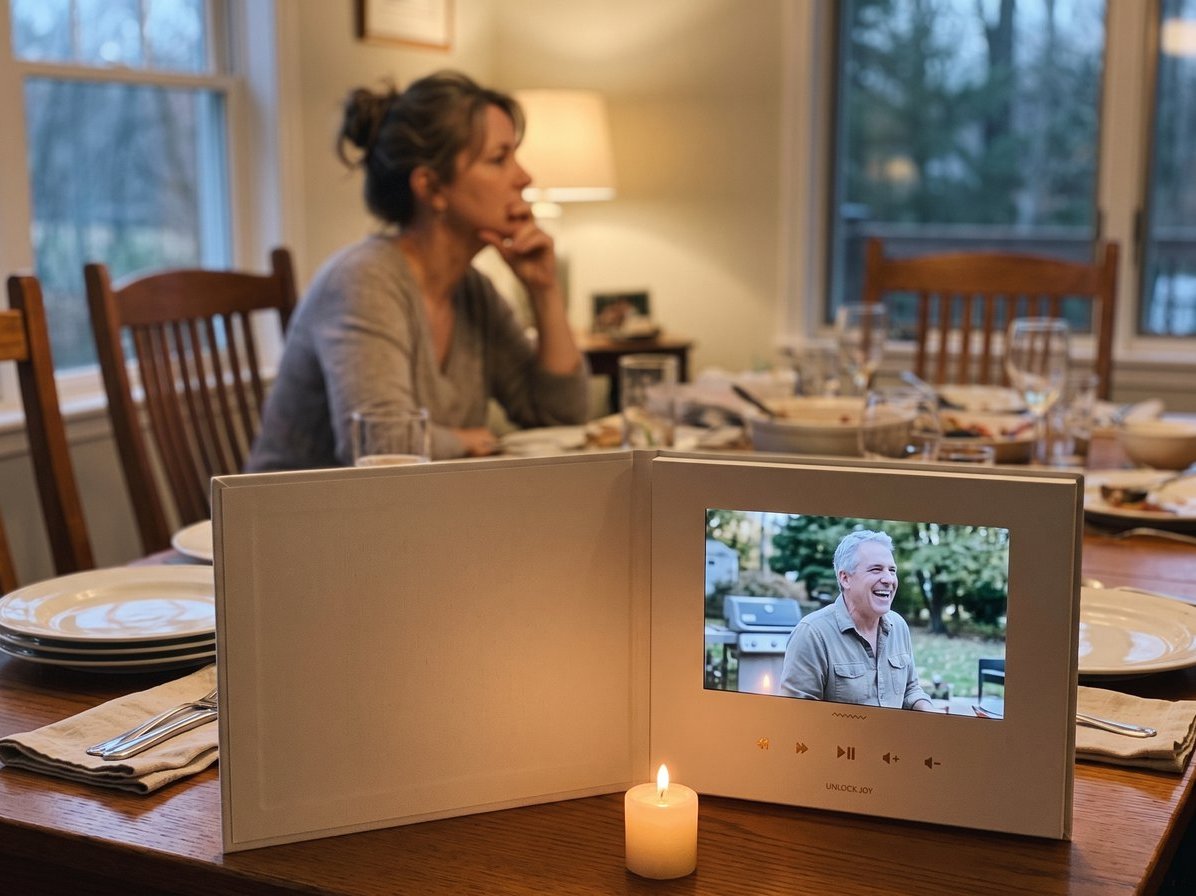
A note before we begin: we make Tribute, the group video maker, and near the end we describe one way families use it to share memories. If you're not ready for that part, the rest of this guide stands on its own.
Why does grief feel heavier during the holidays?
The holidays are built on repetition. The same dishes, the same songs, the same people in the same seats. When one of those people is gone, every tradition points to the gap, and the season can feel louder than the rest of the year.
You are far from alone in this. The CDC counted 3,072,666 deaths in the United States in 2024, and behind each one is a family facing a season with someone missing. For many of them, this year brings the first Thanksgiving, the first Hanukkah or the first Christmas without that person.
How do you cope with grief during the holidays?
Start by doing less. Kenneth Doka of the Hospice Foundation of America suggests three steps for hard days, which he calls the Three Cs: choose, communicate and compromise. Choose which gatherings and traditions you want to keep, tell the people around you what you've decided, and make room for relatives who grieve in a different way.
That last step matters. One sibling may want every tradition kept; another may not be able to look at the tree. A small change, such as a smaller tree in another room, can carry both through the day.
A few practical ideas that families find helpful:
- Plan the hard parts. Decide ahead who sits where, who carves and who says grace, so nobody is caught off guard by the empty seat.
- Protect the basics. Self-care during grief starts with sleep, food and a walk outside. Say no to one event if it means you can rest.
- Tell people what you need. Friends want to help and often don't know how. "Can you call me on Christmas Eve?" is a gift to them too.
- Keep one tradition, drop one. You don't have to choose between keeping everything and cancelling the season.
Unlike other years, this one doesn't need a plan set in November. It's fine to decide a week out, or the morning of, and to change it again.
How do you get through Thanksgiving after the loss of a loved one?
Thanksgiving is the first big holiday of the season, so it can land hardest. Some families change the setting, eating at a restaurant or at a different relative's home, so the day feels new rather than incomplete.
Other families keep the meal and change the moment that hurts most. If going around the table to say what you're thankful for feels impossible, swap it for a round of favorite stories about the person.
Some people write a short note to the person they lost and read it before the meal or keep it in a pocket. Others post a line online, such as "Happy Thanksgiving to family in heaven. We made your stuffing and told your stories." It doesn't need to be shared to count.
What are small ways for families to remember someone together?
Remembrance doesn't have to be a big ceremony. Each idea below fits inside a normal holiday and turns a private ache into a moment the family shares. Pick one, or none this year.
1. Keep their place at the table
Some families set the empty chair with a candle, a photo or the person's favorite mug. Others leave the seat open without comment. Either way, the chair says what's hard to say: they belonged here.
Best for: Families who want the absence acknowledged without a speech.
Why it works: It lets the person be part of the day without asking anyone to perform.
2. Light a candle before the meal
Candle lighting is one of the oldest remembrance rituals across faiths. Before the meal, one person lights a candle and says the name of the person you've lost, and anyone who wants to adds a word or a memory. Let the candle burn through dinner.
Best for: Families of any faith or none, and kids who want a job.
Why it works: It takes thirty seconds and gives grief a beginning and an end inside the day.
3. Cook their recipe
Make the dish they always made, even if it doesn't turn out the same. Print the recipe card in their handwriting, or tape the stained original to the fridge. Picture your aunt passing the green bean casserole and saying, "It's not as good as hers," and the whole table agreeing, and laughing.
Best for: Families where food was how they showed love.
Why it works: Taste and smell bring back memories that words miss.
4. A family memory video (an In Memory Tribute)
When the family is spread across states, or some relatives can't face a gathering, a shared video can hold the memories instead. With an In Memory Tribute, one person starts a page with a photo and an invitation, and everyone records a short clip from their phone about the person: a story, a lesson, a joke they used to tell. Tribute is a group video maker that turns messages from friends and family into one surprise video. It works by inviting everyone to record a short clip from their phone; Tribute compiles the clips, music and photos into a finished video you share or play together.
Nobody has to be online at the same time, and no one needs an app or an account to record. You can watch it together on Christmas Eve, or send the link so each person can watch when they feel ready. Compared to a video call, it gives the quiet cousin and the grandparent who finds it hard to speak the time to say it the way they want.
- Time needed: A few minutes per person to record; open it two to three weeks before the gathering so everyone has time
- Cost: Free to start a draft; you pay from $35 when you publish and start collecting videos
Best for: Families who live far apart, or who find it easier to speak to a camera than to a room.
Why it works: Every voice is in one place, and the family can come back to it when they want.
See how an In Memory Tribute works
What are Christmas wishes for a grieving family?
If someone you love is grieving this December, a card or a text still matters, even a short one. Skip "Merry Christmas" if it feels wrong, and skip anything that explains the loss, such as "Everything happens for a reason." Say their person's name, and say you're thinking of them.
Here are a few Christmas wishes for a grieving family that work in a card or a text:
- "Thinking of you this Christmas and remembering Dan with you. No need to reply."
- "I know this season is different this year. I'm holding you and your family close."
- "Your mom made every Christmas Eve feel like home. We miss her too."
- "I'd love to bring dinner one night this month. Any night works."
Then follow up in January, when the cards stop and the house goes quiet.
When does grief during the holidays need more support?
Most people find that the sharpest pain softens over time, even if the holidays stay tender for years. For some, it doesn't ease. The American Psychiatric Association estimates that 4% to 15% of bereaved adults experience the persistent symptoms of prolonged grief disorder, where intense longing and distress continue at least a year after the loss and get in the way of daily life.
Talk to a doctor, a grief counselor or a hospice bereavement program if grief keeps you from sleeping, eating or working, or if the season feels unbearable. If you are thinking about harming yourself, call or text 988 in the United States to reach the Suicide and Crisis Lifeline.
What if the family can't be together this year?
Distance adds its own weight. A sibling overseas or a parent in a care home grieves alone unless the family makes room for them. A video call during the meal, a shared playlist of the person's favorite songs, or a group video recorded ahead of time can bring them in.

Our guide to virtual Christmas party ideas has more ways to gather a family across time zones. If you are facing the season after losing a parent, the first Christmas without Mom walks through it in more detail, and our holiday season guide is there when you want lighter plans.
Frequently Asked Questions
Is it normal for grief to feel worse at the holidays?
Yes. Holidays are full of traditions and reminders, so the absence of someone you love is harder to miss. Many people feel the loss most in the weeks before the day, and the day itself is often easier than the dread.
Should we skip Christmas the first year after a death?
You can, and some families do. Others keep a smaller version, or travel somewhere new. Decide together, tell the wider family what you've chosen, and leave room to change the plan.
How do you include someone who has died in a holiday gathering?
Light a candle, keep their seat, cook their recipe or share stories about them at the table. Saying their name once tells everyone that talking about them is welcome.
What do you say to someone grieving at Christmas?
Keep it short and honest: say the person's name, say you're thinking of the family, and offer something concrete, like a meal or a call. Avoid explaining the loss or telling them how to feel.
How can kids take part in holiday remembrance?
Give them a job they can hold: lighting the candle with an adult, hanging an ornament for the person, or drawing a picture of a favorite memory. Children grieve in bursts, so a short ritual suits them better than a long one.
When you're ready, make an In Memory Tribute and let the whole family share their memories in one place.